Author: Dmitry Matv

  • Practical guide to NAICS (and SIC) codes

    Practical guide to NAICS (and SIC) codes

    Table of Contents

    Introduction: The Importance of Accurate Business Classification

    Picture this. You run a growing services firm. You register on SAM.gov, pick a NAICS code that sounds right, and start pursuing federal work. Later, you find out a critical opportunity is off-limits because your code ties to a size standard you can’t meet. You weren’t too big for your industry. You were simply in the wrong industry on paper. The lost time, the rework, the missed bid cycle – it hurts.

    Misclassification rarely causes a fire drill on day one. It shows up at important moments. A banker asks for your industry code during underwriting. A contracting officer assigns a NAICS you don’t expect. An OSHA recordkeeping rule applies (or doesn’t) based on how you’re classified. Or your tax preparer needs your principal business activity code. Each touchpoint depends on accurate NAICS and, in some contexts, SIC. Getting this right ahead of time saves you from delays, ineligibility, and avoidable admin costs [reference:5][reference:6][reference:10][reference:9][reference:12].

    NAICS stands for North American Industry Classification System. It’s how U.S. federal statistical agencies describe industries in a consistent, production-oriented way. NAICS covers 20 broad sectors and over 1,000 industries at the detailed national level. Agencies use it to organize data, and many business processes reference it as well [reference:1][reference:4].

    SIC stands for Standard Industrial Classification. It’s the older system that still appears in specific places like SEC filings and some legacy databases. You won’t use SIC daily if you’re focused on modern compliance, but you’ll still see it enough to matter, especially in financial reporting and historical analysis [reference:7][reference:8].

    Here’s why NAICS and SIC Code Identification matters to you. The IRS asks for a principal business or professional activity code that aligns with NAICS when you file returns. The SBA ties small-business eligibility to NAICS-based size standards, which can open or close doors in federal contracting. OSHA bases some recordkeeping exemptions on NAICS categories. And SAM.gov requires NAICS for entities pursuing federal awards [reference:9][reference:5][reference:6][reference:10][reference:12].
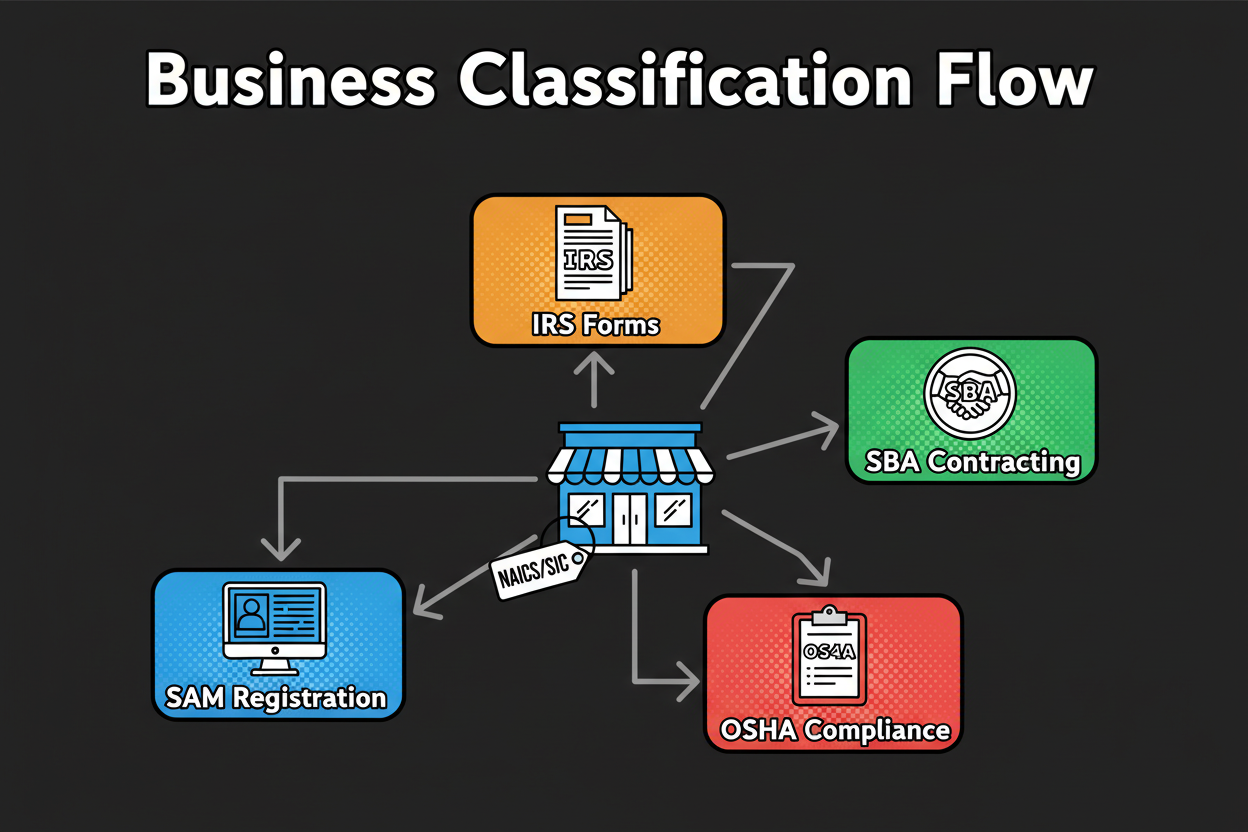
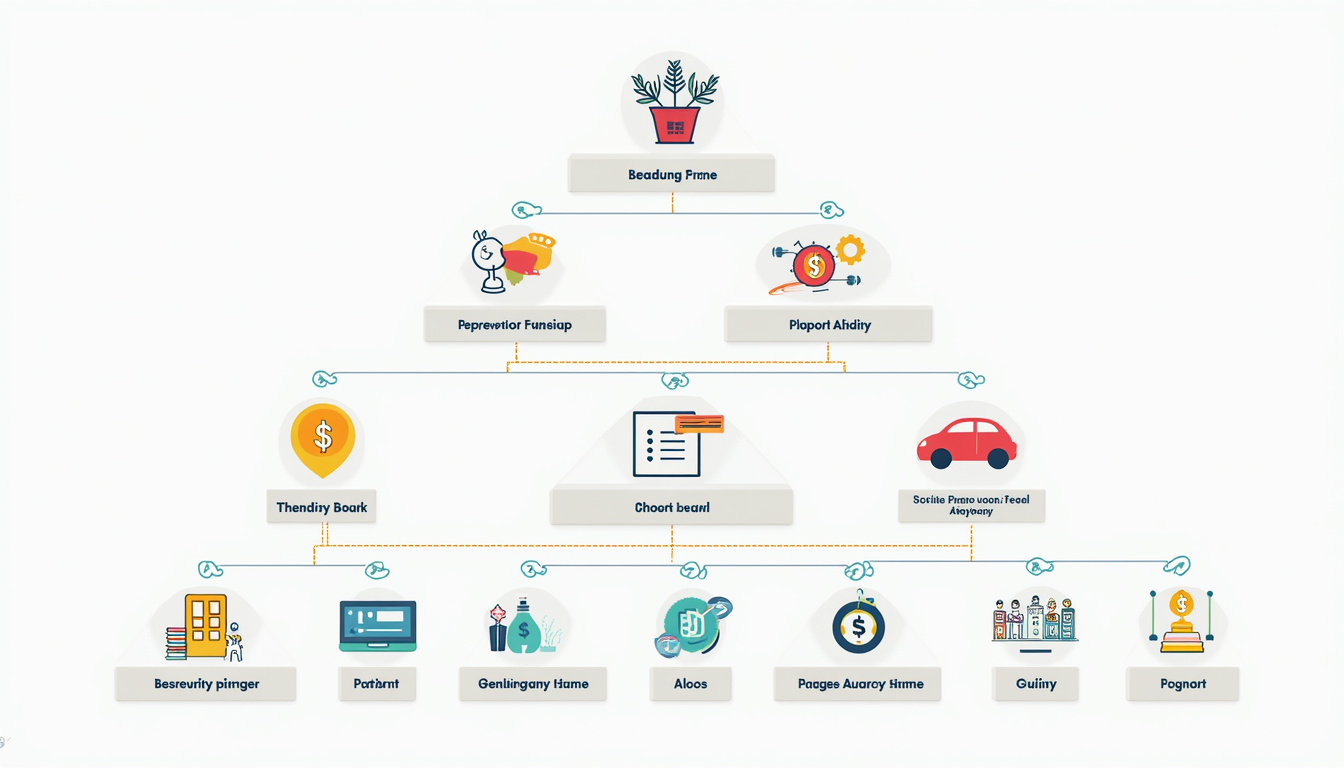
    Illustrated flow: a central business icon connected to IRS tax form, SBA contracting badge, OSHA clipboard, SAM.gov registration screen; each node labeled with where NAICS/SIC is used

    • IRS – principal business activity code on tax filings aligns with NAICS [reference:9]
    • SBA – small-business size standards and eligibility linked to NAICS [reference:5][reference:6]
    • OSHA – partial recordkeeping exemptions depend on NAICS classification [reference:10]
    • SAM.gov – federal registration requires NAICS for awards and opportunities [reference:12]

    Let’s make this practical. A consulting firm we worked with selected a code that matched a side service, not their main revenue generator. The result: they showed up as “other than small” for key solicitations because the size standard on that code didn’t fit their true business model. After revisiting their primary activity and checking the SBA size standards tied to the right NAICS, they corrected their profile and regained access to small-business set-asides they were genuinely eligible for [reference:5][reference:6][reference:11].

    In this guide, you’ll learn what NAICS and SIC are, how they differ, and how to identify the correct codes for your business the first time. You’ll get a simple step-by-step process, examples, and best practices you can reuse. We’ll also cover advanced scenarios, like multi-activity companies and evolving business models, so you can manage your codes with confidence.

    Now that you see where classification shows up in your business systems, let’s demystify the codes themselves.

    Understanding NAICS and SIC Codes: Fundamentals and Key Differences

    NAICS is a structured, production-oriented system. It organizes industries from broad sectors down to detailed national industries. The hierarchy runs from 2-digit sectors to 6-digit industries. It’s designed to reflect how goods and services are produced, not just how they’re sold or marketed. That’s why the official definitions include example activities, inclusions, and exclusions. The goal is clarity about what the industry actually does, not just its label [reference:1][reference:2].

    SIC is the predecessor system. It uses 2 to 4 digits and appears in SEC filings and certain legacy datasets. Even though NAICS is the standard for most federal statistical purposes, SIC remains a fixture in capital markets and historical analyses. If you deal with investor relations, public filings, or older data warehouses, you’ll encounter SIC and might need to reconcile it with NAICS [reference:7][reference:8].

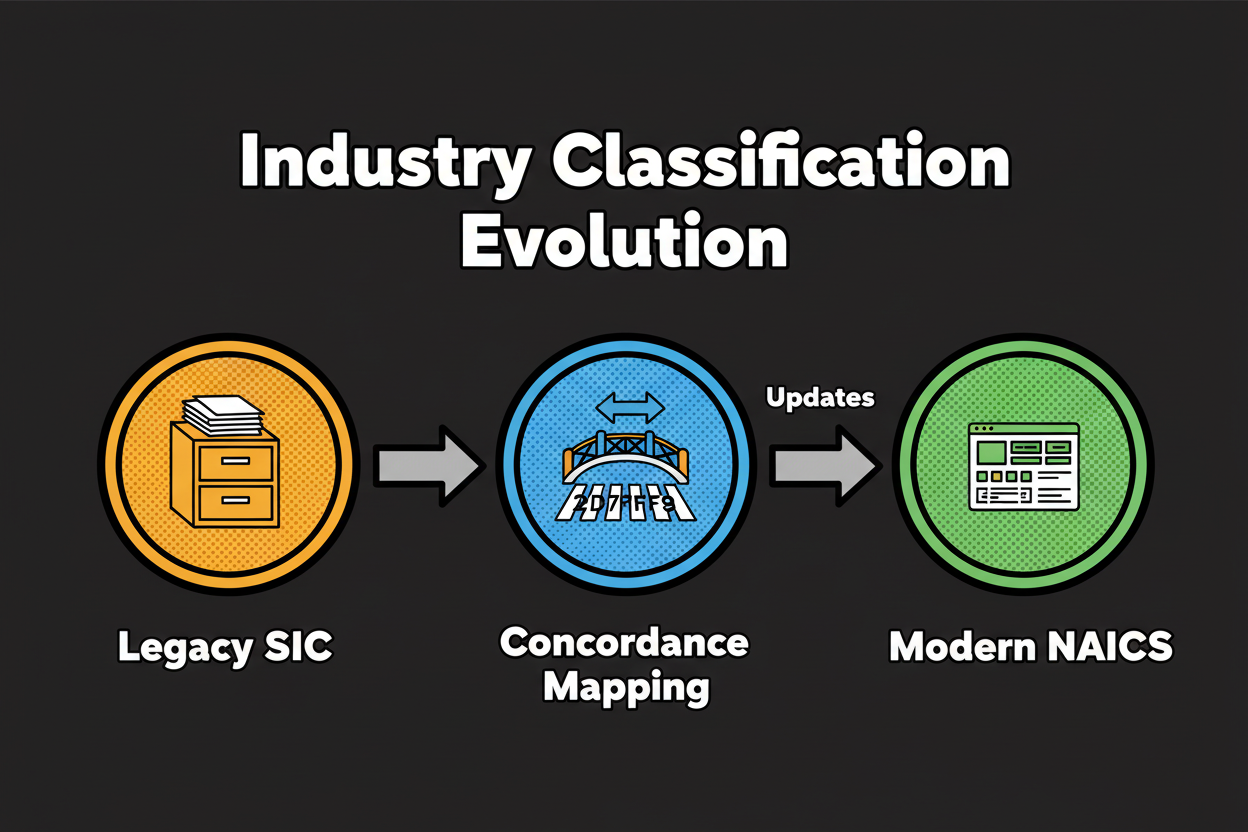
    When you need to bridge systems, concordances are your friend. The Census Bureau publishes official crosswalks that map SIC to NAICS and connect older NAICS versions to newer ones. Concordances let analysts and compliance teams compare apples to apples across data sources and time periods. If your CRM or finance system still stores SIC and your compliance workflows run on NAICS, concordances help you translate without guesswork [reference:3].
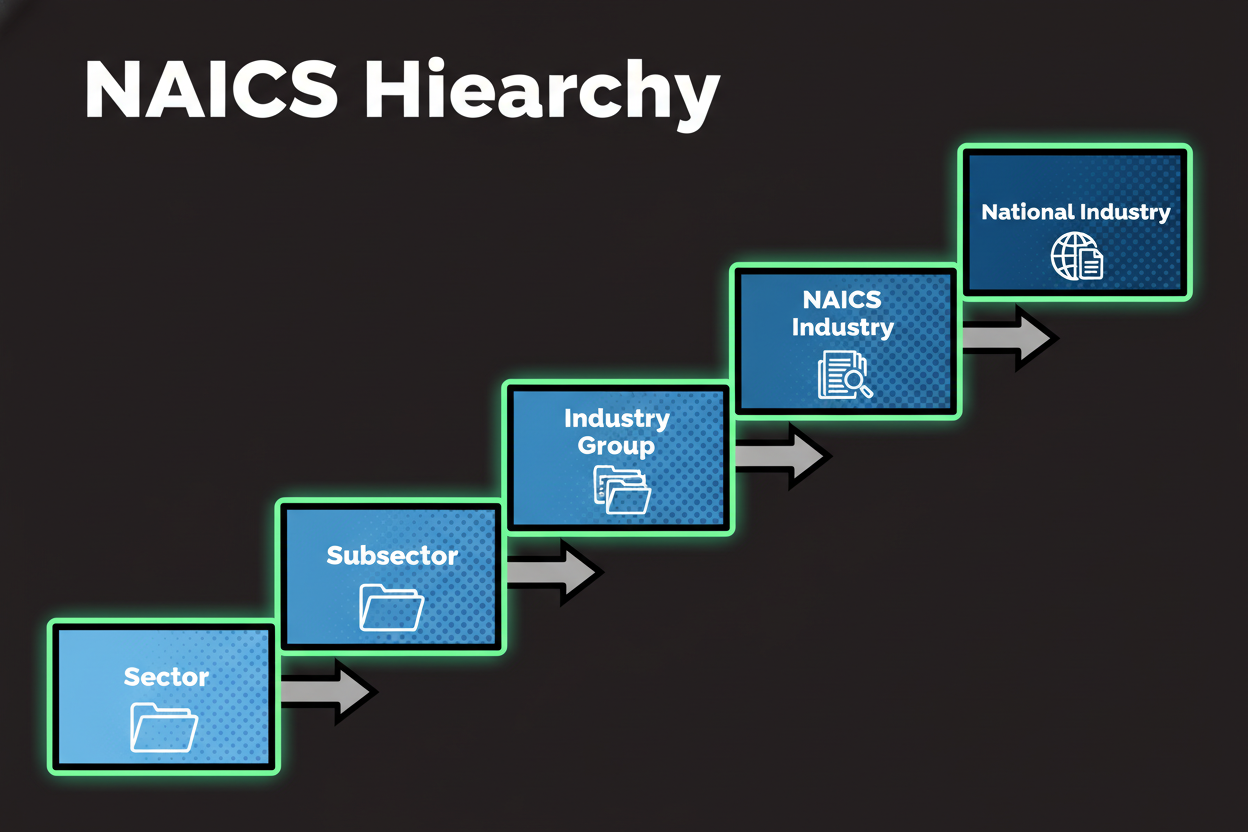
    Simple staircase diagram: 2-digit Sector → 3-digit Subsector → 4-digit Industry Group → 5-digit NAICS Industry → 6-digit National Industry, with an example path highlighted

    Horizontal timeline with three labeled points: Legacy SIC → Transition with Concordances → Modern NAICS; arrows indicate mapping and updates

    Feature NAICS SIC
    Digit length 2 to 6 digits 2 to 4 digits
    Orientation Production-based; detailed national industries Older structure; broader groupings
    Primary U.S. use Federal statistics, contracting, SBA size standards SEC filings; some legacy systems
    Official lookup Census NAICS search and definitions SEC SIC list; OSHA SIC manual
    Crosswalks Official concordances available Map to NAICS via concordances

    [reference:1][reference:3][reference:7][reference:8]

    What is the difference between NAICS and SIC codes?
    NAICS is a modern, production-oriented system with 2 to 6 digits used by most U.S. agencies for statistics, contracting, and size standards. SIC is an older 2 to 4 digit system still used in contexts like SEC filings and some legacy databases. Use NAICS for most government reporting and SIC when a specific system requires it. [reference:1][reference:7][reference:8]

    A few specifics make the distinction concrete. NAICS definitions include example activities and exclusions, helping you avoid look-alike industries that sound similar but operate differently. NAICS covers over 1,000 detailed national industries, offering finer granularity for analysis and reporting. By contrast, SIC groups are broader, which is why two companies that look identical in a modern market can fall into the same SIC but different NAICS codes based on how they produce value [reference:1][reference:2][reference:7].

    Mini-example: A craft beverage company makes and sells its own product in a tasting room. Operationally, its primary activity might be beverage manufacturing under NAICS, not retail. But in SEC-style comparisons using SIC, it could be grouped with a broader beverage or consumer category. To reconcile across datasets, the company uses the official concordance to map its SIC reference to the appropriate NAICS for internal reporting [reference:3][reference:7][reference:1].

    • NAICS is production-based, so choose codes by what you primarily produce or deliver, not just where you sell [reference:2]
    • SIC still appears in SEC filings and some compliance tools, so keep a crosswalk handy [reference:7][reference:8][reference:3]
    • NAICS has deeper detail at 6 digits, which supports analytics and size-standard checks [reference:1][reference:6]
    • Official NAICS definitions include examples and exclusions – read them fully before deciding [reference:1]
    • Use concordances to translate SIC to NAICS or align older NAICS versions with your current records [reference:3]

    With the fundamentals in place, here’s a precise method to identify the right code the first time.

    How to Identify the Correct NAICS and SIC Codes for Your Business

    How do I find my NAICS code?
    Use the official Census NAICS search, enter your core products or services, open candidate 6-digit industries, read full definitions and example activities, and select the code that best matches your primary revenue-generating activity. Document your rationale and check SBA size standards [reference:1][reference:2][reference:6].

    Start with how classification works. NAICS is assigned at the establishment level – a single location where business is conducted. Your primary activity is the one that accounts for the largest share of production or revenue. If your company has multiple establishments, each location can have its own primary NAICS based on what it actually does day to day. That’s why it’s common for a diversified enterprise to carry more than one NAICS across its footprint, even though each establishment has one primary code [reference:2].

    The fastest path is through the official Census NAICS website. Use the search tool, try a few different keywords for your main products or services, and open the candidate industries. Don’t stop at the title. Read the full definition. Look at the example activities and any explicit exclusions. Cross-references often point you to a better fit you didn’t think to search for initially [reference:1].

    If federal contracting is in scope for you, pull up the SBA Table of Size Standards for the chosen NAICS. Confirm which metric applies – average annual receipts or number of employees – and note the threshold. This helps you anticipate your small-business status for solicitations that carry that NAICS and size standard. Remember, contracting officers assign one NAICS per solicitation, and SBA eligibility hinges on that assignment and the corresponding threshold [reference:6][reference:5][reference:11].

    Some systems still ask for SIC. When that happens, use the SEC’s official SIC list or OSHA’s SIC manual. If you only know your NAICS, use the Census concordance to identify the best SIC analog. If you only know your SIC, map to NAICS using the same crosswalks, then validate by reading the target NAICS definitions and examples [reference:7][reference:8][reference:3].
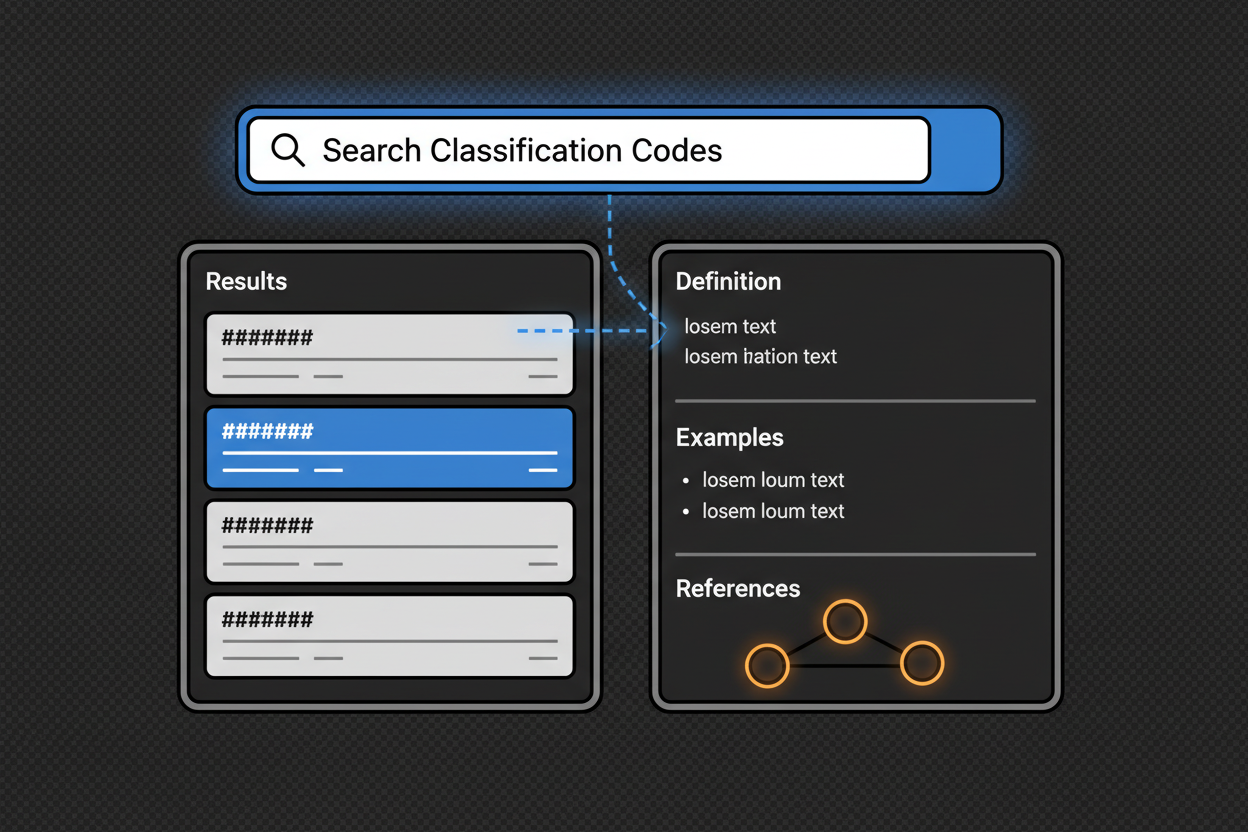
    Mock search interface: search bar with keyword entry, results list with 6-digit codes, side panel showing full definition, example activities, and cross-references highlighted

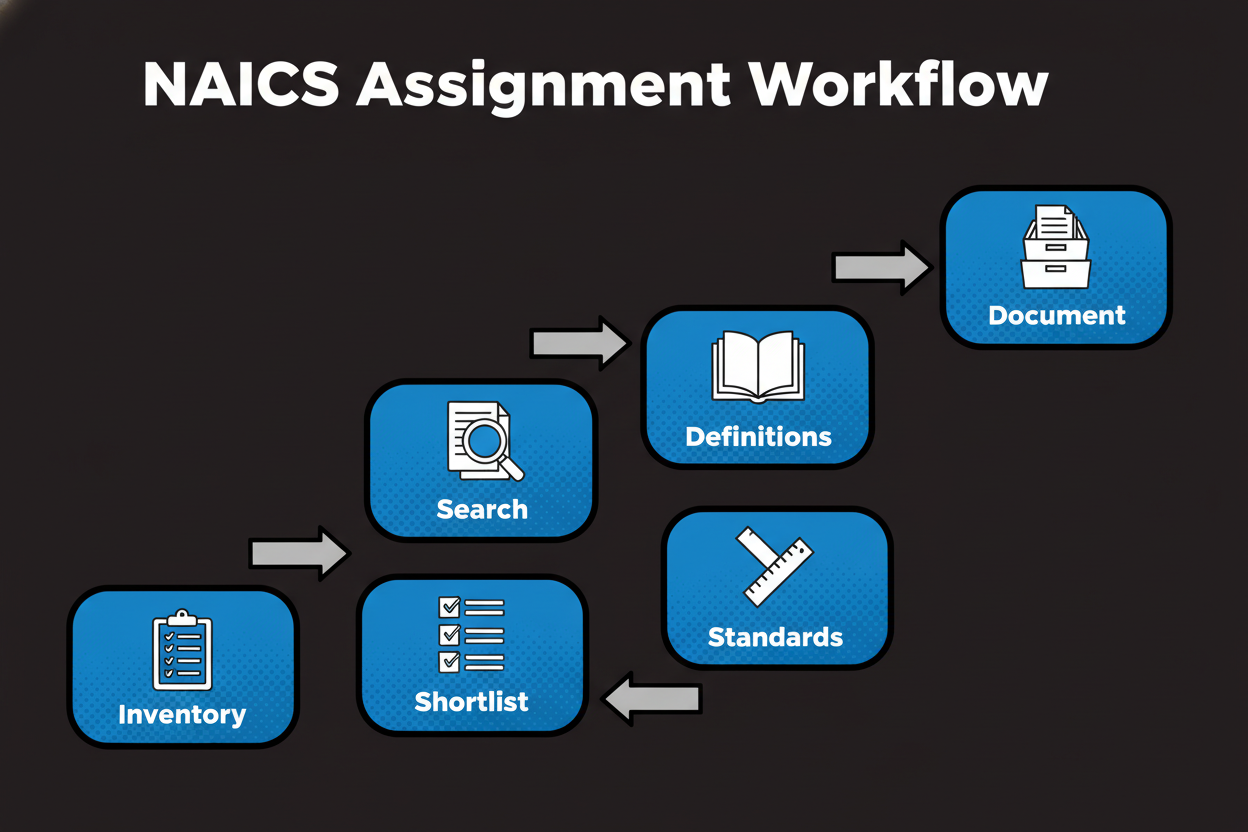
    Numbered flowchart with six nodes: Inventory Activities → Keyword Search → Read Definitions → Shortlist Codes → Check SBA Size Standards → Document and Update Records

    • Inventory your activities and revenue mix per establishment – identify the primary revenue-generating activity [reference:2]
    • Use the official Census NAICS search – test multiple keywords and synonyms for your core offerings [reference:1]
    • Open full 6-digit definitions – read examples, inclusions, and exclusions; follow cross-references to better fits [reference:1]
    • Shortlist 2-3 candidates and document why you accept one and reject others; keep links or screenshots for your file [reference:1][reference:2]
    • Check SBA size standards for your chosen NAICS if you plan to bid, partner, or certify as small; note the metric and threshold [reference:6][reference:5]
    • If a partner or form requires SIC, look it up via SEC or OSHA and crosswalk it to NAICS using official concordances [reference:7][reference:8][reference:3]
    • Update your records consistently – IRS principal activity code, SAM.gov profile, and any state or lender forms should match your chosen NAICS [reference:9][reference:12]

    Mini walkthrough: Say you’re a marketing agency. You list services: campaign strategy, media buying, SEO, creative production. You check revenue – maybe 60 percent comes from campaign management and media buying. In the Census NAICS search, you test “advertising,” “media buying,” and “marketing services.” You open several 6-digit options, then read definitions to see which one covers your primary activity and includes example activities that mirror your work. You note two alternates that sounded right but exclude media buying as a primary service. You choose the best-fit NAICS, then open the SBA size standards table to confirm the receipts or employee threshold you’d face in solicitations carrying that code. You document the rationale and update SAM.gov and your internal records accordingly [reference:1][reference:6][reference:12].

    Two practical guardrails keep you out of trouble. First, don’t pick a code to game SBA size standards. The regulation expects the NAICS to reflect the principal purpose of the work described in a solicitation, and misalignment can create eligibility issues and credibility concerns [reference:6][reference:11]. Second, your NAICS code on tax filings helps the IRS understand your business activity and for statistical purposes, but it does not determine how much tax you owe. Choose it to reflect reality, not to change your tax bill [reference:9].

    Once you’ve selected a code, managing it over time is just as important. If your revenue mix or operations shift, revisit your classification with the same disciplined process and update your systems so everything stays in sync.

    Advanced Strategies: Managing Codes for Multi-Industry and Evolving Businesses

    Once your code is set, the real work starts: keeping it accurate as your business changes. The NAICS rules classify at the establishment level, not only the enterprise. Each location has one primary activity based on the largest share of production or revenue. Secondary activities can be noted internally, but the primary code should follow where most value is created at that site [reference:2].

    Two practical ways to weight activities are revenue share and value added. Revenue share is straightforward: if one activity consistently drives the majority of sales, it likely anchors your primary NAICS. Value added is useful when internal transfers or bundled offerings distort top-line revenue. NAICS guidance supports using the measure that best reflects actual production for the establishment [reference:2].

    When should you update your primary NAICS? Look for material shifts. If a new line grows from 30 percent to 55 percent of an establishment’s revenue for sustained periods, it’s a strong signal to reclassify. New product launches, reorganizations that move production between locations, or a spin-up of a new facility are other clear triggers. The test is simple: does the primary activity, by revenue or value added, still match your current code [reference:2]?
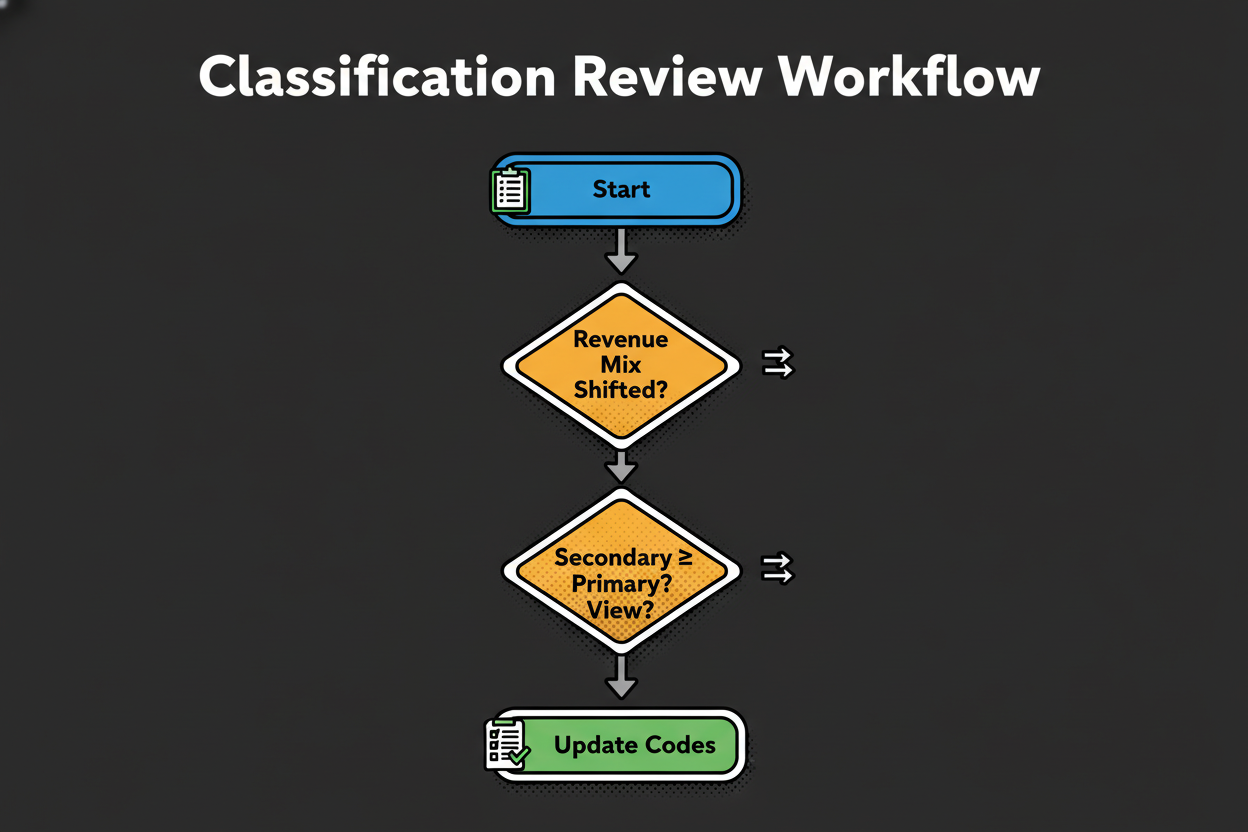
    Decision tree: Start → Has revenue mix shifted? → Are secondary activities ≥ primary? → Establishment-level view? → Update primary or add secondary codes → Revise registrations

    Federal contracting adds a layer you can’t ignore. You can list multiple NAICS in your SAM.gov entity registration to reflect your capabilities. But each solicitation carries one assigned NAICS and a single SBA size standard that governs who is “small” for that opportunity. If an assignment seems off, review the statement of work, compare it to NAICS definitions, and submit a timely question to the contracting officer as allowed by the procurement rules. The regulation directs that one NAICS be assigned per solicitation and provides the framework for these determinations [reference:12][reference:11].

    Hybrid and evolving models benefit from careful reading of definitions. SaaS often aligns with software publishing when your primary activity is producing and monetizing a standardized software product. Custom software projects may align with services-oriented development. Hosting and infrastructure can fall elsewhere. The right choice depends on what you primarily produce, not the marketing language on your site. The official NAICS definitions and cross-references will point you to the best fit if you read them fully [reference:1][reference:2].

    E-commerce versus brick-and-mortar retail is another common fork. If your establishment’s core activity is retailing goods online, classification follows retail rules applicable to electronic shopping. A physical store with on-site sales typically sits in the relevant retail trade category. If you’re a marketplace, definitions and cross-references may point to a different area than a first-party retailer. Always match the definition to what the establishment actually does day to day [reference:1][reference:2].

    As your data spans systems, use concordances to maintain continuity. The Census Bureau publishes official crosswalks that map SIC to NAICS and connect older NAICS versions to newer ones. Build a simple internal mapping table that lists your historical codes and their current equivalents, with links to official definitions. It keeps BI dashboards, finance, and compliance speaking the same language over time [reference:3].
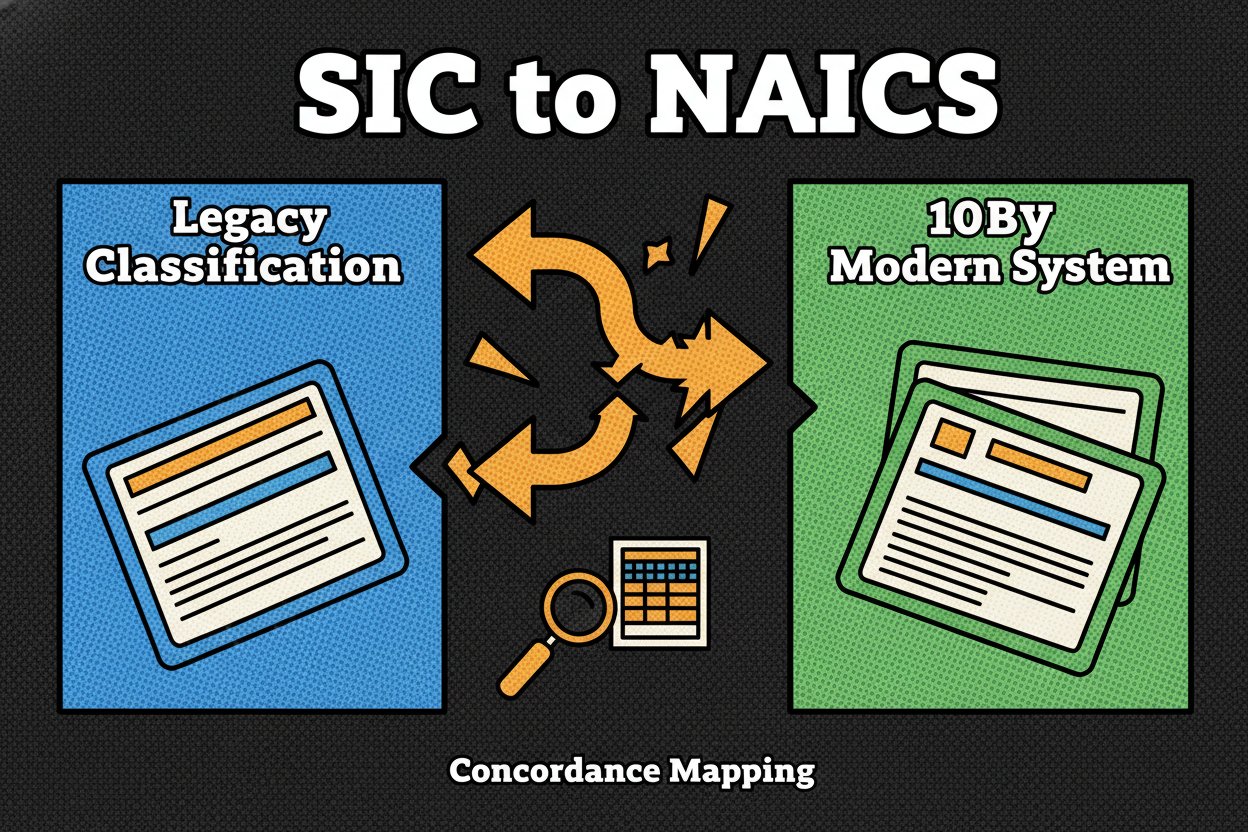
    Side-by-side list: Left column a sample SIC code with description; right column one or more NAICS codes with short descriptions; arrows indicating mapping via concordance

    Case study: A services firm opens a product unit and launches a subscription software tool. At the headquarters establishment, services once represented 70 percent of revenue. Within two planning cycles, the software line grows to 58 percent of that location’s revenue and carries the highest value added. The team updates the HQ establishment’s primary NAICS to reflect software production, retains a secondary internal note for professional services, and revisits small-business status using the SBA table tied to the new code. They remain eligible in some sectors but not others, which guides their bid strategy and teaming decisions [reference:2][reference:6].

    The admin side matters too. When you change a primary NAICS, push the update through your core systems: SAM.gov, state registrations, and any lender or grant records. Keep a short memo with your rationale, revenue tables by establishment, links to official NAICS definitions you relied on, and the SBA size standard reference you checked. That file will save you hours later if a partner, auditor, or contracting officer asks for context [reference:12][reference:6][reference:1].

    • Periodic review framework:
    • Review revenue and value-added shares by establishment; flag shifts of 10 percentage points or more
    • Scan official NAICS definitions; use concordances if your historical code’s scope has changed [reference:3]
    • Recheck SBA size standards for your primary codes if contracting is strategic [reference:6]
    • Confirm one NAICS per active solicitation and raise questions early if the assigned code doesn’t match the principal purpose [reference:11]
    • Refresh SAM.gov and align internal and tax-facing records once decisions are final [reference:12][reference:2]

    Complexity invites errors. In the next section, you’ll see the pitfalls the pros avoid and a simple checklist to keep you on track.

    Common Mistakes and How to Avoid Them

    The most common mistake is picking a code because a competitor uses it or it “sounds right.” NAICS selection should follow your primary activity, measured at the establishment level by revenue or value added, not market perception. If your main work is custom services but you choose a publishing code because the label feels modern, you’ll drift away from the official definitions and invite headaches later [reference:2].

    Another pitfall is ignoring the example activities and exclusions inside the definitions. The right title can still be the wrong code if the examples don’t match how you produce value. The official NAICS pages include cross-references that often send you to a better fit in two clicks. Read them. They’re there for a reason [reference:1].

    Some teams are tempted to choose a code to fit a more favorable SBA size standard. That backfires. Contracting officers assign a single NAICS per solicitation, and small-business status is determined against that code’s standard. If you select a code that doesn’t reflect the principal purpose of work or your primary establishment activity, you risk ineligibility or protest exposure. Better approach: align to the true activity and build your pipeline around opportunities where you legitimately qualify as small [reference:11][reference:6].

    Operational consistency matters. OSHA uses NAICS to determine partial recordkeeping exemptions. A misclassification can add reporting burden you don’t need or, worse, cause you to miss required logs. The IRS asks for your principal business or professional activity code on Schedule C and uses it for processing and statistics. Keep your code truthful and consistent across systems. And remember, NAICS doesn’t change how much tax you owe; it classifies your activity, not your liability [reference:10][reference:9].

    Here’s a quick scenario. A firm applied for a small-business set-aside loan program and targeted federal work. They chose a services code with a low receipts threshold and, based on their current revenue, looked “other than small.” After reviewing their actual work, they updated to a more accurate NAICS that better matched their primary activity and fell under an employee-based threshold. That alignment, confirmed against the SBA table, restored eligibility and focused their capture on the right solicitations [reference:5][reference:6].
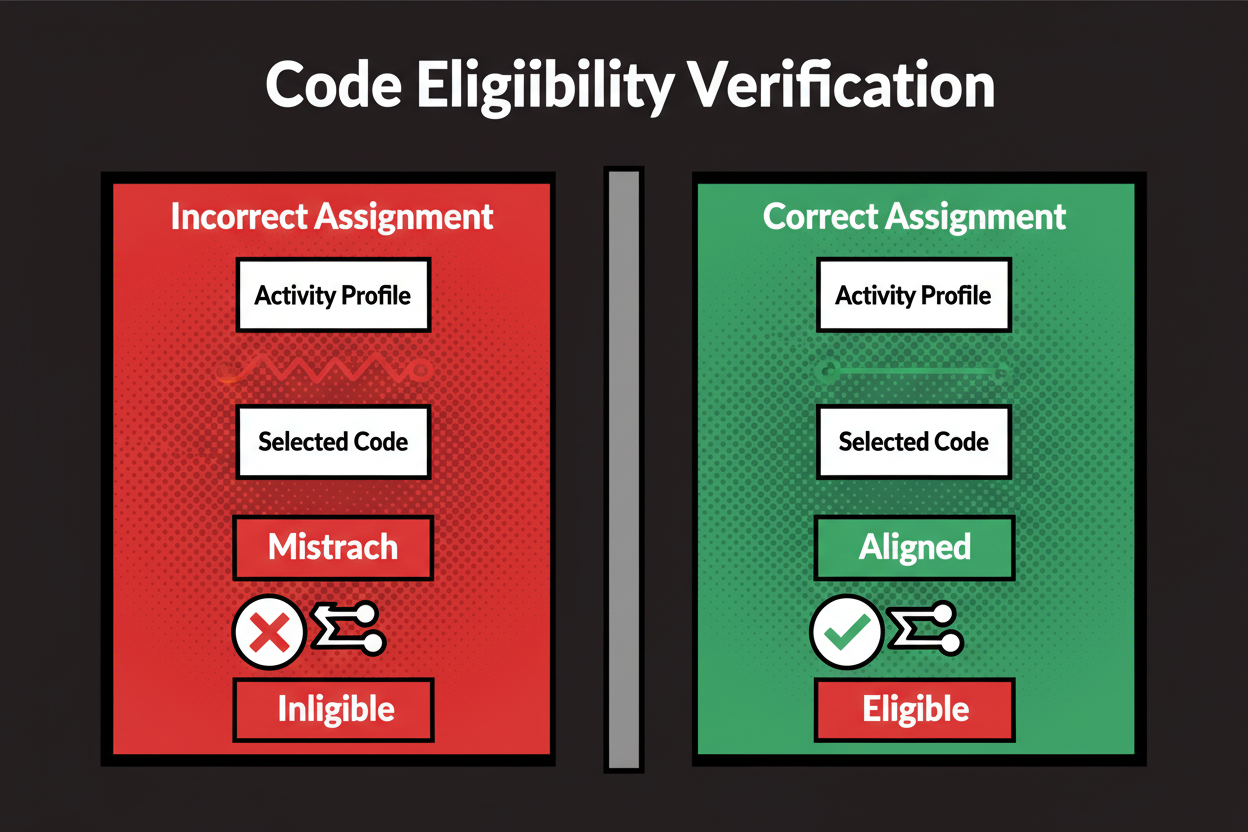
    Split panel: Left 'Incorrect code' shows size standard mismatch and “ineligible”; Right 'Correct code' shows aligned primary activity and “eligible” badge

    Two concrete checks reduce surprises. First, note whether your target size standard is receipts-based or employee-based, because that choice changes your growth runway and reporting prep. Second, bookmark the IRS instructions that ask for the principal business activity code, so your tax team can update it in the next filing cycle without a scramble [reference:6][reference:9].

    • Final validation checklist:
    • Read the full 6-digit NAICS definition, examples, and exclusions before deciding [reference:1]
    • Confirm primary activity at the establishment level by revenue or value added, not brand positioning [reference:2]
    • Verify the SBA size standard for your chosen code and note whether it’s receipts or employees [reference:6]
    • Check OSHA implications, including any partial recordkeeping exemptions tied to your NAICS [reference:10]
    • Align IRS principal activity code, SAM.gov profile, and state records to the same selection [reference:9][reference:12]
    • Write a short internal memo with your rationale, supporting links, and a plan to revisit during annual planning

    Keep this list close. It will save you from last-minute surprises in bids, audits, and filings. Next up, we’ll answer the questions teams ask most so you can keep momentum without second-guessing your choices.

    Frequently Asked Questions About NAICS and SIC Code Identification

    You’ve done the heavy lifting. You understand primary activity, you’ve shortlisted codes, and you’ve sanity-checked size standards. Still, a few practical questions always come up: how to change a code, whether you can have more than one, what to do when an assignment looks off, and how to handle digital models like SaaS or marketplaces.

    Here’s a straight-shot FAQ that mirrors what real teams ask during tax season, SAM.gov updates, and federal bids. Where it helps, we point you to official sources so you can verify in minutes, not hours [reference:1][reference:6][reference:9][reference:11][reference:12].
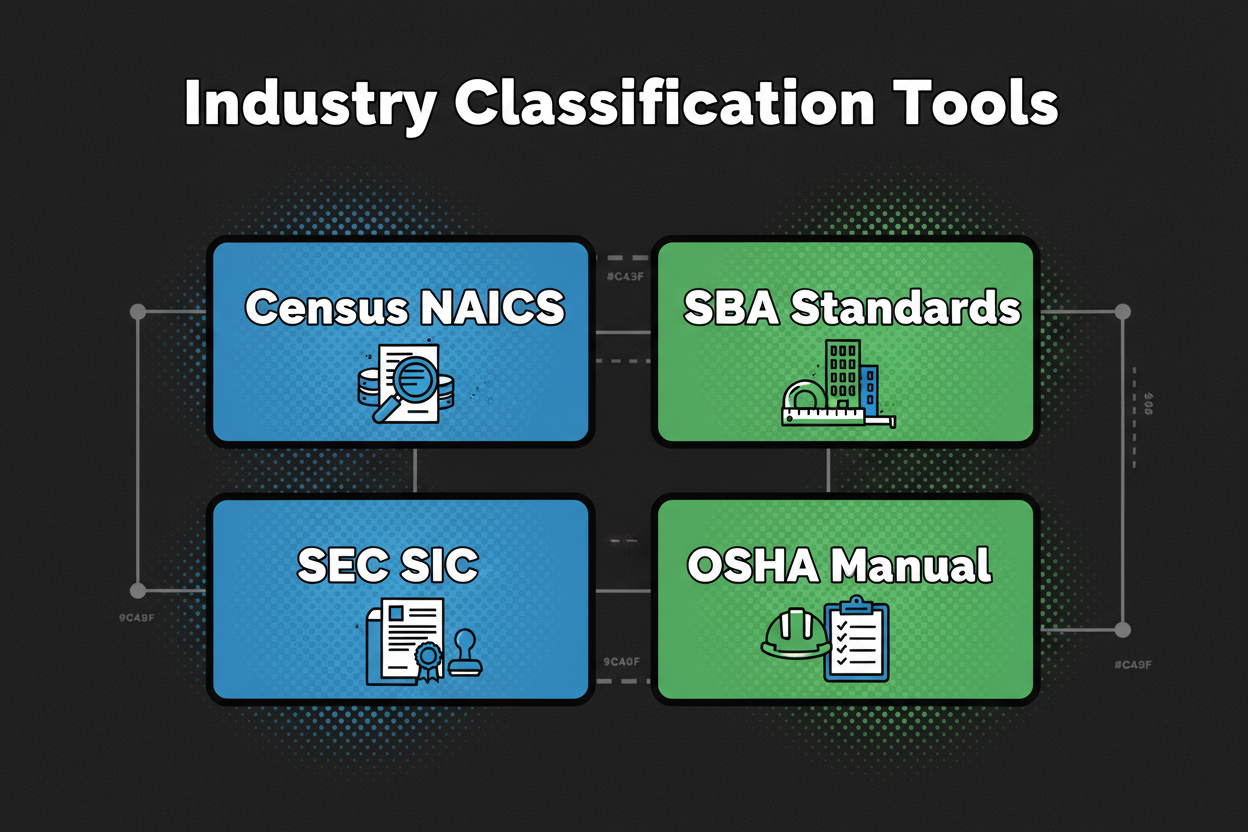
    Grid of four tiles with logos and short labels: Census NAICS Search, SBA Size Standards, SEC SIC List, OSHA SIC Manual

    How do I change my business’s NAICS or SIC code?

    Update your principal business activity code on the next tax filing, adjust your entity profile in government registration portals, and reflect the change in any state or industry systems that store your classification. Keep a short internal memo documenting your rationale and the official definitions you used.

    Changing your code is mostly housekeeping, but do it carefully. Update the IRS principal business activity code in your next filing cycle and match your SAM.gov profile and state records to the same selection for consistency [reference:9][reference:12]. If you operate in multiple states or maintain lender records, mirror the change in those systems too.

    Can a business have more than one code?

    Yes. You can list secondary codes for meaningful lines of activity, but each establishment has one primary code that reflects its main revenue-producing activity. For federal solicitations, a single NAICS is assigned to each opportunity.

    This rule keeps analysis and eligibility simple: one primary per establishment, one NAICS per solicitation. If an RFP’s code doesn’t match the described work, you can ask the contracting officer to review, citing official definitions [reference:2][reference:11].

    What happens if I use the wrong code?

    Misclassification can affect small-business eligibility, safety recordkeeping obligations, and how your data is analyzed. It usually does not change tax owed by itself, but it can cause mismatches and delays. Correct it by selecting the best-fit code based on your primary activity and updating your records.

    Two common symptoms: unexpected OSHA recordkeeping triggers or missed small-business eligibility. Fixing the code and updating your registrations typically resolves both. And again, your NAICS code doesn’t set your tax liability; the IRS uses it for processing and statistics [reference:10][reference:5][reference:9].

    Where can I find official code lookup tools?

    Use the official NAICS search to read full definitions and examples, check small-business size standards by NAICS, consult the SEC SIC list or OSHA SIC manual when a system requires SIC, and use official concordances to map between systems.

    Bookmark these and you’ll save hours in future reviews. The Census NAICS site gives you definitions and examples, the SBA table shows applicable thresholds, and concordances help you translate between systems cleanly [reference:1][reference:6][reference:7][reference:8][reference:3].

    How do I classify SaaS, e-commerce, or marketplaces?

    Choose the code that best reflects your primary activity. Compare definitions for software publishing, custom software services, hosting, retail, or marketplace facilitation. Read example activities and exclusions to confirm the best fit.

    Digital models often span multiple definitions. Read the official NAICS pages in full, paying close attention to inclusions, exclusions, and cross-references. That’s where the right fit reveals itself [reference:1][reference:2].

    Can I challenge a NAICS code in a solicitation?

    Yes. Ask the contracting officer to clarify the assigned NAICS if it does not match the described work. Provide a brief rationale pointing to official industry definitions.

    Time is your friend here. Raise questions during the solicitation window and ground your rationale in official definitions and example activities. Remember, each solicitation carries a single NAICS and the size standard tied to it [reference:11].

    How do I map a SIC code to a NAICS code?

    Use official concordances to identify candidate NAICS codes from a SIC code, then read the NAICS definitions and example activities to pick the best match for your operations.

    This is how you align historical datasets, public filings, and modern operational reporting. Start with the concordance, then validate by reading the NAICS definition end-to-end [reference:3][reference:7][reference:1].

    If you take one thing from this FAQ, let it be this: always read the official definition and examples, then document your reasoning. It protects you when questions arise and keeps your IRS, SAM.gov, OSHA, and contracting workstreams aligned [reference:9][reference:12][reference:10][reference:11].

    Conclusion: Next Steps for Confident Business Classification

    Accurate NAICS and SIC Code Identification isn’t busywork. It shapes your SBA eligibility, your OSHA recordkeeping duties, how the IRS processes your returns, and how contracting officers treat your bids. One thoughtful selection now avoids countless corrections later [reference:5][reference:6][reference:10][reference:9][reference:11].

    Here’s a compact plan you can run this week to lock in a correct, defensible classification.

    • Audit your activities and revenue by establishment; confirm the true primary activity [reference:2]
    • Shortlist candidate NAICS using the official Census search and read full definitions and examples [reference:1]
    • Verify the SBA size standard tied to your chosen NAICS and note receipts vs employees [reference:6]
    • Document your rationale with links to definitions and any concordance mapping you used [reference:3]
    • Update your IRS principal business activity code, SAM.gov profile, and state records [reference:9][reference:12]
    • Schedule a periodic review to catch shifts in revenue mix or new product lines [reference:2]

    Keep your internal memo handy and revisit it as your business evolves. When definitions or data needs shift, use the official concordances to maintain continuity across systems without reinventing your analytics [reference:3]. Do this consistently, and your classification will stop being a hurdle and start working as a lever for growth.

  • Tariff Subheading Explained: How It Affects International Trade Costs

    Tariff Subheading Explained: How It Affects International Trade Costs

    Understanding tariff subheading is crucial for businesses engaged in international trade, as it directly impacts the costs associated with importing and exporting goods. The tariff subheading is a detailed classification within the broader Harmonized System (HS) code framework, which countries use to categorize products for customs purposes. This article will explain what a tariff subheading is, how it functions in international trade, and why accurate classification matters for controlling trade expenses.

    What Is a Tariff Subheading?

    A tariff subheading is a specific numerical code that falls under the more general tariff heading used in customs documentation. The Harmonized System, maintained by the World Customs Organization, organizes goods into chapters and headings identified by six-digit HS codes. Countries often extend these codes with additional digits, creating subheadings to describe products in finer detail.

    For example, the HS code might classify "fruit" broadly, while the tariff subheading distinguishes between "fresh apples" and "dried apples." This level of detail helps customs authorities apply the correct tariffs, quotas, or regulatory measures.

    Why Tariff Subheadings Matter in International Trade

    The tariff subheading determines the tariff rate applied to goods when crossing borders. Different subheadings, even within the same product category, can incur vastly different duties due to variations in trade agreements, domestic policies, or anti-dumping measures.

    • Accurate Duty Calculation: Precise classification ensures you pay the correct duty amount, avoiding costly overpayments or penalties.
    • Compliance: Customs authorities require accurate tariff subheadings to verify compliance with trade laws.
    • Trade Negotiations: Tariff subheadings are used during trade negotiations to lower tariffs on specific goods.
    • Market Access: Some tariff subheadings may be eligible for preferential treatment under trade agreements, such as zero tariffs or reduced rates.

    How Tariff Subheading Affects International Trade Costs

    Tariff subheadings influence international trade costs in several ways:

    1. Tariff Rates Differ by Subheading

    Each tariff subheading correlates with a tariff percentage or a fixed fee. Even small differences can significantly impact the landed cost of a product. For example, electronics might have a 5% tariff under one subheading but 10% under another, affecting your pricing and competitiveness.

    2. Additional Duties and Taxes

    Certain tariff subheadings trigger extra charges like anti-dumping duties, countervailing duties, or luxury taxes, further increasing import costs.

    3. Customs Compliance Costs

    Misclassification of products by tariff subheading can lead to audits, fines, or shipment delays, adding unexpected expenses.

    4. Eligibility for Free Trade Agreements (FTAs)

    Proper classification by tariff subheading is essential for taking advantage of tariff reductions offered under FTAs such as NAFTA, USMCA, or the EU’s agreements with third countries.

    How to Correctly Identify Your Product’s Tariff Subheading

    Identifying the correct tariff subheading requires detailed knowledge of your product and the relevant classification system. Here’s a streamlined approach:

    1. Gather Detailed Product Information: Specifications, material composition, end use, and manufacturing processes.
    2. Consult the Harmonized System Database: Start with the six-digit HS code related to your product category.
    3. Refer to National Extensions: Identify additional digits used by your country to form the complete tariff subheading.
    4. Use Online Classification Tools: Websites like classifast.com offer instant classification and category searching for tariff codes such as UNSPSC, NAICS, ISIC, and HS codes from text descriptions.
    5. Consult Customs or Trade Experts: When in doubt, seek professional advice to ensure your classification is accurate.

    Key Benefits of Using Classification Tools like Classifast

    Classifast.com is an invaluable resource for businesses needing quick and accurate tariff subheading identification. It simplifies the process by allowing users to enter a product description and instantly retrieve relevant UNSPSC, NAICS, ISIC, ETIM, or HS codes. This reduces the risk of misclassification and speeds up customs processing, ultimately lowering the chances of incurring unexpected tariffs or fees.

     Close-up of tariff documents, international trade goods exchanging hands across borders

    Example: Tariff Subheading Impact on Imported Electronic Goods

    Imagine importing a variety of electronic devices. The tariff subheading for "smartphones with touchscreens" may differ from "basic mobile phones." Under the same HS chapter for telecommunications equipment, one subheading may attract a 0% tariff under a trade agreement, while the other carries a 5% import duty.

    This distinction affects the overall landed cost, pricing strategies, and market competitiveness. Ensuring your electronic products are classified accurately can mean significant savings and smoother customs clearance.

    Summary: The Importance of Correct Tariff Subheading in International Trade

    • Tariff subheadings are detailed categorizations within the HS code system, used to apply appropriate tariffs.
    • They impact the duties and taxes you pay and may determine eligibility for trade benefits.
    • Misclassification can lead to penalties, shipment delays, and higher costs.
    • Tools like classifast.com help streamline classification and reduce errors.

    FAQ Section

    Q1: What is the difference between a tariff heading and a tariff subheading?
    A tariff heading is a broad classification within the Harmonized System, typically six digits, while a tariff subheading extends this code with additional digits for finer product differentiation.

    Q2: How can a tariff subheading affect import duties?
    Different subheadings may carry different tariff rates; therefore, classifying a product under the correct subheading ensures the right duty amount is applied.

    Q3: Where can I find the correct tariff subheading for my product?
    You can consult national customs databases, international HS code directories, or use tools like classifast.com for quick and accurate classification.

    Further Reading

    For more detailed information on tariff classifications and their impact on global trade, refer to the World Customs Organization’s official publications (source).


    Understanding the tariff subheading is not just a bureaucratic necessity—it’s a strategic tool that can help optimize your international trade costs. Take control today by accurately classifying your products and leveraging smart tools like classifast.com. Start reducing unnecessary trade expenses and ensuring compliance now!

  • Understanding the HS Coding System: A Key to Global Trade Compliance

    Understanding the HS Coding System: A Key to Global Trade Compliance

    In today’s global marketplace, the HS coding system plays an essential role in facilitating international trade, ensuring compliance with customs regulations, and enhancing the efficiency of supply chains. Whether you’re a business owner, customs broker, or logistics professional, understanding the HS coding system is crucial to navigating import and export processes smoothly. This article will delve into what the HS coding system is, how it works, and why it is vital for global trade compliance.

    What Is the HS Coding System?

    The HS coding system, or Harmonized System, is an internationally standardized numerical method of classifying traded products. Developed and maintained by the World Customs Organization (WCO), the HS system is used by over 200 countries worldwide to categorize goods when they cross borders. Its primary purpose is to provide a universal language that facilitates trade statistics, customs duties, and tariff applications.

    The system assigns a specific code — usually six digits — to every product based on its material composition, use, or nature. These codes are essential for customs clearance, tariff classification, and regulatory compliance. Countries may further extend these codes to more digits for additional specificity, commonly referred to as HS Codes or tariff codes.

    How Does the HS Coding System Work?

    The HS coding system operates by dividing all traded goods into chapters, headings, and subheadings:

    • Chapters: The first two digits indicate the chapter, representing broad product categories like live animals or machinery.
    • Headings: The next two digits specify a heading within the chapter, such as specific types of vegetables or electronics.
    • Subheadings: The final two digits in the six-digit code provide detailed classification within the heading, specifying variations or further product differentiation.

    For instance, the code 0101.21 corresponds to “purebred breeding horses.” This detailed hierarchical structure allows customs authorities to identify and categorize products precisely.

     business professionals analyzing HS codes on digital tablet, global trade background, compliance symbols

    Why the HS Coding System Is Critical for Trade Compliance

    The HS coding system is indispensable for various reasons tied to trade compliance:

    1. Customs Duty and Taxation

    Customs tariffs and taxes are calculated based on the HS codes assigned to imported or exported goods. Misclassification can lead to overpayment or penalties. Accurate HS codes ensure you pay the correct duties and avoid costly fines.

    2. Trade Statistics and Policy Making

    Governments rely on HS codes to compile trade statistics, which influence economic policies, trade agreements, and quota enforcement.

    3. Regulatory Compliance

    Certain products fall under specific regulatory controls, such as hazardous chemicals or pharmaceuticals. Correct HS coding helps regulatory authorities enforce restrictions and controls reliably.

    4. Efficient Customs Clearance

    Proper use of HS codes expedites customs clearance by reducing confusion and disputes, allowing goods to move swiftly across borders.

    How to Accurately Classify Products Using the HS Coding System

    Classifying products using the HS coding system can sometimes be complex, particularly for goods that have multiple uses or components. Here are some best practices to help with accurate classification:

    1. Consult the Official WCO HS Nomenclature: The World Customs Organization provides comprehensive documentation on HS codes.
    2. Analyze the Product Description Thoroughly: Understand the object, material, and function of the good.
    3. Use Product Classification Tools: Online classifiers can simplify your work by suggesting the correct HS codes based on a product description.
    4. Consult Customs Experts: When in doubt, seek advice from trade compliance specialists.
    5. Review Country-Specific Extensions: Remember that some countries add extra digits to the six-digit code for deeper categorization.

    One excellent resource is Classifast.com, a service that enables quick and precise classification of any text description according to international standards like HS, UNSPSC, and NAICS. This instant classifier can save time and improve accuracy in classifying products, ensuring compliance with global trade regulations.

    Benefits of Proper HS Code Classification

    Accurate classification according to the HS coding system can deliver multiple benefits for your business:

    • Reduce Risk of Customs Penalties: Avoid fines or shipment delays caused by misclassification.
    • Optimize Duty Payments: Pay the exact customs duties owed without overpaying.
    • Enhance Supply Chain Efficiency: Speed up customs processing and reduce paperwork.
    • Comply with Trade Agreements: HS codes are essential in applying preferential tariffs under trade treaties.
    • Improve Data Reporting: Provide precise data that helps in business forecasting and analytics.

    Common Challenges in Using the HS Coding System

    While the HS coding system is globally recognized, businesses often face challenges in using it correctly:

    • Complex Product Descriptions: Multi-component or hybrid products may be difficult to classify.
    • Frequent Updates: The HS system is updated regularly, requiring ongoing monitoring.
    • Variations in Country-Specific Codes: Some countries add additional digits to the base HS code.
    • Misinterpretations: Different interpretations of codes can lead to disputes with customs.

    To overcome these challenges, businesses should leverage technological tools and expert consultations to maintain compliance and accuracy.

    FAQs About the HS Coding System

    Q1: What is the difference between the HS coding system and tariff codes?
    A1: The HS coding system provides the standardized 6-digit codes for product classification internationally. Tariff codes may include additional digits added by countries for further specification, based on the HS base code.

    Q2: How often is the HS coding system updated?
    A2: The World Customs Organization typically reviews and updates the HS codes every five years to reflect changes in technology and trade patterns.

    Q3: Can I classify any product myself using the HS coding system?
    A3: While basic classifications can be done independently, complex products often require expert input or the use of classification tools like Classifast.com to ensure accuracy.

    Conclusion

    Mastering the HS coding system is a pivotal step towards achieving global trade compliance. Accurate classification under this system not only facilitates smoother customs procedures but also ensures you remain on the right side of regulations—protecting your business from costly delays and penalties. With the complexity inherent in product classifications and the dynamic nature of the HS system, leveraging resources like Classifast.com can dramatically simplify the process and boost your efficiency.

    Whether you’re an importer, exporter, or trade compliance professional, take charge today by adopting effective classification practices and tools. By doing so, you will safeguard your global operations and unlock opportunities in international markets with confidence.


    For more detailed and instant product classification, visit Classifast.com and ensure your trade compliance is always on point.


    Reference: World Customs Organization (WCO) Harmonized System Overview – wcoomd.org

  • Understanding the Government Supply Code: Essential Guide for Businesses

    Understanding the Government Supply Code: Essential Guide for Businesses

    For businesses looking to work with government agencies, understanding the government supply code is crucial. These codes serve as standardized identifiers that classify products and services purchased by government entities. Familiarity with the government supply code system can streamline procurement processes, ensure compliance, and facilitate smoother contract execution. In this essential guide, we will explore what the government supply code is, why it matters, and how your business can leverage this knowledge to gain an advantage in public sector contracting.

    What Is the Government Supply Code?

    The government supply code is a standardized coding system used by government agencies to classify and identify products and services. It helps organize procurement activities, making it easier to search and track purchases. Two of the most commonly used government supply coding standards include:

    • UNSPSC (United Nations Standard Products and Services Code): A global classification system that categorizes products and services into a hierarchical structure.
    • NAICS (North American Industry Classification System): Primarily used in North America, this system classifies businesses by industry for statistical purposes, but it is also frequently used in government contracting.

    These coding systems promote transparency and efficiency in government procurement, facilitating the selection of vendors and simplifying reporting requirements.

    Why Understanding the Government Supply Code Matters for Businesses

    If your business aims to supply products or services to government agencies, grasping how to use the government supply code can provide several important benefits:

    • Improved Visibility: Government procurement portals, such as those on FedBizOpps or SAM.gov in the U.S., rely on supply codes for search and filtering. Assigning the correct government supply code to your offerings increases your chances of being discovered by government buyers.
    • Compliance and Accuracy: Proper classification ensures that your contract proposals and invoices align with government standards, reducing risks of bid rejection or payment delays.
    • Competitive Advantage: By understanding the nuances of supply codes, your business can better match products and services to specific government needs, building stronger proposals.
    • Streamlined Procurement Process: Accurate coding helps contracting officers quickly identify suitable vendors, expediting award decisions and contract administration.

    How to Identify the Correct Government Supply Code for Your Business

    Selecting the right government supply code can be challenging, especially if your products or services span multiple categories. Here are some practical steps to assist your business in identifying appropriate codes:

    1. Define Your Primary Offerings: Clearly list your products and services to understand what categories they fall into.
    2. Research Relevant Codes: Use official classification tools or websites. For example, the UNSPSC website provides detailed code descriptions.
    3. Utilize Classification Tools: Services like classifast.com offer instant classification and category search for a variety of standards including UNSPSC, NAICS, ISIC, and more. Simply input your product or service description, and the platform generates precise classification codes.
    4. Cross-Reference Multiple Systems: Because different agencies may prefer specific codes (e.g., NAICS for U.S. agencies), mapping your offerings to multiple systems ensures broad applicability.
    5. Consult Industry Experts or Advisors: Experts familiar with government procurement can help validate your selections.

    By rigorously identifying the right government supply code, your business reduces errors and maximizes opportunities in government contracting.

    Common Government Supply Code Systems and Their Uses

    Here is an overview of the prominent supply code systems and how they fit into government procurement:

    Classification System Description Common Usage
    UNSPSC Hierarchical coding of products/services worldwide Federal and international government procurements
    NAICS Industry-based classification for US, Canada, and Mexico Economic analysis, contracting in North America
    ISIC UN system classifying economic activities globally Statistical and registration purposes internationally
    ETIM Technical product classification Electrical and mechanical equipment procurement
    HS (Harmonized System) International customs classification Import/export compliance and tariffs

    Understanding which classification system your targeted government agency prefers aids in accurate coding and communication.

    Tips to Optimize Government Contract Bidding with Government Supply Codes

    When bidding on government contracts, leveraging supply codes effectively can enhance your success rate:

    • Accurate Code Assignment: Double-check that the codes you use perfectly match your products or services.
    • Use Multiple Codes When Appropriate: If your offerings fit into more than one category, listing additional relevant codes can increase visibility.
    • Keep Up-to-Date: Classification systems periodically update—ensure your codes reflect the latest versions.
    • Use Reliable Classification Tools: Tools like classifast.com simplify classification and help avoid mistakes.
    • Align Proposals with Codes: When crafting bids, explicitly mention the government supply codes relevant to your offerings.

    Example: How Government Supply Codes Simplify Procurement

    Imagine a company supplying cybersecurity software solutions to government agencies. Using the correct UNSPSC code for "Software" and NAICS code for "Computer Systems Design Services" helps government buyers quickly locate the company’s offerings during procurement searches. This precise classification accelerates vendor selection and contract awards. Moreover, proper coding ensures compliance with government reporting systems and contract documentation.

     modern office desk with government code books, computer displaying supply regulations, focused atmosphere

    Useful Resources and Tools

    • Classifast.com: An instant classifier and category search service for UNSPSC, NAICS, ISIC, ETIM, and HS codes. By inputting any text description, businesses can quickly obtain accurate government supply codes, saving time and improving accuracy.
    • Federal Procurement Data System (FPDS): Provides data on government contracts and codes in use.
    • SAM.gov: The U.S. government’s official contract opportunity portal where proper use of supply codes enhances proposal visibility.

    FAQ: Understanding Government Supply Code Variations

    Q1: What is the difference between the government supply code and NAICS?
    The government supply code is a general term often referring to classification systems like UNSPSC or NAICS. NAICS specifically identifies industries, whereas the government supply code can include detailed product and service categories.

    Q2: How do I find the correct UNSPSC code for my product?
    You can use classification websites such as classifast.com to enter product descriptions and receive precise UNSPSC codes instantly.

    Q3: Can one business have multiple government supply codes?
    Yes, a business that offers a variety of products or services should list all relevant supply codes to maximize exposure in government procurement systems.

    Conclusion: Take Control of Your Government Contracting Success Today

    Understanding and correctly utilizing the government supply code is a cornerstone of successful government contracting. By accurately classifying your products and services using authoritative codes such as UNSPSC and NAICS, you improve your business’s visibility, compliance, and competitiveness in the government marketplace.

    Leverage classification tools like classifast.com to quickly identify precise codes for your offerings and stay ahead in the complex world of government procurement. Don’t let classification confusion hold your business back—empower your acquisition strategy and secure government contracts with confidence today.


    For businesses navigating government contracting, mastering the government supply code isn’t optional—it’s essential. Start classifying your products accurately now to unlock new opportunities and drive growth!

    References:
    United Nations Standard Products and Services Code (UNSPSC) – unspsc.org

  • Understanding CPV Procurement Codes: A Complete Guide for Businesses

    Understanding CPV Procurement Codes: A Complete Guide for Businesses

    In today’s global marketplace, effective procurement is essential for businesses looking to optimize their supply chain and identify suitable vendors quickly. One critical tool in this process is CPV procurement codes, which help standardize and classify public procurement activities across Europe. Understanding CPV procurement codes can significantly improve your business’s ability to navigate tender opportunities, streamline purchasing, and enhance compliance with regulatory requirements.

    This article provides a comprehensive guide to CPV procurement codes, explaining their purpose, structure, and practical uses in business procurement. We’ll also explore tools like classifast.com that simplify classifying products and services according to international standards, including CPV codes.

    What Are CPV Procurement Codes?

    CPV stands for Common Procurement Vocabulary, a standardized classification system used primarily by public authorities within the European Union to describe the subject of contracts. CPV procurement codes are numerical codes assigned to specific goods, services, or works being procured, creating a uniform language for procurement activities.

    Developed by the European Commission, the CPV system facilitates transparent, efficient, and competitive tendering by ensuring all parties use consistent terminology. This helps suppliers find relevant contract opportunities and public buyers communicate requirements clearly.

    Key Characteristics of CPV Codes:

    • Hierarchical structure: From general categories to specific items
    • 8-digit codes: Comprising a main code of 8 digits plus a control digit for validation
    • Comprehensive coverage: Including works, supplies, and services across diverse sectors

    Structure of CPV Procurement Codes

    CPV codes have a distinct structure designed to categorize procurement items clearly and logically:

    Part Description Example
    Main vocabulary 8 digits indicating the product/service category 30124500 (Laptops)
    Supplementary vocabulary Optional codes adding extra detail such as material or brand 30124500-1 (Laptops with SSD)

    The first two digits define the division, followed by further digits pinpointing the group, class, and category. This hierarchy helps buyers specify contract subjects precisely, and suppliers identify opportunities aligned with their offerings.

    Why CPV Procurement Codes Matter for Businesses

    1. Simplifies Tender Search and Notification

    Many public procurement portals use CPV codes to filter tenders. Businesses that understand CPV procurement codes can quickly pinpoint relevant bids, increasing chances to win contracts.

    2. Ensures Compliance and Transparency

    Using CPV codes is often mandatory in EU public tenders to promote transparency and fairness. Correct classification helps a business’s submissions avoid disqualification based on inaccurate descriptions.

    3. Improves Data Management and Analysis

    Standardized codes allow companies and government bodies to analyze procurement patterns, control budgets, and enhance supply chain decisions.

    4. Facilitates International Trade

    CPV codes align with multiple classification systems, making it easier for businesses to participate in tenders across European countries without confusion.

    How to Use CPV Procurement Codes Effectively in Your Business

    Step 1: Identify Your Product or Service

    Start by clearly defining what you offer. The more precise you are, the easier it will be to find the matching CPV code.

    Step 2: Search for Relevant CPV Codes

    You can browse official CPV code directories or use classification tools. Websites like classifast.com provide instant classification services and category searches for CPV and other global standards, helping you find the most accurate procurement codes by entering your product or service description.

    Step 3: Apply Codes to Tenders and Documents

    Whenever submitting a bid or preparing procurement paperwork, include the appropriate CPV codes. This improves discoverability and compliance.

    Step 4: Stay Updated on CPV Code Changes

    The CPV classification system may be revised periodically. Keeping current ensures your codes remain valid and effective.

    Tools to Simplify CPV Code Classification

    Manually navigating CPV codes can be complex. Several platforms help streamline this process:

    • Classifast.com: Offers an instant classifier and category search for CPV codes, as well as other international standards like UNSPSC, NAICS, ISIC, ETIM, and HS codes. Just input a text description, and it quickly provides accurate classifications.
    • EU Public Procurement Portals: Often have searchable CPV databases for tenders.
    • Official CPV Documentation: The European Commission publishes CPV code lists and guides for reference.

    By leveraging these tools, businesses save time and avoid costly classification errors in their procurement workflows.

     Detailed infographics displaying CPV procurement codes in a corporate office setting

    CPV Procurement Codes vs Other Classification Systems

    While CPV codes are specific to European public procurement, other international classification standards include:

    • UNSPSC (United Nations Standard Products and Services Code): Broadly used globally in private and public sectors.
    • NAICS (North American Industry Classification System): Predominantly in North America.
    • HS (Harmonized System): Focused on customs and tariffs worldwide.

    Understanding where CPV fits among these systems helps enterprises align their internal catalogs and participate in diverse procurement markets seamlessly.

    Summary: Advantages of CPV Procurement Codes

    • Standardization ensures clear communication between buyers and suppliers.
    • Efficiency speeds up tender searches and evaluation.
    • Compliance meets EU regulatory requirements.
    • Market Access opens doors to public contracts across EU member states.
    • Data Insights enable better procurement planning and reporting.

    Frequently Asked Questions About CPV Procurement Codes

    1. What is the primary purpose of CPV procurement codes?

    CPV procurement codes standardize the description of products, services, and works within public tenders in the EU, making procurement processes more transparent and efficient.

    2. How can I find the correct CPV code for my business’s offerings?

    Use classification tools like classifast.com by entering your product or service description. Alternatively, consult official CPV directories provided by the European Commission.

    3. Are CPV procurement codes used outside Europe?

    CPV codes are primarily for EU public sector procurement but are often referenced internationally due to their detailed classification. For non-European markets, businesses may use alternatives like UNSPSC or NAICS.

    Authoritative Source

    For official details and complete CPV code listings, refer to the European Commission’s CPV section on the EU Public Procurement website (source).

    Conclusion

    Understanding CPV procurement codes is vital for businesses looking to compete successfully in the European public procurement market. Accurate use of these codes improves tender visibility, ensures compliance, and streamlines purchasing processes. Tools like classifast.com provide quick and reliable CPV classification, enabling businesses to stay competitive and efficient.

    Take the next step in optimizing your procurement strategy by mastering CPV procurement codes today. Visit classifast.com to quickly identify the precise codes matching your products or services, and unlock new tendering opportunities across Europe’s public sector. Don’t let the complexity of classification slow you down—empower your business with the right tools now!

  • Understanding the NACE Codes Hierarchy: A Complete Business Classification Guide

    Understanding the NACE Codes Hierarchy: A Complete Business Classification Guide

    When navigating the world of business classification, understanding the NACE codes hierarchy is essential. NACE codes are a standardized system used across the European Union to categorize economic activities systematically. This classification enables businesses, government agencies, and researchers to analyze economic data accurately and efficiently. In this guide, we will delve into the intricacies of the NACE codes hierarchy, explaining its structure, purpose, and how it can aid your business or research needs.

    What Are NACE Codes?

    NACE codes stand for Nomenclature statistique des Activités économiques dans la Communauté Européenne, or the Statistical Classification of Economic Activities in the European Community. These codes were developed by Eurostat to create a consistent framework for classifying business activities across the European Union.

    The primary purpose of the NACE system is to:

    • Assist in economic data collection and analysis
    • Facilitate comparability of statistics between countries
    • Support administrative and regulatory processes

    Businesses and organizations across Europe use NACE codes for tax purposes, market analysis, and compliance with legal requirements.

    Exploring the NACE Codes Hierarchy

    The NACE codes hierarchy is designed for easy navigation through economic activities, ranging from broad sectors to very specific activities. It is structured in a four-level hierarchy:

    1. Sections (A to U): The broadest level, indicated by letters, representing major sectors of the economy such as agriculture, manufacturing, or services.
    2. Divisions (2-digit codes): More specific areas within each section. For example, Section C (Manufacturing) contains divisions like 10 (Manufacture of food products).
    3. Groups (3-digit codes): Further breakdown within divisions to specify types of manufacturing or services.
    4. Classes (4-digit codes): The most detailed level describing precise activities.

    For example, the NACE code C10.11 refers to the class "Processing and preserving of meat," where:

    • C represents the manufacturing section
    • 10 is the division for food manufacturing
    • 10.1 is the group for processing and preserving of meat
    • 10.11 is the class level describing the exact activity

    This hierarchical design allows for flexibility in data aggregation and precise categorization, making it easier for organizations to classify their economic activities accurately.

    Why Is the NACE Codes Hierarchy Important for Businesses?

    Understanding the NACE codes hierarchy is crucial for businesses for several reasons:

    • Regulatory Compliance: Many countries require businesses to register their primary activity according to the NACE classification.
    • Funding and Grants: Eligibility for certain EU funds and grants may depend on the NACE classification of your business.
    • Statistical Reporting: Accurate classification helps government agencies and market researchers develop industry insights.
    • Market Analysis: Businesses can benchmark performance against similar companies categorized with the same NACE codes.

    For businesses seeking to classify their activities accurately, tools such as Classifast can be invaluable. Classifast is an instant classifier and category search platform that provides quick and precise NACE codes based on any text description of a business activity. This service eliminates guesswork and speeds up compliance processes.

    How to Use the NACE Codes Hierarchy in Practice

    To leverage the NACE codes hierarchy effectively, follow these steps:

    1. Identify Your Core Business Activity: Write a clear description of your primary economic activity.
    2. Search for Corresponding Codes: Use official NACE manuals or tools like Classifast to find matching codes by entering your description.
    3. Select the Most Specific Code: Choose the 4-digit class code that best fits your operations.
    4. Submit for Registration or Reporting: Use the selected code in your tax filings, company registration, or statistical reporting.

    Tips for Accurate Classification

    • Use detailed and specific descriptions of your activity.
    • Avoid mixing different activities under one code; classify secondary activities separately if needed.
    • Keep abreast of updates to the NACE classification system, as Eurostat occasionally revises codes.

    Comparison with Other International Classification Systems

    While NACE codes are predominant in Europe, other similar classification systems exist globally:

    • NAICS (North American Industry Classification System): Primarily used in the United States, Canada, and Mexico.
    • ISIC (International Standard Industrial Classification): United Nations standard classification used globally.
    • HS Codes (Harmonized System): Used mainly for product classification in international trade.

    Interestingly, Classifast supports classification across these standards, not just NACE. This makes it a versatile resource for businesses involved in international trade or operating in multiple regions.

     Corporate office environment with diverse professionals analyzing classification charts, digital interface, bright lighting

    Benefits of Using Classification Tools Like Classifast

    Manual classification processes can be cumbersome and prone to errors. Automated classifiers like Classifast offer several advantages:

    • Instant, precise matching of business descriptions to codes
    • Support for multiple classification standards including NACE codes hierarchy
    • Time-saving functionality for businesses, consultants, and statisticians
    • Enhanced accuracy reducing the risk of non-compliance

    Leveraging such tools ensures that businesses can adhere to best practices in economic classification effortlessly.

    Frequently Asked Questions About NACE Codes Hierarchy

    1. What is the difference between NACE codes and the NACE codes hierarchy?

    The NACE codes hierarchy refers to the structured levels of NACE classification (sections, divisions, groups, classes) that enable detailed categorization. The NACE codes themselves are the actual alphanumeric codes representing specific economic activities within this hierarchy.

    2. How do I find the correct NACE code for my business?

    You can find the appropriate NACE code by using descriptive tools like Classifast or reviewing the official NACE code lists published by Eurostat. A clear description of your business activity is essential for accurate classification.

    3. Can I use NACE codes outside of Europe?

    While NACE codes are designed for the European Union, they correspond closely with other systems like ISIC, enabling comparability. However, businesses outside Europe typically use local standards like NAICS but may refer to NACE for international reporting purposes.

    Authoritative Source

    The official Eurostat website provides detailed documentation about the NACE classification system, including the NACE Rev. 2 structure, ensuring the most accurate and updated information (source: Eurostat NACE Rev. 2).

    Conclusion: Master the NACE Codes Hierarchy Now

    Understanding the NACE codes hierarchy is no longer optional but essential for any business operating within or with the European Union. This comprehensive classification framework promotes clarity, compliance, and strategic insight in understanding business activities across sectors. To streamline the classification process, empower your business by utilizing intelligent tools like Classifast that provide instant, reliable NACE codes from any business description.

    Take the first step towards optimal business classification today—explore how easy and efficient it is to harness the power of the NACE codes hierarchy with professional support at your fingertips!

  • Understanding Combined Nomenclature: Key Insights for Global Trade Compliance

    Understanding Combined Nomenclature: Key Insights for Global Trade Compliance

    In today’s interconnected world, global trade compliance is more critical than ever. One of the essential elements in ensuring smooth international trade operations is the proper use of the Combined Nomenclature (CN). This sophisticated system of product classification directly influences customs duty rates, trade statistics, and regulatory compliance. Understanding Combined Nomenclature is vital for businesses, customs officials, and trade professionals to avoid costly errors and delays.

    This article presents key insights into Combined Nomenclature and explains its importance in global trade compliance.

    What Is Combined Nomenclature?

    Combined Nomenclature (CN) is a systematic code developed by the European Union based on the Harmonized System (HS) established by the World Customs Organization (WCO). It is an 8-digit code that classifies goods for customs purposes, allowing authorities and traders to identify products uniformly across the EU. The CN codes are updated annually and provide additional granularity beyond the 6-digit HS codes, reflecting specific tariff details relevant to the European market.

    Why Is Combined Nomenclature Important for Global Trade?

    The use of Combined Nomenclature plays a crucial role in multiple aspects of international trade compliance:

    1. Determining Customs Duties and Taxes: CN codes help customs authorities assign accurate duty rates, VAT, and other taxes on goods entering or leaving the EU.

    2. Ensuring Regulatory Compliance: Certain products may have import or export restrictions based on their CN classification, including licensing, quotas, or prohibitions.

    3. Facilitating Trade Statistics and Reporting: CN codes enable accurate collection of trade data, which governments use to shape trade policies and market forecasts.

    4. Simplifying Customs Procedures: Using the correct CN codes speeds up customs clearance, reduces errors, and minimizes the risk of penalties.

    Understanding the exact CN code of your products fully ensures that your shipments comply with legal requirements and benefit from any preferential trade agreements.

    How is Combined Nomenclature Structured?

    The CN structure builds upon the HS system, expanding it by two extra digits for EU-specific identification:

    • First 6 digits: Harmonized System classification (WCO internationally accepted)

    • 7th and 8th digits: EU-specific subdivisions to cover more detailed product descriptions

    This 8-digit code system is organized hierarchically:

    • Sections (such as machinery, chemicals, textiles)

    • Chapters (two-digit codes representing broader product categories)

    • Headings (four-digit codes providing more detailed product types)

    • Subheadings (six-digit codes from the HS for more specificity)

    • EU Subheadings (8-digit CN codes for even finer distinctions)

    Practical Tips for Determining the Correct Combined Nomenclature Code

    Correct classification is crucial but can be complex due to the detailed nature of the CN system. Here are essential tips for businesses and traders:

    1. Use Official Resources: The EU Commission publishes the annual CN directory and explanatory notes which help clarify classification rules.

    2. Review Product Descriptions Carefully: Detailed product specifications, including composition, use, and technical characteristics, guide accurate code determination.

    3. Leverage Technology: Automated classifier tools like Classifast.com provide quick and accurate CN code suggestions by analyzing text descriptions of products based on international standards like UNSPSC, NAICS, ISIC, ETIM, and HS.

    4. Consult Customs Experts: When in doubt, engage customs brokers or trade consultants familiar with CN and EU regulations.

    5. Stay Updated: The CN is revised annually to reflect changes in trade, technology, and regulations; regularly update your product codes accordingly.

    Combined Nomenclature vs. Other Classification Systems

    The CN system is specifically tailored for the European Union, whereas:

    • Harmonized System (HS): A global 6-digit product classification used as the base for many countries’ tariff nomenclatures.

    • UNSPSC, NAICS, ISIC: Codes that classify products and services, often used for procurement, statistics, and broader economic analyses but not primarily for customs tariffs.

    Integrating cross-referencing tools like those offered by Classifast.com allows traders to translate between various international standards efficiently, facilitating global compliance.

     detailed customs classification process, international trade documents, professional business setting

    The Role of Combined Nomenclature in Trade Agreements and Customs Tariffs

    Trade agreements often provide preferential duty rates for qualifying products. However, eligibility depends largely on correctly classifying goods using the CN codes aligned with the agreement’s rules of origin and tariff schedules. Misclassification may lead to denied benefits or legal consequences.

    Furthermore, customs valuation and anti-dumping measures rely on specific CN codes to identify goods accurately. Proper classification, therefore, safeguards businesses from overpayment or disputes.

    Common Challenges in Using the Combined Nomenclature

    Despite its structured approach, several hurdles can impact the correct use of CN codes:

    • Complex Product Descriptions: Multi-component or innovative products can defy straightforward classification.

    • Frequent Updates: Annual revisions require ongoing attention from trade professionals.

    • Ambiguity in Interpretation: Subtle nuances in product usage or materials may cause varied code assignments.

    Addressing these challenges requires commitment to continuous learning and leveraging reliable classification tools and expert advice.

    Quick Guide: Steps to Classify Your Product with the Combined Nomenclature

    To help you get started, here’s a simple step-by-step approach to classifying your products accurately using CN:

    1. Gather Complete Product Information: Include material, composition, use, size, and any technical specifications.

    2. Check the HS Code First: Locate the six-digit HS code related to your product’s category.

    3. Refer to the EU Combined Nomenclature List: Identify the two additional digits that provide the EU-specific classification.

    4. Verify with Explanatory Notes: Confirm the classification by consulting the CN explanatory notes to avoid misunderstandings.

    5. Use Classification Tools: Input your product description into a service like Classifast.com to obtain suggested CN codes instantly.

    6. Validate With Customs Officials or Experts: For critical shipments, confirm your classification with customs authorities or trade consultants.

    Mention of Classifast.com for Easy Classification

    Given the complexity of product classifications in global trade, tools like Classifast.com are invaluable. Classifast offers instant classification and category search for CN codes, including international systems such as UNSPSC, NAICS, ISIC, ETIM, and HS. By simply entering a text description, you can obtain accurate codes ensuring you meet customs and trade compliance requirements swiftly and reliably.

    Frequently Asked Questions About Combined Nomenclature

    1. What is the difference between Combined Nomenclature and the Harmonized System?
    Combined Nomenclature is an 8-digit coding system specific to the EU that expands upon the 6-digit Harmonized System (HS) codes by adding two digits for more detailed classification relevant to EU tariffs and regulations.

    2. How often is the Combined Nomenclature updated?
    The CN is updated annually by the European Commission to account for changes in products, trade policies, and technology, typically coming into effect on January 1st of each year.

    3. Can I use Combined Nomenclature codes outside the European Union?
    While CN is EU-specific, the first six digits come from the internationally recognized HS codes, which are used globally. However, the full 8-digit CN codes are primarily used within the EU legal framework for customs and statistical purposes.

    Authoritative Source

    For more information, the European Commission’s Taxation and Customs Union website provides detailed resources on the Combined Nomenclature and its updates: EU Commission CN Information.

    Conclusion: Empower Your Global Trade Compliance with Combined Nomenclature

    Mastering the Combined Nomenclature system is an essential step for any business engaged in importing or exporting goods within or through the European Union. Correct classification affects tariffs, compliance, logistics, and overall efficiency in global trade operations. By staying informed, utilizing authoritative sources, and leveraging powerful tools such as Classifast.com, you can streamline your compliance processes, reduce risks, and ensure your goods meet international requirements seamlessly.

    Don’t let classification confusion hinder your global trade success. Explore the resources available and take advantage of automated classification services to safeguard your business. Start utilizing Combined Nomenclature expertise today and stay ahead in the evolving world of international commerce!

  • Unlocking Global Trade Secrets with the Ultimate HS Code Directory Guide

    Unlocking Global Trade Secrets with the Ultimate HS Code Directory Guide

    In today’s fast-paced and interconnected world, efficient international trade is critical for businesses of all sizes. Central to smooth global transactions is the ability to accurately classify products, and this is where the HS code directory becomes indispensable. HS codes, or Harmonized System codes, streamline trade by providing a universal language for commodities across borders. This comprehensive guide will delve into the intricacies of HS codes, how to use an HS code directory effectively, and how it can unlock important secrets for your global trade success.

    What Is an HS Code Directory?

    The HS code directory is a structured catalog or database of Harmonized System codes, categorizing thousands of products according to internationally recognized standards. Developed and maintained by the World Customs Organization (WCO), the HS system assigns unique six-digit codes to goods, simplifying customs processes and aligning tariffs worldwide.

    An HS code directory allows businesses and customs officials to:

    • Quickly find the correct HS code for a product
    • Understand tariff rates, import/export restrictions, and compliance requirements
    • Access standardized product descriptions for seamless communication with global partners

    By using an HS code directory, companies reduce errors in documentation, avoid shipment delays, and ensure regulatory compliance.

    Why Are HS Codes Essential for International Trade?

    HS codes perform a vital role by facilitating smoother customs clearance and enabling accurate trade statistics. The benefits of leveraging a reliable HS code directory include:

    1. Simplifying Customs Procedures: An HS code defines exactly what the product is and subject to which regulations. Proper classification minimizes customs delays and potential fines.
    2. Determining Tariffs and Taxes: Customs duties are calculated based on HS codes, making classification key to understanding costs.
    3. Meeting Legal Requirements: Different countries may enforce varying restrictions or certifications on certain HS-coded goods.
    4. Enhancing Global Market Access: Correct codes help businesses comply with trade agreements and meet partner country standards.

    In short, the HS code directory serves as a secret weapon for businesses looking to optimize their supply chains and mitigate international trade risks.

    How to Use an HS Code Directory to Improve Your Global Trade Strategy

    Using an HS code directory correctly is paramount for unlocking its benefits. Here’s a step-by-step approach:

    Step 1: Understand Your Product Details

    Gather all relevant information about your product, including materials, components, and intended use. Detailed descriptions are vital as HS code classification is often nuanced and precise.

    Step 2: Use a Trusted Directory or Classifier Tool

    Access a reputable online HS code directory or classification tool. For quick, accurate results, you might consider classifast.com, which offers instant classification of any product description against international standards such as HS, UNSPSC, NAICS, and more.

    Step 3: Search Using Keywords or Descriptions

    Input detailed descriptions or keywords related to your product into the directory search interface. The directory will return relevant HS codes along with product category information.

     detailed open directory book with highlighted HS codes, digital data stream background

    Step 4: Review Descriptions and Choose the Best Match

    Examine the returned HS codes and ensure the descriptions align with your product specifications. Selecting the most accurate code is critical to compliance and avoiding costly errors.

    Step 5: Apply Your HS Code in Documentation

    Once identified, use the HS code consistently on all shipping, customs, and trade documents to ensure smooth processing.

    Benefits of Using Classifast.com for HS Code Classification

    To enhance your HS code lookup experience, classifast.com is a valuable resource worth mentioning. It is an instant classifier and category search platform for UNSPSC, NAICS, ISIC, and importantly, HS codes. Here’s why businesses rely on Classifast:

    • Speed and Accuracy: Instant results from any product description save time and minimize manual errors.
    • Multiple Classification Standards: Useful for companies working with diverse classification systems.
    • Ease of Use: An intuitive interface designed for trade professionals and novices alike.
    • Global Relevance: Supports international standards essential for worldwide trade.

    Leveraging tools like Classifast empowers exporters and importers to confidently navigate the complex world of product classification.

    The Structure of HS Codes: Decoding the Numbers

    To fully understand the HS code directory, it helps to know how the codes are structured:

    • First 2 digits: Chapter – Broad product category
    • Next 2 digits: Heading – Further product specification
    • Last 2 digits: Subheading – More granularity on the product type

    For example, an HS code like 1006.30 represents "Rice in the husk," specifying the product layer by layer.

    Countries can add extra digits (usually 2-4 more) to create their own tariff codes based on the international six-digit HS standard, further tailoring trade requirements.

    Common Challenges When Using an HS Code Directory

    While HS code directories are invaluable, some challenges may arise:

    • Product Complexity: Items with mixed materials or new technology may be difficult to classify.
    • Changing Regulations: Regular updates to HS codes mean businesses must stay informed.
    • Interpretation Variance: Different customs authorities may interpret codes slightly differently, requiring due diligence.

    To mitigate these, always cross-check codes via multiple sources and consider consulting customs brokers or classification experts.

    Top Tips for Efficient HS Code Directory Usage

    To make the most of your HS code directory experience, follow these tips:

    • Keep product descriptions detailed and specific.
    • Utilize advanced classification tools like classifast.com for quick codes.
    • Monitor updates from the World Customs Organization regularly.
    • Train your staff on HS code knowledge and classification best practices.
    • Document classification decisions for audit and compliance purposes.

    By following these guidelines, your global trade will be more streamlined and compliant.

    FAQ: HS Code Directory Essentials

    Q1: How do I find the HS code for my product?
    Start with a detailed product description and enter it into an HS code directory or classifier tool like classifast.com. Review the suggested codes and select the one that best matches your product.

    Q2: Can an HS code directory help reduce import duties?
    Yes, using accurate HS codes ensures your product is classified appropriately, potentially qualifying for lower tariffs or trade agreements. Misclassification can result in higher duties or penalties.

    Q3: Is the HS code directory the same worldwide?
    The first six digits of HS codes are internationally standardized by the World Customs Organization, but countries may add additional digits for further categorization, so regional differences exist.

    Conclusion: Harness the Power of an HS Code Directory for Trade Success

    Unlocking the secrets of global trade starts with mastering product classification, and the HS code directory is your ultimate key. By understanding, correctly applying, and staying updated on HS codes, businesses can avoid costly delays, tariffs, and compliance pitfalls — gaining a competitive edge in international markets.

    Don’t let complex classification slow your trade down. Use efficient, trusted resources such as classifast.com to streamline your product categorization process effortlessly. Start leveraging the power of an HS code directory today and open the door to smoother, faster, and more profitable global transactions.

    For more detailed insights and instant classification tools, visit classifast.com and take the first step toward mastering the language of global trade.


    Source: World Customs Organization (WCO) – Harmonized Commodity Description and Coding System WCO official site

  • NATO Item Identification: Essential Guide to Streamline Military Logistics

    NATO Item Identification: Essential Guide to Streamline Military Logistics

    Efficient military logistics rely heavily on clear and consistent item classification, which is where NATO item identification plays a crucial role. This system provides a standardized method for cataloging and managing equipment, supplies, and services used by NATO member countries, ensuring seamless interoperability and supply chain efficiency. Understanding the fundamentals of NATO item identification can help military personnel, contractors, and logistics specialists optimize inventory management and reduce operational delays.

    In this essential guide to NATO item identification, we will explore what it is, why it matters, the classification process, and best practices for implementation—all designed to help streamline military logistics.

    What is NATO Item Identification?

    NATO item identification refers to the standardized classification and coding of military equipment and supplies used by the North Atlantic Treaty Organization (NATO) member countries. The system assigns unique identifiers to items to ensure uniform understanding across different nations and branches of the military.

    Central to this process is the NATO Stock Number (NSN), a 13-digit numeric code composed of several components that uniquely identifies an item of supply. The NSN helps prevent confusion, reduces duplication in inventory, and facilitates international cooperation in logistics.

    Why is NATO Item Identification Important?

    In multinational military operations, supply chains can become complex, involving numerous countries and logistics providers. Without a common classification system, discrepancies in item naming or descriptions can lead to miscommunication, stock shortages, or overstocking.

    NATO item identification simplifies this by:

    • Enhancing interoperability: Different NATO members can order, store, and distribute items without language or terminology barriers.
    • Streamlining procurement: Standardized codes speed up purchasing decisions and contract negotiations.
    • Improving inventory accuracy: Logistic systems can track demand and usage trends more effectively.
    • Supporting lifecycle management: Each item’s full lifecycle—from acquisition to disposal—can be monitored with greater clarity.

    These advantages culminate in operational readiness and cost-effectiveness for military forces.

    Components of NATO Item Identification: Understanding the NATO Stock Number

    The NATO Stock Number (NSN) is the cornerstone of the NATO item identification system. It consists of three main parts:

    1. Federal Supply Classification (FSC): The first four digits represent the general category of an item, grouping similar products (e.g., footwear, medical supplies).
    2. Country Code / National Codification Bureau (NCB) code: The next two digits identify the country that first cataloged the item.
    3. Item Serial Number: The final seven digits uniquely identify the individual item within the category and country code group.

    For example, an NSN like 5305-00-123-4567 breaks down as follows:

    • 5305: The FSC for hand tools.
    • 00: The code for the United States as the cataloging country.
    • 123-4567: The unique serial number for the specific tool.

    This well-structured format ensures each item can be tracked precisely in logistics and procurement systems.

    How NATO Item Identification Supports Military Logistics

    Accurate item identification is vital for smooth military logistics operations. Here’s how it directly impacts various logistics activities:

    • Inventory Management: Armed forces maintain precise counts of items on hand, avoiding shortages or surpluses.
    • Supply Chain Coordination: Standard coding ensures that suppliers and transporters understand exactly what products are required.
    • Maintenance and Repair: Replacement parts are quickly identified and ordered, reducing equipment downtime.
    • Budget and Resource Planning: Accurate data allows for forecasting and efficient allocation of funds and materials.

    By integrating NATO item identification into logistics systems, military organizations benefit from a more responsive and resilient supply chain.

     organized military storage with NATO tagged crates, uniformed personnel managing inventory, modern military facility

    Steps to Implement NATO Item Identification Effectively

    Implementing NATO item identification within an organization requires a clear strategy:

    1. Training Personnel: Logistics staff must understand how to assign and decode NATO Stock Numbers.
    2. Cataloging Items: Review all inventory and assign or verify NSNs based on official NATO codification guidelines.
    3. Using Classification Tools: Utilize software or online services like classifast.com to quickly find or verify appropriate classification codes according to NATO and other standards.
    4. Updating Databases: Keep inventory management and procurement systems current with accurate NSN records.
    5. Continuous Auditing: Regular audits ensure compliance with NATO standards and catch discrepancies early.

    This systematic approach will greatly improve item traceability and supply chain transparency.

    Leveraging Technology: Classifast for Quick and Accurate Classification

    An essential resource for organizations working with NATO item identification is classifast.com. This instant classifier helps users quickly obtain accurate classification codes for a wide range of international standards, including UNSPSC, NAICS, ISIC, ETIM, and notably the HS codes relevant in military supply logistics.

    With classifast.com, military logistics personnel or suppliers can input item descriptions into an intuitive interface and instantly receive the precise NATO or related classification codes. This reduces human error, accelerates cataloging processes, and supports seamless integration with automated procurement and inventory systems.

    FAQs About NATO Item Identification

    Q1: How can I find the NATO Stock Number for a specific item?
    You can consult official NATO or national codification bureau databases, or use online services like classifast.com, which provide instant classification based on item descriptions.

    Q2: Is NATO item identification used only for weapons and military hardware?
    No, it covers a broad range of supplies, including clothing, medical equipment, food items, and technical tools essential for military operations.

    Q3: Can NATO item identification systems integrate with commercial logistics software?
    Yes. Many contemporary logistics platforms support NSN and related classification codes, enabling military and commercial supply chains to work cohesively.

    Conclusion: Streamline Your Military Logistics with NATO Item Identification

    In today’s dynamic and multinational military environment, NATO item identification is indispensable for achieving logistical efficiency, operational readiness, and cost savings. By adopting standardized classification methods like the NATO Stock Number system, military organizations can significantly reduce complexity in inventory management and procurement processes.

    To stay ahead in this arena, modern logistics teams should embrace digital tools such as classifast.com that provide quick, reliable classification capabilities aligned with international standards. Start optimizing your military supply chain today by implementing accurate NATO item identification—your operations will thank you with greater speed, accuracy, and coordination.

    For more information and resources on item classification, visit classifast.com and experience the ease of instant classification that modern military logistics demand.


    Source: NATO Codification System (NCS) official guidelines, available through NATO’s Standardization Office.

  • CPV Code Examples: Unlocking Procurement Success with Practical Insights

    CPV Code Examples: Unlocking Procurement Success with Practical Insights

    When navigating the complex world of public procurement, understanding and utilizing CPV code examples can significantly enhance efficiency and accuracy. The Common Procurement Vocabulary (CPV) system is designed to standardize the referencing of goods, works, and services, enabling clearer communication and streamlined processes in tendering and procurement activities. This article provides practical insights into CPV codes, highlighting how you can leverage CPV code examples to unlock procurement success.

    What Are CPV Codes and Why Do They Matter?

    CPV codes, or Common Procurement Vocabulary codes, are numerical classification codes used throughout the European Union to uniformly describe procurement items. These codes promote transparency and simplicity in public contracts by categorizing products and services with standardized codes.

    Including pertinent CPV code examples within procurement documents helps bidders and contracting authorities easily identify relevant goods or services. This enhances clarity, reduces ambiguity, and improves the accuracy of contract matching.

    Key benefits of CPV codes include:

    • Simplified categorization of procurement objects
    • Improved searchability of tenders in public databases
    • Enhanced comparability between tenders
    • Streamlined communication across different languages and sectors

    For anyone involved in public procurement—from contracting authorities to suppliers—becoming familiar with CPV code examples is a crucial first step toward success.

    Exploring CPV Code Examples: Understanding the Structure

    CPV codes are composed of an eight-digit primary code followed by an optional two-digit supplementary code. The structure looks like this:

    12345678-9

    • First two digits – Main category or division
    • Next three digits – Group within the category
    • Following three digits – Subgroup
    • Last digit – Check digit for validation

    For example, the CPV code for "Office furniture" is 39113000-6, where:

    • 39 – Furniture and furnishings
    • 113 – Desks and tables
    • 000 – General identifier
    • 6 – Check digit verifying code accuracy

    Looking at a few practical CPV code examples offers valuable insight into their application:

    CPV Code Description
    45233110-2 Construction work for roads
    71311000-7 Architectural services
    44111530-0 Pipes, tubes, and fittings
    70220000-1 Business and management consultancy services

    How CPV Code Examples Help in Tendering and Procurement

    Using accurate CPV codes in procurement documentation is essential for successful tender publication and evaluation. Here’s how CPV code examples help procurement professionals:

    1. Clear Specification: Including precise CPV codes reduces misunderstanding of what’s being procured.
    2. Improved Tender Visibility: Procurement portals like TED and public tender databases rely on CPV codes to categorize and filter tenders, improving visibility for bidders.
    3. Efficient Supplier Matching: Suppliers search tenders by CPV codes corresponding to their expertise, increasing chances of relevant contract opportunities.
    4. Compliance and Standardization: CPV codes support alignment with international procurement regulations and standards.

    Best Practices for Selecting and Using CPV Code Examples

    Selecting appropriate CPV code examples requires a methodical approach to ensure relevance and accuracy:

    • Understand Your Procurement Object: Clearly define what goods, services, or works are required.
    • Use Official CPV Code Lists: The European Commission provides a detailed CPV vocabulary for reference.
    • Apply Multiple Codes if Needed: For complex procurements covering diverse items, include all relevant CPV codes.
    • Check Code Validity: Make sure the CPV code corresponds accurately to the targeted item.
    • Leverage Technology: Use tools to assist in quick classification and verification.

    To facilitate rapid and precise classification, tools like classifast.com provide instant classifiers and searchable categories for CPV, along with other international classification standards like UNSPSC, NAICS, and ISIC. This resource helps procurements teams quickly identify the correct codes from any text description, saving time and reducing errors.

    CPV Code Examples in Action: A Tender Notice Breakdown

    Imagine a municipality issuing a tender for road construction and architectural consultancy. The tender notice might list the following CPV codes:

    • 45233110-2: Construction work for roads
    • 71311000-7: Architectural services

    By including these CPV code examples, potential suppliers can immediately recognize the scope of work and decide if the tender aligns with their expertise.

     focused developer coding CPV codes, multiple screens, modern tech workspace, vibrant colors

    Additional Classification Systems and Their Relation to CPV

    While CPV is the standard for European public procurement, other classification systems operate worldwide, such as:

    • UNSPSC (United Nations Standard Products and Services Code)
    • NAICS (North American Industry Classification System)
    • ISIC (International Standard Industrial Classification)

    Many organizations benefit from cross-referencing between these systems for international contracts. Platforms like classifast.com enable users to translate and find corresponding codes across multiple classification standards, facilitating global procurement activities.

    Summary: Why Mastering CPV Code Examples Boosts Procurement Outcomes

    Mastering CPV code examples unlocks:

    • Greater procurement clarity and transparency
    • Enhanced tender exposure and supplier engagement
    • Smooth contract management based on clearly defined classification
    • Alignment with EU and international procurement standards

    Understanding CPV codes is no longer optional for procurement professionals aspiring to elevate their procurement processes but an essential capability.


    Frequently Asked Questions About CPV Code Examples

    Q1: What are CPV codes used for in procurement?
    A1: CPV codes classify the goods, services, or works in public procurement to standardize descriptions, improve searchability, and facilitate clearer communication between contracting authorities and suppliers.

    Q2: Can I use multiple CPV codes in one tender?
    A2: Yes. If your procurement covers diverse items or services, you can include multiple CPV codes to accurately represent each part.

    Q3: How do I find the right CPV code examples for my procurement?
    A3: Use official CPV dictionaries provided by the European Commission or leverage tools like classifast.com that offer instant classification and search for CPV and other classification standards based on any text input.


    Reference

    For a comprehensive guide to CPV codes and their application, the European Commission’s official CPV handbook is an authoritative resource (source: EU CPV documentation).


    Unlock the power of procurement with precise CPV code examples today. Whether you are a contracting authority or supplier, adopting standardized CPV codes streamlines tender processes and opens doors to better opportunities. Start using CPV codes confidently by exploring tools like classifast.com for fast, accurate classification. Embrace the clarity and efficiency of CPV-standardized procurement and achieve success in your public contracting endeavors.