Author: Dmitry Matv

  • Mastering UNSPSC Classification: Streamline Procurement and Inventory Management

    Mastering UNSPSC Classification: Streamline Procurement and Inventory Management

    In today’s fast-paced business environment, efficient procurement and inventory management are crucial for maintaining competitive advantage and operational excellence. One key tool that organizations leverage to achieve this is UNSPSC classification. UNSPSC classification provides a standardized system for categorizing products and services, enabling companies to streamline their procurement processes, improve spend visibility, and enhance inventory tracking accuracy. In this article, we’ll explore the fundamentals of UNSPSC classification and how mastering it can revolutionize your procurement and inventory management systems.

    What Is UNSPSC Classification?

    UNSPSC stands for the United Nations Standard Products and Services Code. It is an open, global classification system that categorizes both products and services into a hierarchical schema structured across four levels: Segment, Family, Class, and Commodity. Each level delves deeper into specific types of items or services.

    By applying UNSPSC classification to purchases and inventory items, companies can achieve a universal language that facilitates better communication between suppliers, buyers, and internal departments. It helps organizations standardize descriptions, making it easier to manage catalogs, automate procurement workflows, and generate more insightful analytics.

    Why UNSPSC Classification Matters in Procurement and Inventory Management

    Implementing UNSPSC classification in your procurement system transforms how you acquire goods and manage your stock. Here are some significant benefits:

    1. Enhanced Spend Analysis

    When all procurement data is classified accurately using UNSPSC codes, businesses can gain a precise view of spending patterns. This visibility enables identifying cost-saving opportunities, supplier consolidation, and leakage prevention.

    2. Improved Supplier Management

    By assigning UNSPSC codes to products and services, procurement teams can segment suppliers by the type of goods provided. This aids in benchmarking supplier performance, negotiating contracts, and ensuring compliance.

    3. Streamlined Inventory Control

    Classifying inventory items with UNSPSC codes facilitates smoother stock tracking and management. Categorization according to global standards makes it easier to optimize stock levels, reduce overstock or stockouts, and expedite inventory audits.

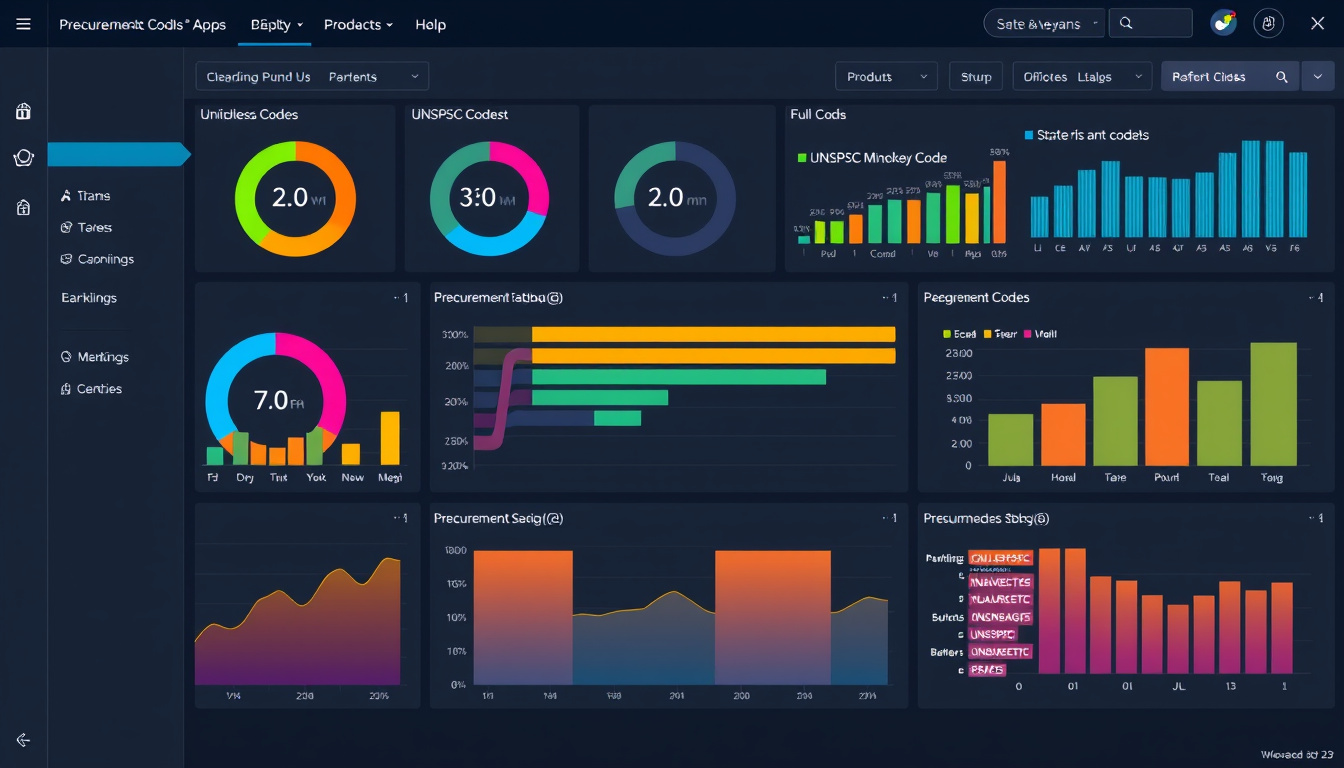
     Corporate team analyzing UNSPSC codes on large screen, efficient supply chain management system in action

    4. Accelerated Purchase Order Processing

    Standardized coding reduces ambiguity in product descriptions, minimizing errors in purchase orders. It also supports e-procurement systems by enabling automated matching of requisitions to supplier catalogs.

    How to Master UNSPSC Classification

    Mastering UNSPSC classification involves more than simply attaching a code to each product or service. It requires a comprehensive strategy and reliable tools to ensure accuracy and consistency. Follow these key steps:

    Step 1: Understand Your Procurement and Inventory Categories

    Begin by auditing your current product and service lists. Group these items logically to correspond with UNSPSC segments and families before drilling down to classes and commodities.

    Step 2: Use Accurate Classification Tools

    Manual classification can be time-consuming and prone to errors. Utilize advanced classification tools like Classifast.com, which offers instant UNSPSC classification by inputting text descriptions. This ensures fast, reliable, and consistent categorization aligned with international standards.

    Step 3: Train Your Procurement and Inventory Teams

    Educate your teams on the importance of UNSPSC classification and how to use tools and resources effectively. Consistency across all departments is vital for maintaining clean data.

    Step 4: Integrate UNSPSC Codes into Your ERP and Procurement Software

    Embed UNSPSC classification into your Enterprise Resource Planning (ERP) and purchasing platforms. This integration enables automated workflows, enhanced reporting, and seamless supplier communications.

    Step 5: Regularly Review and Update Classifications

    Procurement categories and products evolve over time. It’s essential to schedule periodic reviews to update UNSPSC codes, ensuring alignment with the latest standards and business needs.

    Key Features of a Reliable UNSPSC Classification System

    When selecting an approach or software for UNSPSC classification, consider these features:

    • Comprehensive Coverage: Ability to classify a broad spectrum of products and services.
    • International Standard Alignment: Codes up-to-date with global UNSPSC taxonomy.
    • Ease of Use: User-friendly interfaces for rapid classification.
    • Integration Capabilities: Seamless connection with ERP, inventory, and procurement systems.
    • Accuracy and Consistency: High precision in classification to reduce human errors.

    Using a dedicated service like Classifast.com offers access to accurate and up-to-date classification data across multiple international standards, including UNSPSC, NAICS, ISIC, and others. This versatility allows companies to harmonize classifications for global operations quickly.

    Practical Example: Improving Procurement Efficiency with UNSPSC Codes

    A multinational manufacturing company faced challenges in procurement due to inconsistent product descriptions and siloed supplier information. By implementing UNSPSC classification throughout its procurement and inventory systems—with the help of automated classification through Classifast—they achieved:

    • A 30% reduction in procurement cycle times.
    • Enhanced supplier segmentation for better negotiations.
    • Improved accuracy in inventory replenishment, reducing stockouts by 20%.

    This example underlines how mastering UNSPSC classification empowers businesses to optimize operational workflows and control costs effectively.

    FAQ: Understanding UNSPSC Classification

    Q1: What is the difference between UNSPSC classification and other product codes?
    A1: UNSPSC classification is an open, hierarchical product and service categorization system focused on standardizing procurement descriptions globally. Other systems, like SKU or UPC, are often company-specific or used mainly for sales tracking.

    Q2: How does automated classification with tools like Classifast improve UNSPSC code accuracy?
    A2: Automated tools analyze text descriptions to assign the most appropriate UNSPSC codes, reducing manual errors, speeding up the process, and ensuring consistency across large data sets.

    Q3: Can UNSPSC classification be used across different industries?
    A3: Yes, UNSPSC codes cover a wide range of industries, making it suitable for organizations in manufacturing, services, government procurement, healthcare, and more.

    Authoritative Insight on the Importance of Standard Classifications

    According to the procurement experts at the Chartered Institute of Procurement & Supply (CIPS), utilizing standardized classification systems like UNSPSC is vital for enabling strategic sourcing initiatives, improving supplier relationship management, and driving cost efficiencies in purchasing activities (source: CIPS).

    Conclusion: Take Control with UNSPSC Classification

    Mastering UNSPSC classification is a strategic move that enables your business to streamline procurement workflows, sharpen inventory controls, and unlock deeper spending insights. With standardized and accurate classifications, you reduce operational complexity and build a foundation for smarter sourcing decisions and improved supplier collaboration.

    To simplify this journey, leverage powerful classification tools such as Classifast.com, which provide instant and reliable UNSPSC codes from any product or service description. Don’t let inconsistent data hold back your procurement potential—embrace UNSPSC classification and transform how your organization manages purchasing and inventory today!

    Click here to quickly find category codes from UNSPSC or from many other industry standards.

  • Industry Classification Explained: How It Shapes Business Strategy and Growth

    Industry Classification Explained: How It Shapes Business Strategy and Growth

    Understanding industry classification is essential for businesses aiming to position themselves strategically in competitive markets. Industry classification refers to the systematic categorization of industries and companies based on their primary business activities. This process not only helps in organizing economic data but also plays a pivotal role in shaping business strategies and driving sustainable growth. In this article, we dive deep into what industry classification is, why it matters, and how leveraging it can provide a competitive advantage.

    What Is Industry Classification?

    Industry classification is the method of grouping companies into categories based on the products or services they provide. These classifications use standardized codes and taxonomies such as the North American Industry Classification System (NAICS), the United Nations Standard Products and Services Code (UNSPSC), International Standard Industrial Classification (ISIC), Harmonized System (HS), and ETIM for technical products.

    Organizations, governments, and analysts use these classifications for accurate economic analysis, taxation, policy-making, and market research. For instance, NAICS is widely used in North America for recognizing business sectors, while UNSPSC provides an international standardized vocabulary for products and services.

    Why Industry Classification Matters to Businesses

    The concept of industry classification isn’t just about labeling businesses—its implications extend to strategic decision-making and resource allocation.

    • Competitive Analysis: By understanding which sector they belong to and how peers are classified, companies can benchmark performance and identify industry trends.
    • Market Segmentation and Targeting: Classification helps businesses pinpoint target markets and tailor their marketing strategies accordingly.
    • Investment and Funding: Investors often analyze industry classifications to diversify portfolios and mitigate sector-specific risks.
    • Regulatory Compliance: Many regulations are industry-specific, and classification helps companies ensure they meet legal obligations.
    • Supply Chain Management: Classifying suppliers and products using standards like UNSPSC enables companies to streamline procurement and reduce costs.

    Popular Industry Classification Systems

    Each classification system has its unique features and global or regional relevance. Here’s a quick overview:

    1. NAICS (North American Industry Classification System)
      Mainly used in the U.S., Canada, and Mexico, NAICS categorizes businesses into 20 sectors and hundreds of subsectors, enabling detailed economic and statistical analysis.

    2. UNSPSC (United Nations Standard Products and Services Code)
      An open global standard primarily for products and services, used by procurement professionals to classify spend categories.

    3. ISIC (International Standard Industrial Classification)
      Developed by the United Nations, ISIC categorizes all economic activities and is often used in international economic statistics.

    4. HS (Harmonized System)
      Used worldwide for customs tariffs and trade statistics, HS codes classify goods based on their nature and use.

    5. ETIM (ElectroTechnical Information Model)
      Focused on technical products, especially electrical and electronic goods, ETIM facilitates data exchange and product classification in technical industries.

    If you need to quickly identify or validate the appropriate codes from descriptions of your business activities or products, tools like Classifast.com offer instant classification and category search across many of these systems. This service is ideal for businesses looking to streamline compliance, procurement, or market analysis efforts without dedicating time to manual research.

    How Industry Classification Shapes Business Strategy

    Effective business strategy hinges on understanding both internal capabilities and external market conditions. Industry classification influences strategy in several ways:

    Market Positioning and Competitive Differentiation

    Knowing your industry classification helps you identify direct competitors, potential market entrants, and substitutes. It also clarifies customer expectations within that industry and highlights unmet needs or innovation opportunities.

    Product Development and Innovation

    By examining how industries are defined and segmented, businesses can discover adjacent markets or specialized niches. This insight directs research and development toward products that match or create demand within specific classifications.

     Futuristic city skyline representing diverse thriving industries and growth

    Strategic Partnerships and Mergers

    Industry classifications provide a blueprint for identifying potential partners and acquisitions that complement or expand capabilities. Companies often look for synergy within or across closely related categories to maximize competitive advantage.

    Risk Management and Compliance

    Certain industry classifications enable businesses to anticipate regulatory changes or economic risks that impact their sector. For example, environmental regulations may be more stringent in manufacturing industries, affecting operational costs and strategy.

    Using Industry Classification to Drive Growth: Best Practices

    To fully leverage the power of industry classification, companies can follow these best practices:

    1. Regularly Update Industry Codes
      Ensure that classifications reflect the current business scope. Companies often evolve, and misclassification can lead to incorrect market intelligence or even compliance issues.

    2. Leverage Data Analytics
      Combine classification data with market trends to predict opportunities and threats. Using business intelligence tools can highlight gaps or emerging customer segments.

    3. Integrate Classification into Procurement and Sales
      Use classification standards such as UNSPSC to organize catalogs and vendor data, improving purchasing decisions and customer targeting.

    4. Utilize Automated Tools
      Services like Classifast.com simplify finding the right classification codes from textual descriptions, saving time and increasing accuracy.

    Advantages of Automating Industry Classification

    Manual classification can be error-prone and time-consuming. Automation brings several advantages:

    • Accuracy: Reduces misclassification risks due to human error.
    • Speed: Provides instant results even for complex or ambiguous descriptions.
    • Scalability: Handles large datasets effortlessly—critical for enterprises with extensive product lines or subsidiaries.
    • Compliance: Keeps classification aligned with the latest international standards.

    Industry Classification in Statistical Analysis and Reporting

    Governments and international bodies rely on standardized industry classifications to produce meaningful economic statistics. For example, the U.S. Bureau of Labor Statistics uses NAICS to analyze employment trends sector by sector (source: Bureau of Labor Statistics). Likewise, companies use industry classifications for sustainability reporting, investor relations, and reporting to regulatory agencies.

    Checklist: What to Consider When Using Industry Classification in Your Business

    • Identify the classification systems most relevant to your region and business scope.
    • Classify all your products, services, and activities accurately using accepted codes.
    • Use automation tools like Classifast.com for efficiency and consistency.
    • Align your marketing and sales efforts based on your defined classifications.
    • Monitor changes in classifications and update your data frequently.
    • Analyze classification-based market data to inform strategic decisions.

    FAQ Section

    Q1: What is the main purpose of industry classification?
    Industry classification primarily organizes businesses and economic activities into defined categories, enabling better analysis, compliance, and strategic decision-making.

    Q2: How can small businesses benefit from industry classification?
    Small businesses gain competitive insights, improve targeting, and ensure regulatory compliance by knowing their industry classification and using tools to identify accurate codes.

    Q3: Are industry classification systems globally standardized?
    While some systems like UNSPSC and ISIC have international scope, others such as NAICS are region-specific. It’s important to select classifications that match your business geography and purpose.

    Conclusion: Harness Industry Classification to Accelerate Your Business Growth

    Industry classification is far more than an administrative necessity—it is a strategic tool that impacts every facet of your business, from marketing and product development to compliance and investment. Embracing and continuously refining your understanding of your industry classification will arm you with competitive intelligence, streamline your operations, and uncover growth opportunities.

    For businesses seeking a fast, reliable way to classify products and services accurately, leveraging tools like Classifast.com offers a distinct advantage. By integrating such technologies into your workflow, you ensure compliance and maximize strategic insights with minimal effort.

    Take control of your business’s future today by mastering industry classification—your roadmap to informed decisions and sustainable growth.

    Click here to quickly find category codes from NAICS or from many other industry standards.

  • UNSPSC Lookup: How to Simplify Procurement and Spend Management

    UNSPSC Lookup: How to Simplify Procurement and Spend Management

    In today’s fast-paced business environment, efficient procurement and spend management are essential for organizations aiming to optimize costs and improve supplier relationships. One powerful tool to achieve this is the UNSPSC lookup system. By harnessing the United Nations Standard Products and Services Code (UNSPSC), companies can categorize products and services consistently, enabling streamlined procurement processes and clearer spend analysis. This article explores how the UNSPSC lookup can simplify procurement and contribute to smarter spend management.

    What is UNSPSC Lookup?

    The UNSPSC is a globally recognized classification system for products and services. It provides a standardized coding framework that allows businesses to identify and group items systematically. A UNSPSC lookup involves searching or coding products and services in this standardized format to ensure uniform cataloguing. By utilizing this framework, organizations can promote clarity and transparency in purchasing and financial reporting.

    How UNSPSC Lookup Enhances Procurement Efficiency

    Procurement teams face numerous challenges, such as managing diverse supplier catalogs, avoiding purchasing mistakes, and maintaining compliance. Performing a UNSPSC lookup on products or services allows procurement professionals to:

    • Standardize descriptions: Avoid confusion with ambiguous item names by using UNSPSC codes.
    • Simplify supplier comparisons: Group products by standardized codes for easier price and quality analysis.
    • Improve contract management: Segment spend by category for targeted negotiations.
    • Enable automation: Easily integrate procurement software with spending data for automated workflows.

    By embedding the UNSPSC lookup into the procurement lifecycle, businesses reduce manual work and improve data accuracy.

    Using UNSPSC Lookup for Spend Management

    Spend management involves understanding and controlling company expenditures. Leveraging UNSPSC lookup can boost spend visibility and analysis through:

    • Consistent classification: Align spending across departments by using common codes.
    • Spend transparency: Identify high-value categories and suppliers.
    • Fraud prevention: Detect unusual or unauthorized purchases by analyzing spending patterns.
    • Budget control: Monitor category-specific budgets efficiently.

    Moreover, financial teams can generate more reliable reports for stakeholders, enhancing decision-making.

    Step-by-Step Guide to Performing an UNSPSC Lookup

    1. Identify the product or service: Obtain a detailed description or SKU from your procurement data.
    2. Access a UNSPSC lookup tool: Use official or third-party platforms that facilitate searching by description or code.
    3. Search for the correct code: Enter relevant keywords or browse the hierarchy to find the most accurate UNSPSC code.
    4. Verify code accuracy: Cross-check with product specifications and supplier information.
    5. Integrate code into procurement systems: Use the code in purchase orders, invoices, and contracts.
    6. Analyze and report spend: Utilize categorized data for business intelligence insights.

    Using these steps ensures accuracy and maximizes the benefits of the UNSPSC lookup process.

     business professionals collaborating over modern interface showing spend analysis and category data

    Benefits of UNSPSC Lookup for Different Industries

    The UNSPSC system is versatile and applies across varied sectors:

    • Manufacturing: Streamlines sourcing of raw materials and equipment.
    • Healthcare: Enables precise classification of medical supplies and services.
    • Retail: Facilitates inventory categorization and supplier negotiations.
    • Government: Supports compliance and audit trails in public procurement.

    The broad applicability of UNSPSC lookup makes it a valuable asset for any organization aiming to maintain robust and transparent procurement operations.

    Common Challenges and How to Overcome Them

    While UNSPSC lookup offers many advantages, implementation is not without challenges:

    • Code complexity: With thousands of codes, selecting the right one can be daunting.
    • Data integration: Aligning UNSPSC codes with existing systems requires technical planning.
    • User training: Staff need education to effectively use and interpret UNSPSC categories.

    To mitigate these issues, companies should invest in comprehensive training, choose user-friendly lookup platforms, and ensure IT support for smooth integration.

    Authoritative Insight on UNSPSC Usage

    According to the United Nations Development Programme (UNDP), the UNSPSC coding system is essential for harmonizing procurement data globally and improving economic transparency (source). This endorsement underscores the value of adopting a standardized lookup approach for procurement and spend management optimization.

    FAQs About UNSPSC Lookup

    Q1: What exactly does UNSPSC stand for?
    A1: UNSPSC stands for United Nations Standard Products and Services Code, a global classification system for products and services to standardize procurement processes.

    Q2: How do I perform a UNSPSC lookup for my company’s purchases?
    A2: You can perform a UNSPSC lookup by using online tools or software integrated with your procurement system to match items with the correct UNSPSC codes based on descriptions or categories.

    Q3: Can UNSPSC lookup help reduce procurement costs?
    A3: Yes, by providing transparency and standardization, UNSPSC lookup enables better spend analysis and supplier negotiations, which can lead to cost savings.

    Conclusion: Take Control of Procurement with UNSPSC Lookup

    Integrating UNSPSC lookup into your procurement and spend management routines offers a smart, scalable solution to challenges such as inconsistent product categorization and unclear spending visibility. By adopting this standardized system, your organization can simplify purchasing processes, enhance data-driven decision-making, and unlock new efficiencies.

    Don’t let procurement complexity hold your business back. Begin exploring UNSPSC lookup tools today and transform your spend management strategy, paving the way for smarter growth and stronger financial health.

    Click here to quickly find category codes from UNSPSC and from many other industry standards.