Category: ISIC classification

  • The Ultimate Online Goods and Services Classifier: Instantly Categorize Any Product or Service with Classifast

    The Ultimate Online Goods and Services Classifier: Instantly Categorize Any Product or Service with Classifast

    Table of Contents

    Effortless Goods and Services Classification: Instantly Categorize with AI

    You’re staring at a spreadsheet with hundreds of items. A few are simple. Most are oddly specific or bundled. You tab between a category tree, a customs reference, and a marketplace guide. Each choice feels like a guess you’ll have to defend later. Goods and services classifier is required.

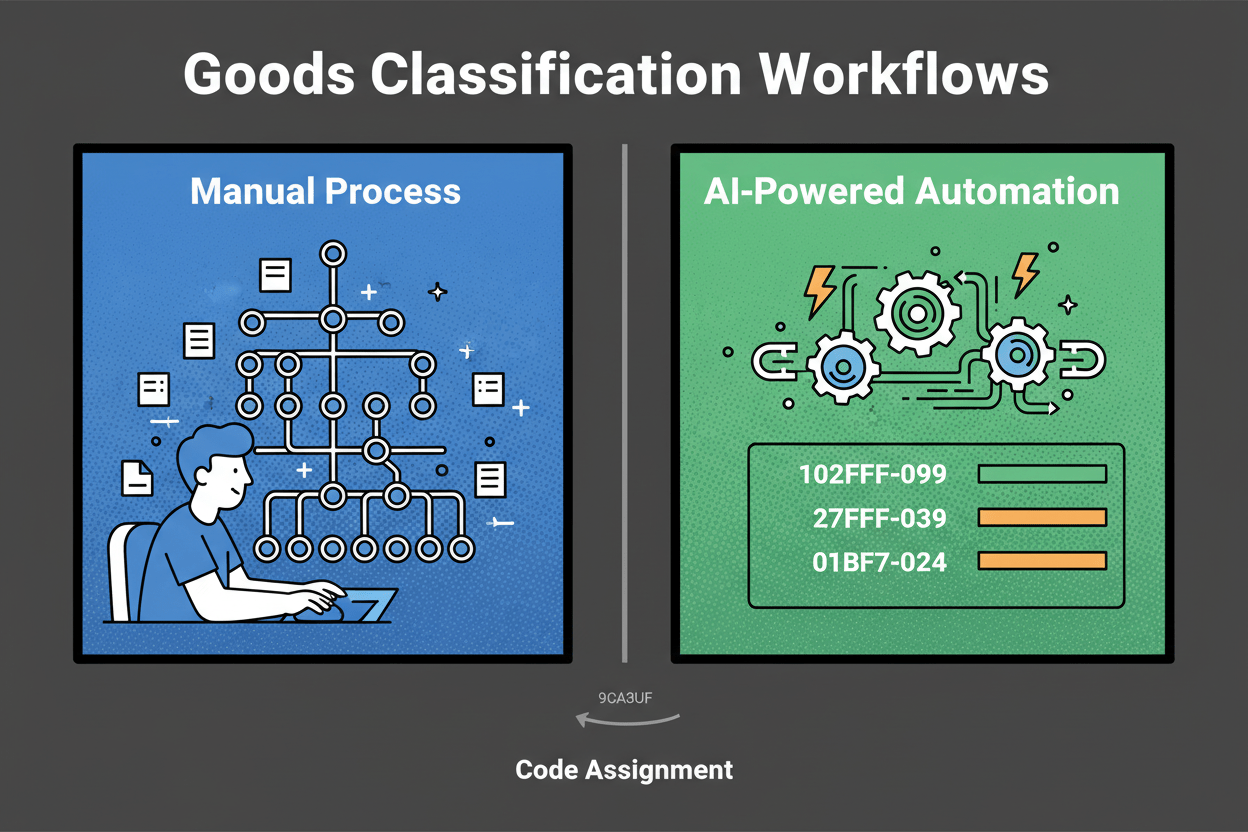
    That’s the grind of manual classification. It’s slow, inconsistent, and it doesn’t scale. In catalog operations, humans typically spend 30–180 seconds per SKU just to pick a product category. Assigning an HS code for a trade can take 5–20 minutes per line when you check notes and rulings.

    What if you could paste a description, click once, and get the best-fit code with a confidence score and a short rationale? That’s exactly what Classifast does. Classifast is a web application designed for the instant classification of goods and services using advanced semantic search technology to ensure accuracy and speed.

    What is a goods and services classifier?

    A goods and services classifier reads a product or service description and assigns the right code from a defined taxonomy. Classifast supports major international standards, including:

    • UNSPSC (Procurement and spend analytics)
    • NAICS (Industry classification)
    • ISIC (International standard industrial classification)
    • HS/HTS (Global trade and customs)
    • ETIM (Electrotechnical and technical product data)

    The benefit is simple: consistent labels for compliance, analytics, and findability, generated instantly with transparent confidence measures.
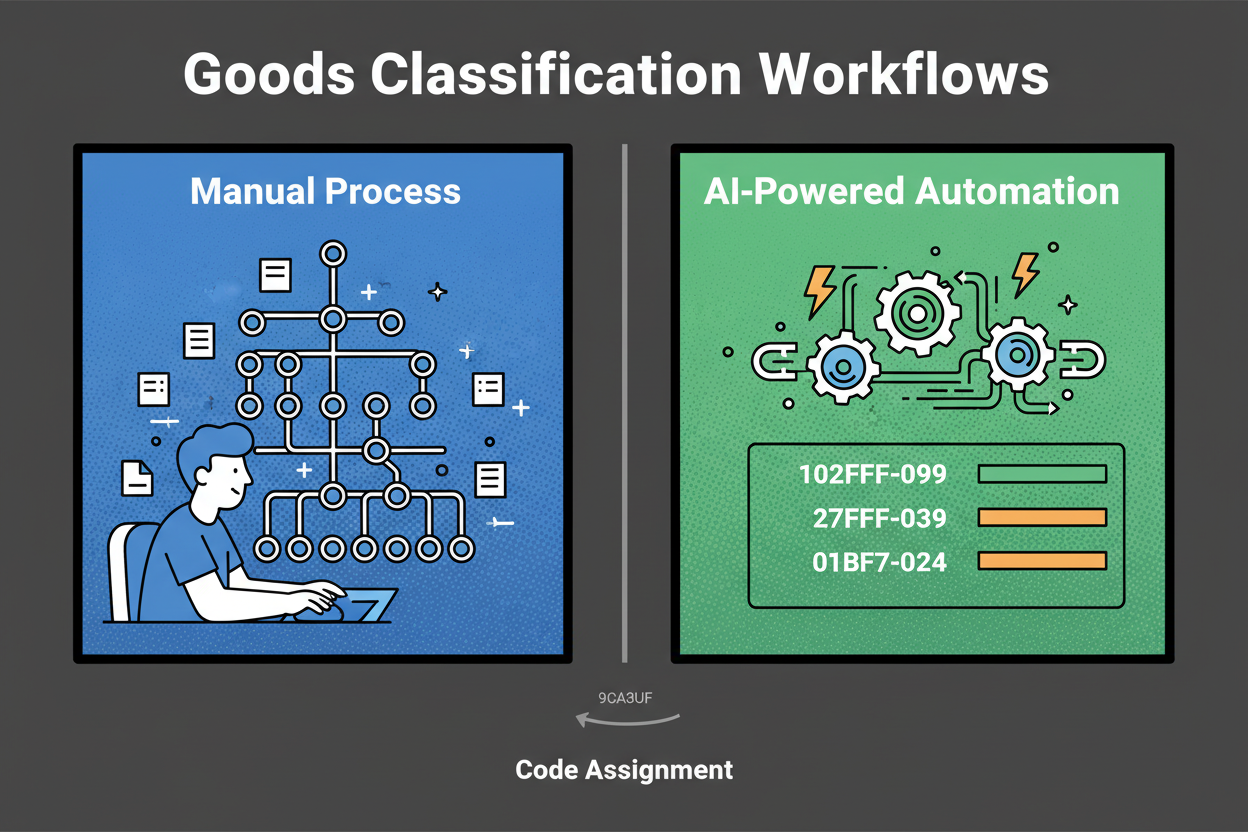
    Manual vs Automated Classification Workflow

    How Classifast Works: Semantic Search and High Performance

    You shouldn’t have to guess how an AI made its pick. Classifast is built with modern web technologies like FastAPI to deliver near-instant results. Unlike traditional keyword matching, our system uses advanced semantic search. This means the tool understands the context and meaning behind your text, not just the words themselves.

    The AI Pipeline: From Description to Code

    1. Inputs: You provide a title, description, or attributes (like materials or voltage).
    2. Preprocessing: Classifast cleans the text, detects the language, and prepares it for analysis.
    3. Semantic Embedding: The text is converted into high-dimensional vectors that capture its true meaning.
    4. Hierarchical Inference: The model drills down the taxonomy (e.g., from “Electronics” to “Smartphones”) to find the exact leaf node.
    5. Output: You receive a top code, a confidence bar, and a rationale explaining the decision.
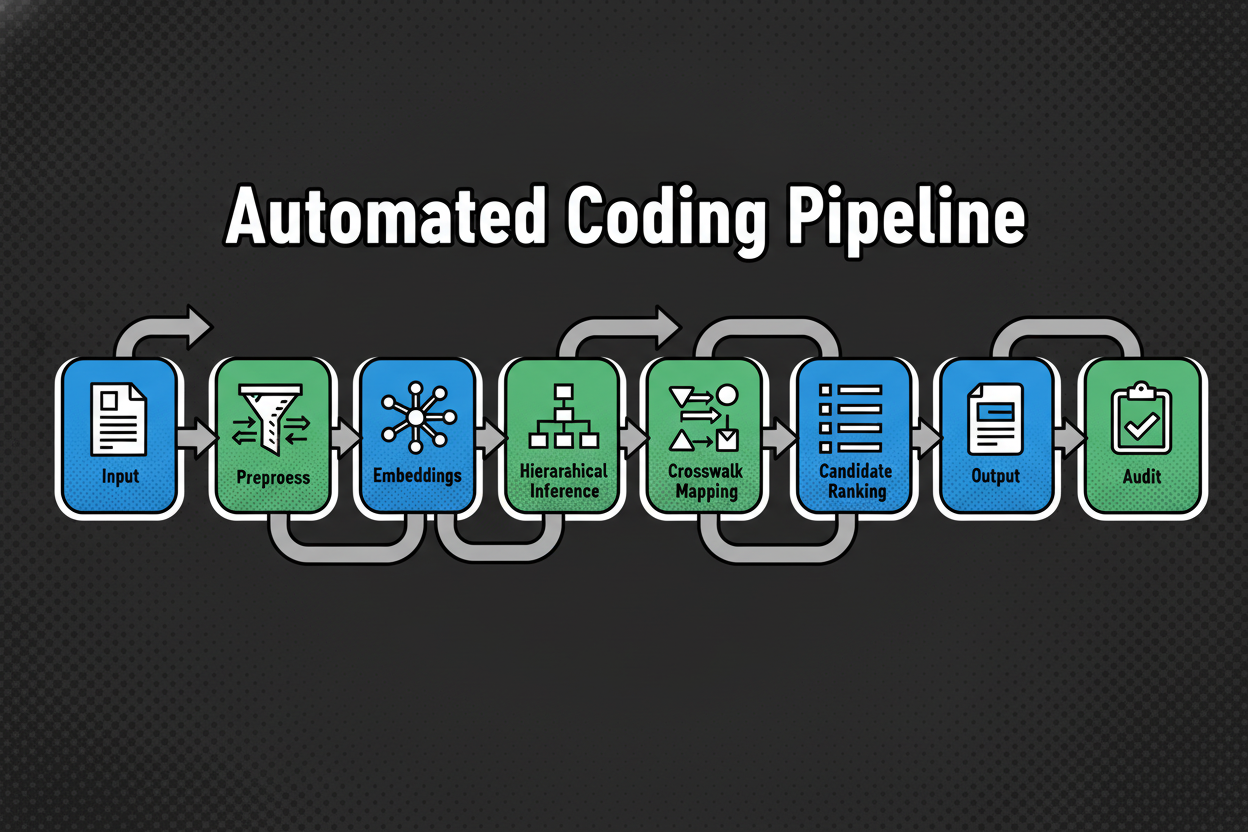
    Classifast Process Flow

    Practical Use Cases: Who Benefits from Automated Classification?

    Automation is useful when it moves needles: faster cycles, cleaner data, and fewer rework loops.

    • Compliance Officers: Reduce HS/HTS research time and keep audit-ready logs for every shipment.
    • Ecommerce Managers: Stabilize categories across your site to improve findability and reduce returns.
    • Procurement Leads: Map thousands of PO lines to UNSPSC instantly to unlock true spend visibility.
    • Data Scientists: Ensure consistent labeling across datasets to build better forecasting models.

    Step-by-Step Guide: Using Classifast

    Getting started is simple. You don’t need a complex integration to begin cleaning your data today.

    1. Prepare your data: Use clear, factual titles and descriptions. Include specs like materials or intended use.
    2. Choose your taxonomy: Select from UNSPSC, NAICS, ISIC, ETIM, or HS.
    3. Run the classification: Click “Classify” and get results in seconds.
    4. Review and Audit: Check the confidence score. If it’s high, you’re good to go. If it’s low, the rationale will tell you what extra info (like “material type”) is needed to be certain.
    Classifast Single Result Panel

    Bulk Classification for Large Projects

    For those with tens of thousands of SKUs, Classifast supports bulk uploads. Upload your CSV, map the columns, and let the semantic engine process the entire batch. You can set a “confidence threshold” to automatically accept the most certain results, leaving only the edge cases for human review.

    Frequently Asked Questions

    Q: Which systems does Classifast support?
    A: We support UNSPSC, NAICS, ISIC, ETIM, HS/HTS, GS1 GPC, and eCl@ss. We can also map to your own custom internal taxonomies.

    Q: How accurate is the semantic search?
    A: Semantic search allows Classifast to understand synonyms and technical context that traditional tools miss. This often matches or exceeds human accuracy in complex retail or industrial settings.

    Q: Is my data secure?
    A: Yes. Classifast practices data minimization and uses encryption in transit and at rest. We align with SOC 2 and ISO 27001 principles to ensure your product data is protected.

    Unlock Consistent, Accurate Classification with Classifast

    The real win of moving to an automated system is simple: faster outputs, steadier decisions, and clean data you can trust. Manual labeling is a bottleneck that your business can’t afford in 2025.

    By using Classifast.com, you shift from minutes per item to seconds. You invest human time only where it moves the needle—on high-risk exceptions—while the semantic engine handles the rest.

    Key Takeaways

    • Instant Results: Categorize in seconds using FastAPI-powered search.
    • Global Standards: One tool for UNSPSC, NAICS, ISIC, HS, and ETIM.
    • Defensible Logic: Every code comes with a rationale you can audit.
    • Consistent Data: Eliminate the variance caused by human error and manual fatigue.

    Ready to try it? Visit Classifast.com to run your first items right now. No sign-up required—just paste your description and go.
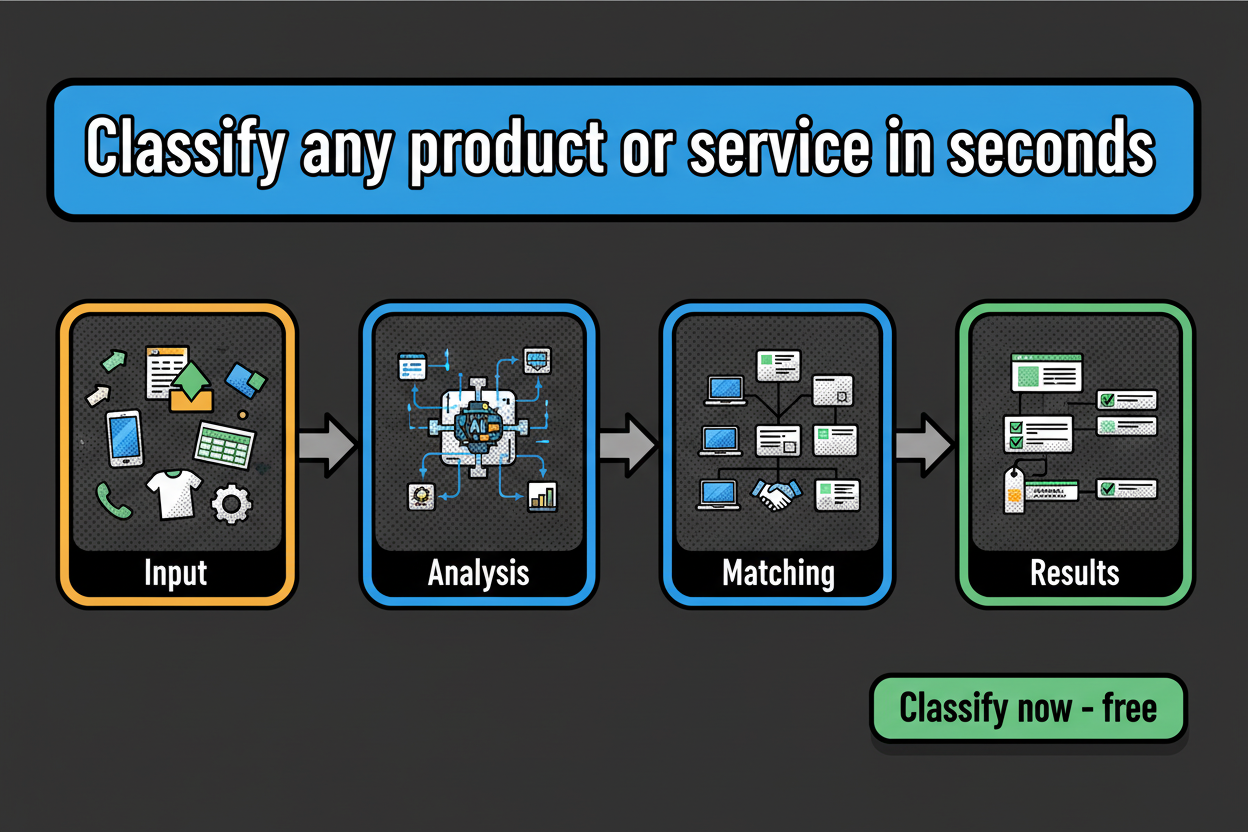
    Classify now - free

  • The Essential Guide to NAICS, NACE, and ISIC Classification: Key Differences and Alignment Strategies

    The Essential Guide to NAICS, NACE, and ISIC Classification: Key Differences and Alignment Strategies

    Table of Contents

    Introduction: Why Economic Activity Classification Systems Matter

    If you report across borders, you’ve felt the pain. One dataset arrives coded in NAICS, another in NACE, and a third in ISIC. The categories look similar at the top, then splinter as you go deeper. Revenue gets double counted, risk scores drift, and compliance teams start asking questions.

    Economic activity codes are the backbone of how governments, lenders, and analysts describe what businesses actually do. They drive national statistics, tax rules, procurement policies, and industry benchmarking. If your codes are wrong, everything you build on top of them is shaky.

    Most teams run into trouble when they try to stitch together US and EU data or when they benchmark global peers. NAICS classification is standard across North America. NACE classification is required across the European Union. ISIC classification, managed by the United Nations, sets the global baseline. Each system has its own structure, wording, and depth. Close, but not identical.

    So you need two superpowers: understand how the systems are built, and map between them without losing meaning. That’s what this guide gives you. We’ll walk through scopes and structures, call out key differences that trip up analysts, and share practical mapping frameworks you can put to work right away.

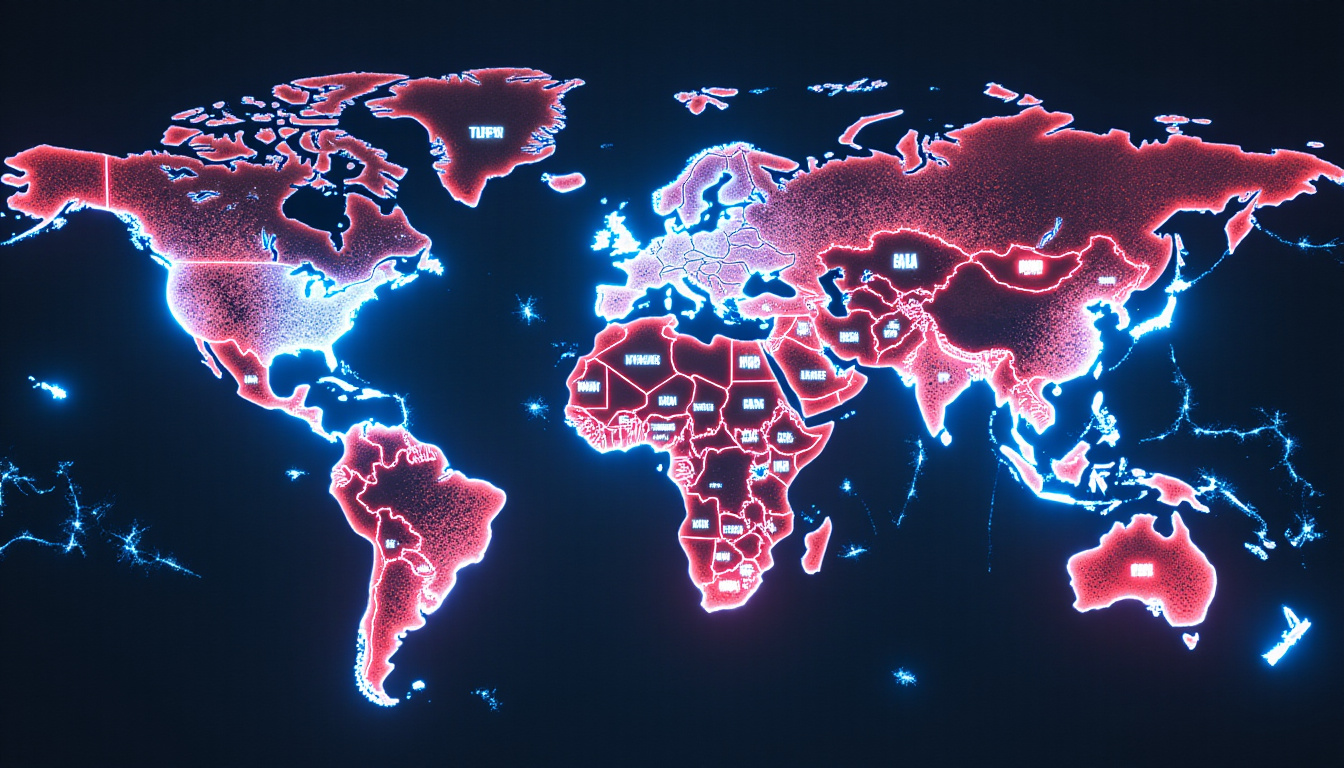
    Before we dive in, here’s the regional picture at a glance.

    (Note: Upload your ‘naics-nace-isic-geographic-scope-map.png’ image here)

    You’ll also see where to find official definitions and correspondences that professionals rely on. NAICS structures and manuals live at the U.S. Census Bureau. NACE materials are maintained through Eurostat’s RAMON. ISIC documentation and concordances are published by the UN Statistics Division. These official repositories are the anchors for clean classification work.

    Ready for the fast version first?

    Quick Answer: NAICS vs NACE vs ISIC

    • NAICS: Maintained through the U.S. statistical system (Census hosts NAICS materials) for North America; used for national statistics, regulation, and analytics.
    • NACE: Managed by Eurostat via the RAMON server for the European Union; used for EU statistics, regulation, and compliance reporting.
    • ISIC: Published by the UN Statistics Division for global use; supports international comparability and often acts as a neutral bridge across systems.
    • Crosswalk reality: census.gov does not host a NAICS–ISIC crosswalk. Practitioners use UNStats and Eurostat correspondences, combined with NAICS structures, to align codes across borders.

    Understanding NAICS, NACE, and ISIC: Scopes, Structures, and Applications

    NAICS classification: purpose, hierarchy, and North American usage

    NAICS (North American Industry Classification System) groups business establishments by their primary economic activity. It underpins core federal statistics and many regulatory and procurement workflows across the United States, and it is also used in Canada and Mexico.

    The hierarchy is numeric and progressive. At the top you have 2-digit sectors. These break down into 3-digit subsectors, 4-digit industry groups, and 5–6 digit industries for national detail. A typical path looks like 31 (Sector) → 311 (Subsector) → 3116 (Industry group) → 311615 (Industry). The structure and official explanatory notes are published by the U.S. Census Bureau, which serves as the authoritative repository for NAICS materials.

    NACE classification: EU governance, hierarchy, and reporting role

    NACE (Nomenclature of Economic Activities) is the European Union’s standard for classifying economic activity. It’s governed through the EU statistical system, and Eurostat maintains the official materials and correspondences in the RAMON classification server.

    The structure mirrors ISIC’s terminology: Section, Division, Group, Class. The code format combines a lettered Section (like C for Manufacturing) with numeric levels, typically shown with dots, such as 10, 10.1, 10.12.

    ISIC classification: the UN’s global standard and common bridge

    ISIC (International Standard Industrial Classification of All Economic Activities) is published by the United Nations Statistics Division. It serves as the global reference classification and the starting point for many national systems, including NACE.

    Like NACE, ISIC uses Section, Division, Group, and Class. Codes are letter plus numbers, such as C → 10 → 101 → 1012. ISIC definitions are designed for international comparability, which is why analysts frequently use ISIC as a neutral bridge.

    Side-by-side structures at a glance

    AttributeNAICSNACEISIC
    IssuerU.S. Census BureauEurostat (RAMON)UN Statistics Division
    RegionNorth AmericaEuropean UnionGlobal
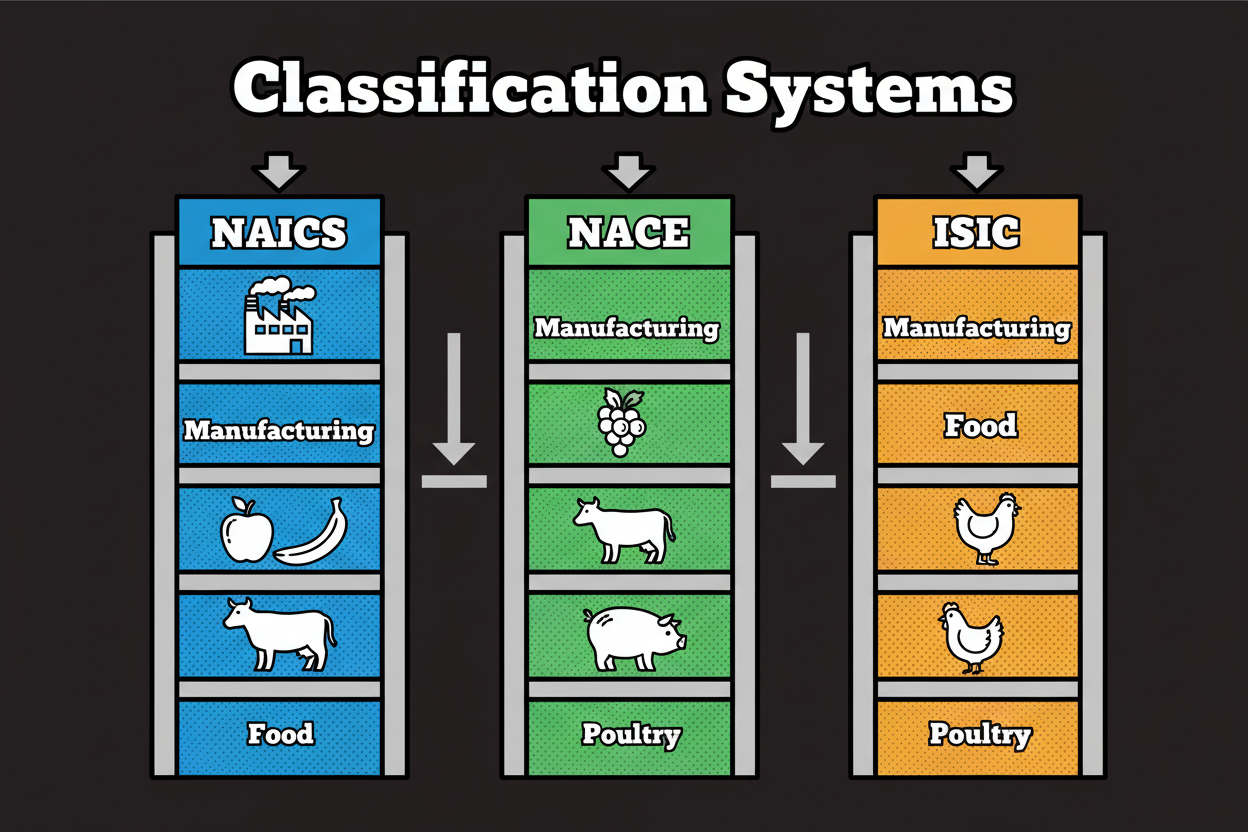
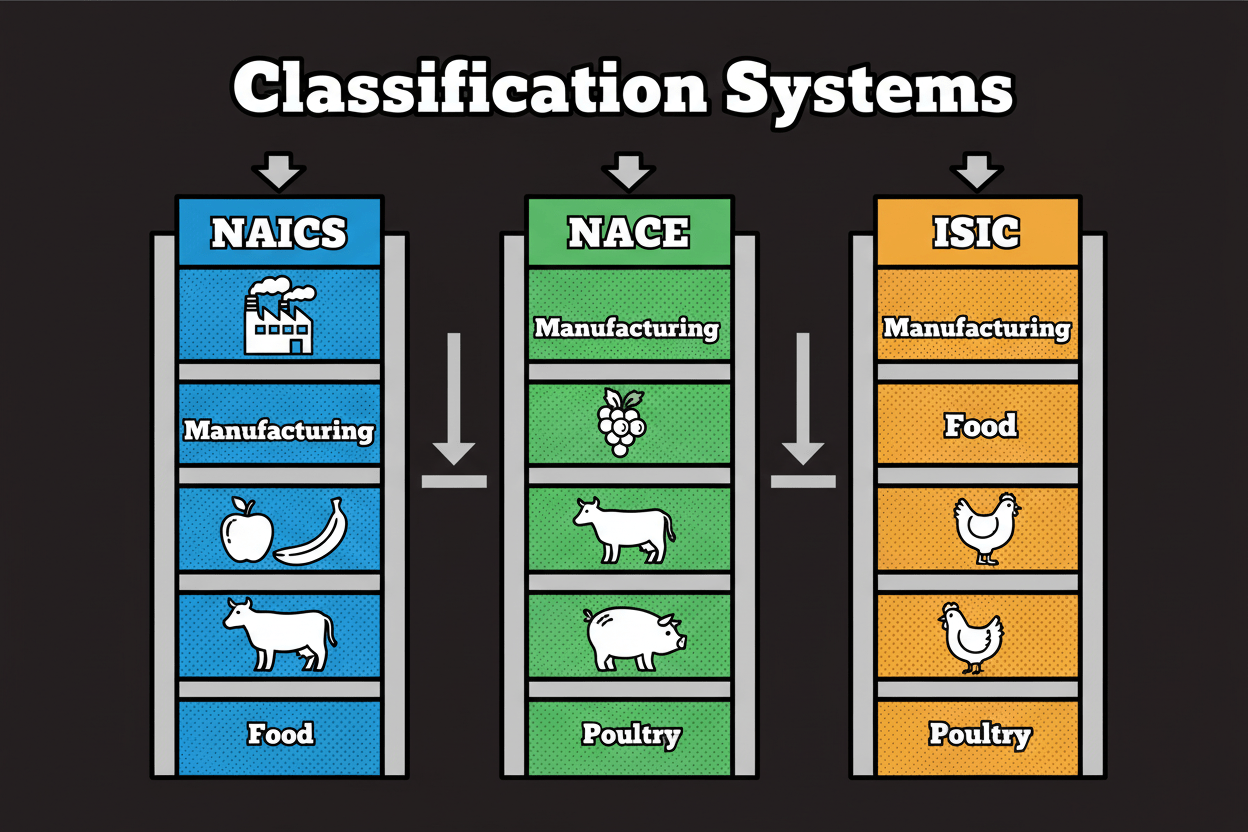
    HierarchySector → Subsector → Industry groupSection → Division → Group → ClassSection → Division → Group → Class
    Format2–6 digits1 letter + 2–4 digits1 letter + 2–4 digits
    “Manufacturing”Sector 31–33Section CSection C
    Three parallel ladders showing NAICS, NACE, and ISIC alignment

    Key differences between NAICS, NACE, and ISIC

    Definitions and hierarchy choices that change outcomes

    • E-commerce vs retail storefront: NAICS classes often focus on the merchandise line, while NACE/ISIC have stricter boundaries for store vs non-store.
    • SaaS vs custom software: NAICS separates packaged software from custom programming; NACE/ISIC boundaries can blur if delivery models aren’t tested.
    • Marketplaces vs retailers: Platforms that don’t own inventory should be classified as intermediaries. If you map by “Gross Merchandise Value” instead of activity, you’ll misclassify them.

    Case study: US-to-EU alignment with an ISIC bridge

    A US retailer with European subsidiaries adopted ISIC as a bridge.

    1. Step one: Map NAICS 44–45 (Retail Trade) into ISIC Section G.
    2. Step two: Map those ISIC codes into NACE Section G.
      This two-step process reduces ambiguity because ISIC and NACE share nearly identical structures, whereas mapping NAICS directly to NACE often results in messy “one-to-many” outcomes.

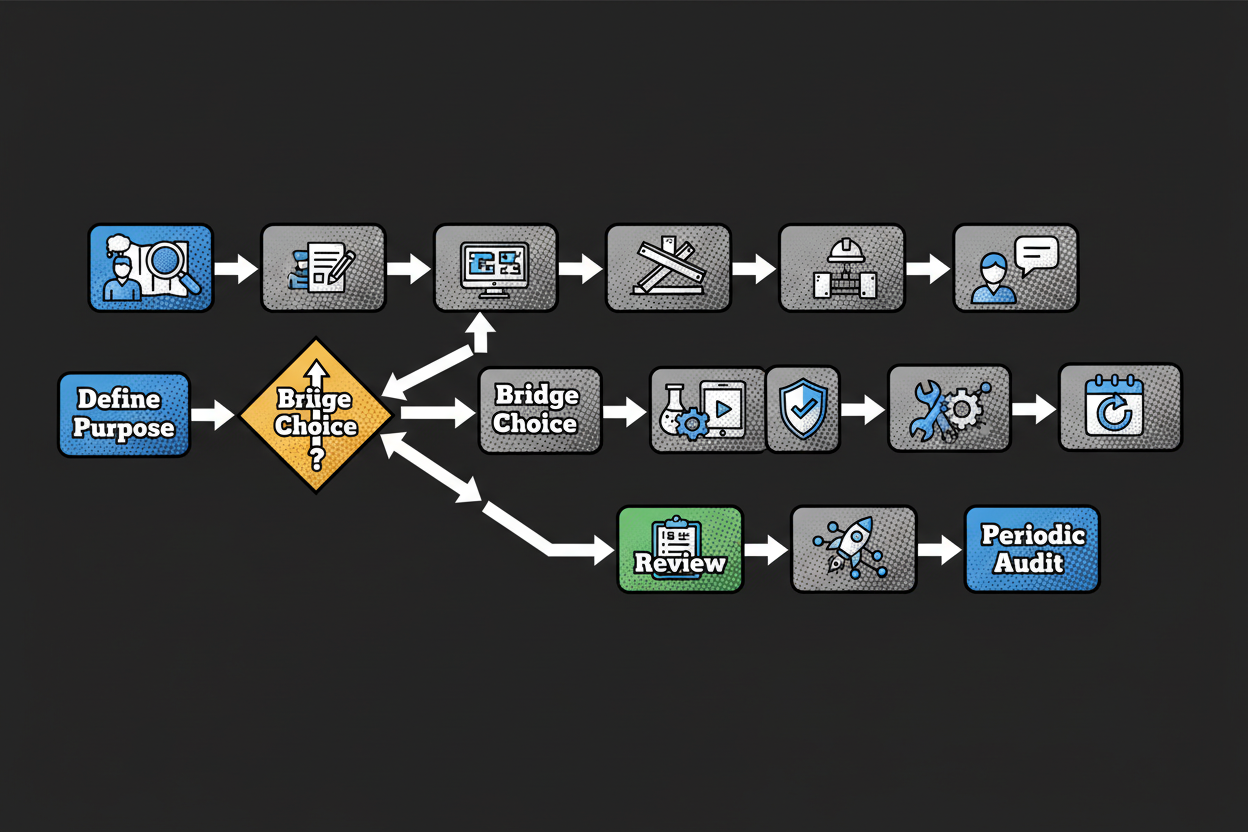
    Aligning and mapping data: practical frameworks

    1. Define purpose: Lock the exact editions (e.g., NAICS 2022) you are mapping.
    2. Collect official materials: Use Census (NAICS), RAMON (NACE), and UNStats (ISIC).
    3. Choose a bridge: Map via ISIC for international projects.
    4. Validate: Confirm boundaries using official explanatory notes.
    5. Periodic review: Revalidate after any structural updates.
    Mapping workflow flowchart

    Frequently asked questions

    Q: What is the main difference?
    NAICS is North American; NACE is European; ISIC is the UN’s global standard used as a “bridge” between the two.

    Q: How do I map a NAICS code to NACE?
    Because census.gov doesn’t host a direct NAICS-to-ISIC crosswalk, the most reliable method is to map NAICS → ISIC first, then ISIC → NACE using UNStats concordances.

    Q: Where can I download official lists?

    • NAICS: census.gov/naics
    • NACE: Eurostat RAMON server
    • ISIC: unstats.un.org/classifications

    Conclusion

    Your classification choice shapes your data’s accuracy. By anchoring your definitions to official notes and using ISIC as a neutral bridge for cross-border analytics, you ensure your reporting remains compliant and comparable.

    Key Takeaways

    • Confirm jurisdiction requirements before choosing a system.
    • Always use official explanatory notes for boundary decisions.
    • Use ISIC as a neutral bridge for international datasets.
    • Establish version control for your mapping tables.
  • Understanding the ISIC Classification Manual: A Complete Guide for Businesses

    Understanding the ISIC Classification Manual: A Complete Guide for Businesses

    The ISIC classification manual is an essential resource for businesses, government agencies, and researchers worldwide. Designed to provide a standardized framework for classifying economic activities, this manual helps organizations categorize their operations systematically and uniformly. Whether you run a small enterprise or manage a large corporation, understanding the ISIC classification manual can streamline reporting, improve data analysis, and enhance compliance with international standards.

    In this complete guide, we will explore what the ISIC classification manual is, why it’s important, how businesses can use it effectively, and where you can find reliable tools such as Classifast.com to assist in applying ISIC codes accurately.

    What Is the ISIC Classification Manual?

    The International Standard Industrial Classification of All Economic Activities (ISIC) is a system developed by the United Nations to classify economic activities into a set of standard codes. The ISIC classification manual outlines these codes, grouping industries and sectors into a hierarchical structure, which facilitates consistent data collection, analysis, and comparison across countries and industries.

    Currently, businesses and statistical offices commonly use Rev. 4 of the ISIC classification manual, which divides economic activities into 21 sections, further broken down into divisions, groups, and classes. This classification ensures that economic data is comparable internationally, aiding global economic analysis.

    Why Is the ISIC Classification Manual Important for Businesses?

    Businesses benefit significantly by aligning their operations with the ISIC classification manual:

    • Standardized Reporting: Helps companies submit economic and industry reports in formats understood by regulators and statisticians worldwide.
    • Market Analysis: Enables benchmarking their activities against competitors using standard industry definitions.
    • Policy Compliance: Assists businesses in meeting local and international regulatory requirements by classifying their activities accurately.
    • Investment and Trade Facilitation: Investors and trade partners rely on ISIC codes to identify industry sectors clearly.
    • Enhanced Data Collection: Supports accurate data aggregation used in national accounts, taxation, and labor statistics.

    Accurately determining your ISIC code is essential in saving time and avoiding misclassification issues that might lead to fines or lost business opportunities.

    Breakdown of the ISIC Classification Manual Structure

    The ISIC classification manual organizes activities in a hierarchical format to improve ease of use:

    1. Sections: Broad economic sectors identified by letters A through U (e.g., A — Agriculture, Forestry and Fishing).
    2. Divisions: Two-digit codes within each section that refine the type of economic activity.
    3. Groups: Three-digit codes that provide more precise classification.
    4. Classes: Four-digit codes offering the most detailed categorization level.

    For example:

    • Section C — Manufacturing
    • Division 10 — Manufacture of Food Products
    • Group 107 — Manufacture of Bakery Products
    • Class 1071 — Manufacture of Bread and Fresh Pastries

    How Businesses Can Use the ISIC Classification Manual

    Businesses typically use the ISIC classification manual to:

    • Identify Industry Codes: Determine the exact ISIC code for their business operations.
    • Prepare Regulatory Filings: Include proper ISIC codes when submitting tax returns or financial disclosure documents.
    • Conduct Market Research: Segment industry data by ISIC codes to analyze trends.
    • Classify Products and Services: Align their product or service portfolio with relevant ISIC codes.

    Moreover, with the rise of digital solutions like Classifast.com, businesses can now quickly and accurately classify any text description of their products or services to the appropriate ISIC category. Using such classifiers reduces manual research time and increases classification accuracy.

     open ISIC Classification Manual on a wooden desk, business person analyzing data, bright study setting, focused atmosphere

    Using Classifast.com as a Resource for ISIC Classification

    Classifast.com is a powerful online resource designed to simplify classification tasks for businesses and individuals. It provides instant classifiers and category searches for multiple standards, including ISIC, UNSPSC, NAICS, ETIM, and HS codes.

    Benefits of Using Classifast.com:

    • Instant Results: Obtain accurate ISIC codes from text inputs within seconds.
    • Multi-standard Support: Useful if your business operates in global markets requiring different classification systems.
    • Ease of Use: Intuitive, user-friendly interface accessible from any device.
    • Reliable Accuracy: Based on up-to-date international standards.

    For businesses handling complex product catalogs or diverse service offerings, Classifast.com can be an indispensable tool to ensure their classifications conform to official standards, saving time and minimizing errors.

    Difference Between ISIC and Other Classification Systems

    While the ISIC classification manual is widely adopted internationally, it’s helpful to understand how it compares to other systems:

    Classification System Focus Geographic Use Example Usage
    ISIC Economic activities Global (UN member states) National statistics, economic planning
    NAICS North American industries USA, Canada, Mexico US Census, trade data
    UNSPSC Products and services Global Procurement, supply chain
    HS (Harmonized System) Trade goods classification Global Customs duty, international trade

    Though these systems serve different purposes, many businesses must navigate them all, making tools like Classifast.com that support multiple standards highly valuable.

    Step-By-Step Guide to Determining Your ISIC Code

    Determining the appropriate ISIC classification can be straightforward if you follow these steps:

    1. Define Your Primary Economic Activity: Identify the main activity generating your revenue.
    2. Consult the ISIC Manual: Use the official manual or an online tool to browse sections and divisions that align with your business.
    3. Narrow Down to Groups and Classes: Read descriptions carefully to find the closest match for your operation.
    4. Validate with Tools: Use platforms such as Classifast.com to enter your product or service details and get suggested ISIC codes.
    5. Confirm Accuracy: Cross-check with national statistical offices or industry associations if questions arise.
    6. Use the Code Consistently: Apply the selected ISIC code in all official documentation, reports, and registrations.

    Frequently Asked Questions About ISIC Classification Manual

    Q1: What is the difference between the ISIC classification manual and the NAICS system?
    A1: The ISIC is an international system maintained by the UN for classifying economic activities globally, while NAICS is primarily used in North America and offers more industry-specific categories for US, Canadian, and Mexican markets.

    Q2: Can a business have multiple ISIC codes?
    A2: Yes. If a business operates multiple significant economic activities, each can be assigned a corresponding ISIC code to represent its full scope accurately.

    Q3: How often is the ISIC classification manual updated?
    A3: The ISIC manual is revised periodically. The current version, Revision 4, was published in 2008, with minor updates as needed to accommodate emerging economic activities.

    Authoritative Source Reference

    For official details and the full ISIC classification manual, you can visit the United Nations Statistics Division website, which provides the exact definitions, structure, and explanations about ISIC codes (source: UNSD ISIC).

    Conclusion: Adopt the ISIC Classification Manual to Propel Your Business Forward

    Understanding and applying the ISIC classification manual offers your business clarity, compliance, and a competitive edge in today’s global economy. By standardizing your economic activities with internationally recognized codes, you improve reporting accuracy, enhance market research, and meet regulatory requirements seamlessly.

    Take advantage of modern tools like Classifast.com to simplify the classification process and ensure you always select the most appropriate ISIC codes for your products and services. Doing so not only saves time but also helps you uncover new market opportunities.

    Ready to optimize your business classification? Visit Classifast.com today and experience the easiest, fastest way to find correct ISIC codes and much more!

  • Understanding the International Standard Industrial Classification for Global Business Success

    Understanding the International Standard Industrial Classification for Global Business Success

    In today’s interconnected world, conducting business internationally requires a clear understanding of various global standards. One crucial framework in this arena is the International Standard Industrial Classification (ISIC). Whether you are a business owner, a market analyst, or a policy maker, understanding this classification system can significantly enhance your ability to navigate international markets, analyze economic activities across countries, and ensure regulatory compliance. This article will guide you through the fundamentals of the international standard industrial classification, its applications, and why it matters for global business success.

    What Is the International Standard Industrial Classification (ISIC)?

    The International Standard Industrial Classification is a system developed by the United Nations to categorize economic activities uniformly across all countries. Its primary purpose is to facilitate the collection, reporting, and comparison of economic data worldwide. The ISIC provides a standardized framework that classifies industries into sectors, divisions, groups, and classes based on their production processes and economic activities.

    Knowing the international standard industrial classification helps businesses and governments communicate clearly about industry types, benchmark economic performance, and streamline regulatory and trade policies. It also serves as a common language enabling statistical offices and researchers to produce coherent and comparable datasets.

    Key Features of ISIC

    The ISIC system is divided into multiple hierarchical levels:

    1. Sections: Denoted by letters (A to U), these represent broad economic sectors such as agriculture, manufacturing, and services.
    2. Divisions: Two-digit codes that break down sections into more specific economic activities.
    3. Groups: Three-digit codes further dividing divisions for more precise categorization.
    4. Classes: Four-digit codes that provide the finest level of detail within groups.

    The current revision, ISIC Rev.4, is widely adopted internationally and aligns with other classification standards for consistency and interoperability.

    Why ISIC Is Essential for Global Business Success

    1. Facilitates Market Analysis and Research

    Understanding the international standard industrial classification allows companies to analyze industry trends accurately across different countries. Researchers can compare data on production, employment, and growth rates, enabling businesses to identify new markets or benchmark their performance globally.

    2. Enhances Regulatory Compliance

    Many countries and international organizations require businesses to report their activities using standardized classifications like ISIC for taxation, licensing, and statistical reporting. Compliance ensures transparency and minimizes legal risks when operating internationally.

    3. Streamlines Trade and Investment Decisions

    Investors rely on standardized classifications to evaluate risks and opportunities within industries across borders. ISIC codes help in screening sectors for investment, assessing supply chain partners, and making strategic decisions backed by reliable data.

    4. Improves Supply Chain and Partner Classification

    When sourcing materials or collaborating globally, consistent classification of products and services is vital. Alongside ISIC for industrial activity, tools like Classifast.com offer instant classifiers that provide accurate UNSPSC, NAICS, ISIC, ETIM, and HS codes from any text description. This ensures clarity and speed in categorizing products and services, contributing to smoother business operations.

     diverse global business meeting, charts and digital data overlays, modern office background

    How ISIC Compares to Other Classification Standards

    While ISIC focuses on categorizing industries by economic activity, many other systems like NAICS (North American Industry Classification System) or UNSPSC (United Nations Standard Products and Services Code) exist to serve regional or product-specific needs.

    Classification System Focus Area Geographic Applicability
    ISIC Economic activities & industries Global (UN member countries)
    NAICS Business establishments & industries North America
    UNSPSC Products and services Global
    HS (Harmonized System) Goods classification in trade Global (customs & trade)

    For global enterprises, understanding ISIC alongside other standards and leveraging tools like Classifast can optimize classification accuracy and operational efficiency.

    Practical Tips for Using ISIC in Your Business

    If you want to integrate ISIC codes into your workflows, consider these strategies:

    • Map your business activities: Analyze your operations and classify each activity using the appropriate ISIC codes.
    • Leverage classification tools: Use services like Classifast.com to quickly identify correct ISIC codes and related classifications without manual research.
    • Stay updated: Keep track of revisions in ISIC or related classification systems to ensure ongoing compliance.
    • Incorporate ISIC in data reporting: When submitting reports or engaging with stakeholders, use ISIC codes to standardize your data presentation.
    • Use ISIC for competitor and market analysis: Identify industry segments of interest and gather comparative global insights.

    Frequently Asked Questions (FAQ)

    Q1: What is the difference between ISIC and NAICS?
    A1: ISIC is the international standard developed by the United Nations to classify economic activities globally. NAICS, by contrast, is primarily used in North America and is specifically designed to classify business establishments. Both classify industries but serve different regional and functional needs.

    Q2: How can I find the correct international standard industrial classification code for my business?
    A2: You can use online classification tools like Classifast.com, which offer an instant classifier and category search. By inputting a text description of your business activities, you quickly get the accurate ISIC codes and other related classification numbers.

    Q3: Are ISIC codes mandatory for all businesses?
    A3: While ISIC codes are not mandatory everywhere, many government and international agencies require their use for statistical reporting, taxation, and trade compliance. Even where optional, adopting ISIC codes improves clarity and competitiveness in international markets.

    Authoritative Perspective on ISIC’s Importance

    According to the United Nations Statistics Division, the ISIC system "provides a comprehensive framework for understanding economic data, facilitating better policy-making and economic planning globally" (source). This endorsement highlights how vital ISIC is for international business operations, particularly in a data-driven and regulatory-complex environment.

    Conclusion: Elevate Your Global Business with ISIC

    Mastering the international standard industrial classification enables businesses to operate more effectively and competitively on the global stage. By aligning your operations and reporting with ISIC standards, you unlock access to reliable economic data, ease compliance burdens, and foster trust with global partners. Incorporating tools like Classifast for quick, accurate classification further streamlines this process. Don’t let classification hold your business back — understand ISIC today and drive your international success forward!

    Visit Classifast.com now to simplify your text classification needs and stay ahead in the global marketplace.

  • Isic Classification Examples: Understanding Industry Categories for Business Success

    Isic Classification Examples: Understanding Industry Categories for Business Success

    When establishing or expanding a business, understanding how your company is classified within industry standards is crucial for market analysis, regulatory compliance, and strategic planning. One widely used system is the International Standard Industrial Classification (ISIC). In this article, we will explore ISIC classification examples to help you understand how various industries are categorized. Whether you are a startup entrepreneur, business analyst, or policymaker, mastering ISIC codes will position you for informed decision-making and business success.

    What is ISIC?

    The International Standard Industrial Classification (ISIC) is a system developed by the United Nations to categorize economic activities in a uniform way across countries. It provides a framework for organizing data concerning production, employment, and trade, making it easier to analyze industries on a global scale. The ISIC system groups businesses into hierarchical levels, including:

    • Sections (broad categories)
    • Divisions
    • Groups
    • Classes (most specific level)

    Each business activity is assigned a unique numerical code. Understanding and using these codes is essential for market research, government reporting, and international trade.

    Why ISIC Classification Examples Matter

    Knowing ISIC classification examples is vital because companies often need to:

    • Register their business activity under the correct ISIC code.
    • Access sector-specific statistics for industry analysis.
    • Ensure compliance with local and international regulations.
    • Facilitate international trade by aligning with a globally recognized classification system.

    These examples help you quickly identify where your business or sector fits, improving communication with stakeholders such as government bodies, financial institutions, and business partners.

    Common ISIC Classification Examples by Industry

    Below are some ISIC classification examples that illustrate how various industries are categorized:

    1. Agriculture, Forestry, and Fishing (Section A)

      • 0110 – Growing of cereals (except rice), leguminous crops, and oil seeds
      • 0310 – Marine fishing
      • 0210 – Silviculture and other forestry activities
    2. Manufacturing (Section C)

      • 1010 – Processing and preserving of meat
      • 2910 – Manufacture of motor vehicles
      • 2011 – Manufacture of industrial gases
    3. Information and Communication (Section J)

      • 5820 – Software publishing
      • 6120 – Wireless telecommunications activities
      • 6201 – Computer programming activities
    4. Financial and Insurance Activities (Section K)

      • 6419 – Other monetary intermediation
      • 6512 – Non-life insurance
      • 6630 – Fund management activities
    5. Professional, Scientific, and Technical Activities (Section M)

      • 7110 – Architectural and engineering activities
      • 7020 – Management consultancy activities
      • 7490 – Other professional, scientific and technical activities n.e.c.
    6. Trade (Section G)

      • 4711 – Retail sale in non-specialized stores with food, beverages or tobacco predominating
      • 4741 – Retail sale of clothing in specialized stores

    Benefits of Using ISIC Classification for Your Business

    Employing ISIC classification correctly allows businesses to:

    • Benchmark against competitors and industry standards.
    • Identify potential niches or growth sectors.
    • Align with international standards for smoother cross-border transactions.
    • Simplify business reporting to government agencies.
    • Facilitate market segmentation and targeted marketing campaigns.

    This standardized classification supports better analytics and strategic planning—key components for success in a competitive marketplace.

     Entrepreneurs analyzing colorful industry classification charts, futuristic office background, detailed vector illustration

    How to Find Your ISIC Code Quickly

    Determining your ISIC code might seem complex, especially with thousands of possible entries. Fortunately, online tools such as Classifast.com offer an instant classification service that makes searching for ISIC codes straightforward. By typing your business’s text description, Classifast returns accurate ISIC classifications and also covers other important standards such as UNSPSC, NAICS, ETIM, and HS codes. Using such resources ensures you register and report your business activity correctly with minimal hassle.

    How ISIC Compares to Other Classification Systems

    While ISIC is widely used internationally, other classification systems exist, including:

    • NAICS (North American Industry Classification System): Mainly used in the United States, Canada, and Mexico.
    • UNSPSC (United Nations Standard Products and Services Code): Focused on product and service classification for procurement.
    • HS (Harmonized System): Used internationally for customs tariff classification.

    Each system has its purpose, but ISIC’s global applicability and hierarchical structure make it a go-to resource for analyzing overall industrial sectors.

    Practical Applications: Using ISIC Classification Examples in Business

    Market Research and Expansion

    Suppose you’re exploring new markets for your manufacturing business. By identifying your ISIC code—say, 2910 for manufacturing motor vehicles—you can access global data on industry size, trends, and competitive analysis. This assists you in making informed decisions regarding entry strategies or diversification.

    Financing and Reporting

    Banks often ask for industry codes like ISIC during loan applications to evaluate risk. Additionally, regulatory bodies use these codes for tax classification, social insurance reporting, and compliance checks.

    Supply Chain Management

    ISIC codes help businesses categorize suppliers and customers within recognized industry standards, streamlining procurement and supplier evaluation processes.

    ISIC Classification Examples: Summary Table

    Industry Sector ISIC Code Description
    Growing of cereals 0110 Production of cereals and related crops
    Manufacture of motor vehicles 2910 Production and assembly of cars and other motor vehicles
    Software publishing 5820 Development and distribution of software products
    Architectural and engineering 7110 Design and consulting services in architecture and engineering
    Retail sale of clothing 4741 Selling clothing products in specialized retail stores
    Non-life insurance 6512 Insurance coverage excluding life insurance

    FAQs About ISIC Classification Examples

    Q1: What is the purpose of ISIC classification examples?
    A1: ISIC classification examples help businesses and analysts identify the specific category of an economic activity, facilitating regulatory compliance, market analysis, and international reporting.

    Q2: How can I find the most accurate ISIC code for my business?
    A2: You can use online tools such as Classifast.com to input text descriptions and instantly receive accurate ISIC codes tailored to your activity.

    Q3: Is ISIC classification the same worldwide?
    A3: Yes, ISIC is a globally standardized system developed by the United Nations. However, some countries may have adapted versions or use complementary systems like NAICS.

    Conclusion: Harness the Power of ISIC Classifications for Business Growth

    Understanding ISIC classification examples is not just an academic exercise—it’s a practical step toward optimizing your business operations and strategy. A correct classification aligns your business with international standards, improves communication with stakeholders, and opens doors to new markets and opportunities. Don’t let confusion around classification slow your growth. Explore resources like Classifast.com for quick, reliable ISIC code identification, ensuring your business is positioned for success in the global economy. Take action today by classifying your business accurately and leveraging industry data tailored to your sector!

    For further insights and tools on business classification, visit Classifast for instant classification and easy industry code searching.


    Reference: United Nations Statistics Division, International Standard Industrial Classification of All Economic Activities (ISIC), Rev. 4, link

  • Isic Industries Explained: Key Insights and Global Market Impact

    Isic Industries Explained: Key Insights and Global Market Impact

    Understanding ISIC industries is essential for businesses, policymakers, and researchers who want to analyze and compare economic activities worldwide. The International Standard Industrial Classification (ISIC) system provides a uniform framework to categorize industries, enabling consistent economic data analysis and global market insights. In this article, we will explore the basics of ISIC industries, their classification system, global significance, and how you can leverage tools like Classifast.com for efficient business categorization.

    What Are ISIC Industries?

    ISIC stands for the International Standard Industrial Classification, a system developed by the United Nations to classify economic activities systematically and uniformly. The classification groups industries based on their primary activities, allowing for standardized data collection and comparison across countries and sectors.

    The term ISIC industries refers to those economic activities categorized under this international standard. Each industry is assigned a unique code, which breaks down into finer categories, facilitating detailed statistical and economic analysis. This system ensures that data on production, employment, and trade can be comparable no matter where the information originates.

    Importance of ISIC Industries in Global Economics

    The classification of ISIC industries plays a vital role in shaping economic policies and understanding market dynamics on a global scale. Some key reasons why ISIC is so significant include:

    • Consistency in Data Collection: Ensures governments and international agencies use the same language to describe industries, reducing discrepancies in economic reporting.
    • Economic Analysis: Helps economists and analysts track the performance of sectors and industries to identify trends and growth areas.
    • Trade and Investment Decisions: Investors can evaluate sectors based on standardized classifications, reducing ambiguities about the nature of business activities.
    • Benchmarking and Reporting: Supports companies in benchmarking their performance against industry peers globally, aiding in competitiveness and strategic planning.

    The Structure of ISIC Industry Codes

    ISIC industries are organized hierarchically. There are four levels of classification:

    1. Sections: Broadest level, denoted by letters (e.g., A – Agriculture, Forestry, and Fishing).
    2. Divisions: Numerical categories within sections (e.g., 01 – Crop and animal production).
    3. Groups: More specific subdivisions within divisions.
    4. Classes: The most detailed level, specifying the exact nature of the industry activity.

    For example, a company engaged in manufacturing motor vehicles might fall under:

    • Section C: Manufacturing
    • Division 29: Manufacture of motor vehicles, trailers, and semi-trailers
    • Group 291: Manufacture of motor vehicles
    • Class 2910: Manufacture of motor vehicles

    This comprehensive hierarchical system allows detailed categorization, helping businesses and governments land on precise descriptions of industries and associated activities.

    Comparing ISIC With Other Industrial Classification Systems

    While ISIC is the UN’s global standard, other classification systems are also widely used, such as:

    • NAICS (North American Industry Classification System): Used primarily in the U.S., Canada, and Mexico.
    • UNSPSC (United Nations Standard Products and Services Code): Focuses on products and services classification rather than industries.
    • HS (Harmonized System): Used internationally for customs tariffs and trade statistics.

    Each system has its strengths depending on the application, but ISIC remains the most globally accepted framework for economic activity classification. For businesses dealing in international trade or seeking global market analysis, understanding and working with ISIC industries is invaluable.

    How Classifast.com Helps With ISIC Industry Classification

    Classifast.com is an innovative online tool designed to simplify the process of classifying texts according to various international standards, including ISIC industries. Whether you need to classify product descriptions, services, or company activities, Classifast provides quick and accurate codes through an intuitive interface.

    Key features of Classifast relevant to ISIC industries include:

    • Instant classification: Enter any text description and get the corresponding ISIC code quickly.
    • Multi-standard support: Beyond ISIC, it supports classifications like UNSPSC, NAICS, ETIM, and HS codes.
    • Accuracy in coding: Ensures that categorizations align with international regulatory and trade requirements.
    • Time and cost saving: Reduces manual labor in searching classification codes.

    Businesses, trade professionals, and researchers can harness Classifast.com to streamline compliance, reporting, and market research efforts related to ISIC industries.

    Global Market Impact of ISIC Industries

    ISIC industries serve as a backbone for tracking the evolution of global markets. By examining classifications and associated data, stakeholders can glean vital insights.

    Trends and Economic Shifts

    The classification system allows analysts to monitor shifts such as:

    • Growth in technology manufacturing sectors.
    • Declines in traditional industries like coal mining.
    • Expansion of service-based industries in emerging economies.

    This understanding helps policy makers adjust regulations, businesses refine strategies, and investors make informed decisions.

     Diverse professionals analyzing colorful data charts, futuristic city skyline background

    International Trade and Investment

    Classification of industries helps in better defining trade categories and tariffs under international agreements. For instance:

    • Trade negotiations reference ISIC codes to set tariffs relevant to industrial sectors.
    • Foreign direct investment (FDI) inflows are tracked by ISIC industry, highlighting attractive sectors and countries.

    Accurate industry classification thus facilitates smoother global commerce and economic partnerships.

    How to Navigate ISIC Industries Efficiently

    To make the most out of ISIC industries for your business or study, consider these steps:

    1. Identify Your Primary Activity: Clearly define your business’s main economic activity.
    2. Use Reliable Classification Tools: Utilize platforms like Classifast.com for precise ISIC code lookup.
    3. Review Hierarchical Codes: Understand how sections, divisions, groups, and classes align with your industry.
    4. Keep Updated on Revisions: ISIC versions get updated periodically; stay aligned with the latest edition (ISIC Revision 4 is current).
    5. Leverage Classification Data: Apply ISIC data for market analysis, benchmarking, and compliance purposes.

    Frequently Asked Questions About ISIC Industries

    Q1: What is the main purpose of ISIC industries classification?
    A1: The primary purpose is to provide a standardized system for classifying economic activities worldwide, enabling consistent data collection and meaningful global comparisons.

    Q2: How does ISIC differ from NAICS in industry classification?
    A2: ISIC is an international system maintained by the UN, whereas NAICS is mainly used in North America. ISIC offers broader global application, while NAICS provides detailed classification specific to its regions.

    Q3: Where can I quickly find an ISIC code for my business activity?
    A3: Online tools like Classifast.com offer fast and accurate ISIC code identification by analyzing any text description related to your business or product.

    Conclusion: Embrace ISIC Industries for Global Business Success

    In today’s interconnected global economy, mastering the classification and understanding of ISIC industries is indispensable. From creating standardized economic reports to making investment decisions and navigating international trade, the ISIC system offers clarity and consistency needed for success.

    Utilize cutting-edge resources like Classifast.com to streamline your classification process and unlock deeper market insights. Whether you’re an entrepreneur, analyst, or policymaker, accurate ISIC industry classification can shape smarter strategies and foster global competitiveness. Start exploring the power of ISIC industries today and position your business for future growth!


    For more detailed insights on international classifications and easy access to industry codes, visit Classifast.com, your go-to solution for instant and precise classification aligned with global standards.


    Reference: United Nations Statistics Division – International Standard Industrial Classification (ISIC) source.

  • Isic Methodology Explained: Key Benefits and Practical Applications

    Isic Methodology Explained: Key Benefits and Practical Applications

    Understanding the ISIC methodology is essential for businesses, government agencies, and researchers looking to classify economic activities consistently across the globe. The International Standard Industrial Classification (ISIC) system offers a universal framework that organizes industries and economic activities into a standardized format. This article explores the ISIC methodology in detail, outlining its key benefits and practical applications to help you grasp why it is an indispensable tool in today’s economic and business landscapes.

    What Is ISIC Methodology?

    The ISIC methodology is a systematic approach developed by the United Nations to classify economic activities into a hierarchical structure. Each economic activity is assigned a unique code that represents its sector and sub-sector, allowing for uniform statistical analysis and comparison across countries and industries. Since its inception, ISIC has been widely adopted for economic census reports, labor statistics, and trade analysis.

    The ISIC codes facilitate analysis of economic data by grouping businesses and industries based on defined criteria such as production processes and the type of goods or services produced. This standardized classification reduces ambiguity in data comparisons, making it easier for stakeholders to make informed decisions.

    Key Benefits of Using ISIC Methodology

    Implementing the ISIC methodology comes with various advantages for organizations and statistical agencies. Here are some key benefits:

    1. Standardization Across Regions and Sectors

    By providing a uniform classification system, ISIC ensures that data from different countries or regions can be compared without discrepancy. This standardization promotes international trade analysis, economic policymaking, and research.

    2. Enhanced Data Consistency and Accuracy

    ISIC codes reduce ambiguities that could arise when industries or economic activities are categorized differently in various national systems. This increases the reliability of economic data collection and reporting.

    3. Improved Economic Analysis and Policy Development

    Governments and institutions utilize ISIC codes to track economic progress, identify sectoral growth areas, and develop targeted policies. It supports strategic decisions in resource allocation and economic planning.

    4. Facilitation of Business Classification

    Businesses also benefit by accurately identifying their industry classification. This impacts licensing, taxation, and regulatory requirements aligned with industry standards.

    5. Interoperability with Other Classification Systems

    ISIC methodology can be mapped to other classification standards like NAICS (North American Industry Classification System) or HS (Harmonized System) codes, enhancing its usability in various trade and economic datasets.

    Practical Applications of ISIC Methodology

    The ISIC system is widely applied across sectors and operational areas. Here are some practical uses:

    Economic and Labor Statistics

    Statistical offices globally adopt ISIC for data collection and reporting. Labour market studies, productivity analysis, and GDP measurement frequently rely on ISIC classifications to segment data by industry.

    International Trade and Customs

    ISIC codes support customs declarations and international trade monitoring. By linking with systems like the Harmonized System (HS), they provide a comprehensive view of goods production and trade flows.

    Business Registries and Licensing

    Governments assign ISIC codes in business registrations and licensing processes to categorize company activities clearly, which helps in regulation and compliance management.

    Market Research and Competitive Analysis

    Companies use ISIC classifications to analyze competitors’ industry segments, market potential, and trends. This enhances strategic planning and marketing efforts.

    Digital Classification Services

    Digital tools like classifast.com offer instant classification of text inputs to relevant ISIC codes and other systems such as UNSPSC and NAICS. These services simplify the process of identifying the appropriate classification for any product or service description, saving time and improving accuracy.

     medical researchers using AI for skin disease diagnosis, futuristic lab with holographic displays

    How to Determine the ISIC Code for Your Business

    If you’re looking to find the right ISIC code for your business or project, consider the following steps for a simplified process:

    1. Describe Your Business Activity Clearly: Write a detailed explanation of the products or services you provide.
    2. Use Online Classifiers: Tools like Classifast provide fast and accurate classification by inputting your text description.
    3. Refer to the Official ISIC Manual: The United Nations publishes guidelines to help users navigate the classification hierarchy.
    4. Consult Regulatory Agencies: Local authorities or statistical bureaus often assist businesses in assigning correct ISIC codes.
    5. Cross-Check with Other Systems: If you operate internationally, align your classification with systems like NAICS or HS codes for consistency.

    The Relationship Between ISIC and Other Classification Systems

    While ISIC is globally recognized, other countries and regions use their own classification frameworks, such as NAICS in North America or the European NACE system, which is a derivative of ISIC. Understanding the interoperability between these systems is vital, especially for multinational companies and international trade analysts.

    ISIC codes provide the foundation, and modern databases with quick classifiers (such as Classifast) can translate between various standards, making it seamless to work in different classification environments.

    Frequently Asked Questions (FAQs)

    1. What is the difference between ISIC methodology and NAICS?

    ISIC is an international standard developed by the United Nations for classifying economic activities globally. NAICS is a North American classification system, primarily used in the U.S., Canada, and Mexico, and offers more detailed codes tailored to North American markets. Both systems share a similar hierarchical structure, and many NAICS codes can be mapped back to ISIC codes.

    2. How can the ISIC methodology improve my company’s reporting accuracy?

    By using ISIC codes, your company ensures that your activity descriptions match standardized industry categories. This improves the consistency of reports submitted to government or statistical bodies and enhances comparability across sectors and countries.

    3. Where can I find an easy way to classify my business activity according to ISIC?

    Online tools like classifast.com allow for quick and accurate classification of any text description to ISIC codes. These services use AI-driven algorithms to identify the proper code, saving time compared to manual searches.

    Authoritative Source

    According to the United Nations Statistics Division, the ISIC system “provides a set of activity categories that enables the collection and presentation of statistics according to kind of economic activity in a coherent and internationally comparable way”(source).

    Conclusion: Embrace ISIC Methodology for Clear Economic Classification

    The ISIC methodology stands as a cornerstone in global economic classification, benefiting governments, businesses, and researchers alike. By adopting this standard system, you unlock accuracy, comparability, and efficiency in data reporting and analysis. Whether you are registering a new business, conducting market research, or analyzing international trade patterns, understanding and utilizing the ISIC classification framework can provide a significant advantage.

    For seamless classification aligned with international standards, consider utilizing online platforms like Classifast, which offers instant and accurate ISIC code identification based on your text description. Start today to enhance your economic data’s quality and accessibility—and take your business or project to the next level with ISIC methodology.

  • Isic Framework Explained: Key Benefits and Practical Applications Uncovered

    Isic Framework Explained: Key Benefits and Practical Applications Uncovered

    Understanding the ISIC framework is essential for businesses, researchers, and policymakers who need to classify economic activities consistently across the globe. The ISIC framework, or International Standard Industrial Classification, provides a universal system to categorize various industries, enabling better data comparison, economic analysis, and regulatory compliance. In this article, we will explore what the ISIC framework is, its key benefits, and practical applications that make it indispensable in today’s economy.

    What is the ISIC Framework?

    The ISIC framework is an international classification system developed by the United Nations to categorize economic activities systematically. It divides the economy into a structured hierarchy of industries and sectors, from broad categories to more specific subcategories. First introduced in 1948, the ISIC framework has undergone several revisions to stay relevant amid evolving economic landscapes. The current version, ISIC Revision 4, covers a wide range of activities across agriculture, manufacturing, services, and more.

    By providing standardized codes for industries, the ISIC framework helps governments, researchers, and businesses collect, analyze, and compare economic data across countries in a harmonized way.

    Key Benefits of the ISIC Framework

    Using the ISIC framework brings multiple advantages:

    1. Global Standardization

    The framework ensures that economic activities are categorized uniformly worldwide. This standardization facilitates international trade analysis, investment decisions, and global economic comparisons.

    2. Improved Data Accuracy

    Statistical agencies use the ISIC framework to classify business establishments, which leads to more accurate and reliable economic data. Accurate industry data supports policymaking, economic forecasting, and market research.

    3. Enhanced Policy Development

    Governments can create focused economic policies and track their effectiveness by analyzing ISIC-coded industry data. For example, policies to boost manufacturing can be evaluated by comparing data within the manufacturing classes.

    4. Simplified Business Classification

    Companies often need to classify their activities for tax, export/import compliance, or reporting purposes. The ISIC framework’s clear codes simplify this classification process, reducing errors and inconsistencies.

    5. Facilitation of Market Research

    With ISIC codes, market researchers can segment industries and perform detailed analyses, allowing better targeting of customers and understanding of competitive landscapes.

    Practical Applications of the ISIC Framework

    The importance of the ISIC framework extends across many practical uses in various fields.

    Economic and Statistical Analysis

    Statistical offices globally rely heavily on the ISIC framework to produce national accounts, labor statistics, and GDP estimates. For example, when measuring how much a country’s industrial sector contributes to its GDP, the ISIC classification ensures that data collection is consistent within and between nations.

     business professionals collaborating over a high-tech interactive display illustrating ISIC applications

    Business Registration and Tax Compliance

    Many countries require new businesses to declare their primary economic activity using an ISIC code during registration. This practice helps tax authorities and regulators monitor economic sectors’ performance and compliance effectively.

    International Trade Reporting

    Trade analysts use ISIC codes to classify imports and exports, enabling governments and organizations to assess trade patterns by industry sectors accurately.

    Environmental Impact Assessment

    The ISIC framework can assist environmental agencies in identifying environmentally sensitive industries, facilitating better monitoring and regulation of industrial impacts.

    Digital Tools Enhancing ISIC Classification

    Modern technologies have simplified the use of classification frameworks like ISIC. Services like Classifast.com offer instant classifiers that provide accurate ISIC codes from any text description. This capability is especially useful for businesses processing large datasets or those needing quick classification for compliance or statistical reporting.

    How to Use ISIC Codes Effectively: A Step-By-Step Guide

    1. Identify the Economic Activity: Clearly define the primary activity of the business, product, or service you want to classify.
    2. Use Classification Tools: Utilize online platforms like Classifast.com to input text descriptions and retrieve the correct ISIC code quickly.
    3. Verify the Code: Check the hierarchical structure of the ISIC code to ensure it matches your specific industry or activity.
    4. Apply Consistently: Use the identified ISIC codes in all reporting and regulatory documents to maintain consistency.
    5. Update as Needed: Economic activities evolve, so periodically review and update classifications to reflect current operations.

    ISIC Framework vs. Other Industry Classification Standards

    While ISIC is a global standard, other classification systems exist, such as NAICS (North America), UNSPSC (product classification), and HS (Harmonized System for trade goods). Unlike these, ISIC focuses exclusively on economic activities broadly and is recognized by international organizations for global statistical consistency.

    For businesses engaged in international trade or research involving multiple standards, tools like Classifast.com provide an invaluable service by cross-referencing ISIC with other standards seamlessly.

    Frequently Asked Questions about ISIC Framework

    Q1: What does the ISIC framework stand for?
    A1: The ISIC framework stands for the International Standard Industrial Classification system, used for classifying economic activities globally.

    Q2: How do I find the ISIC code for my business?
    A2: You can use online tools like Classifast.com, which instantly provide accurate ISIC codes based on text descriptions of your business activities.

    Q3: Why is ISIC classification important for statistical data?
    A3: It standardizes economic activity reporting, ensuring that data collected by different countries and regions can be reliably compared and analyzed.

    Authoritative Insight

    The United Nations Statistics Division (UNSD) maintains and promotes the ISIC framework, highlighting its crucial role in economic statistics and international comparability (source). Their emphasis on ISIC underscores its ongoing global relevance and utility.

    Conclusion: Embrace the ISIC Framework for Accurate Economic Classification

    In today’s interconnected economy, the ISIC framework proves invaluable for maintaining clarity and consistency in classifying industries. Whether you’re a government agency, a multinational corporation, or a market analyst, leveraging the ISIC classification ensures informed decisions based on reliable data.

    To optimize your classification processes and gain immediate access to accurate ISIC codes, consider using innovative solutions like Classifast.com. This instant classifier tool streamlines your workflow, helping you comply with international standards effortlessly.

    Take control of your economic data classification today with the ISIC framework and watch your business or research thrive with clearer, standardized insight!

  • Understanding ISIC Levels: Key Insights for Business Classification

    Understanding ISIC Levels: Key Insights for Business Classification

    Accurately understanding ISIC levels is essential for businesses, policymakers, and researchers looking to classify economic activities systematically. As the International Standard Industrial Classification (ISIC) provides a standardized framework to categorize all types of economic activities, knowing how these levels work helps ensure consistent reporting, analysis, and comparison across countries and industries. This article delves into the structure of ISIC levels, their importance, and how they can be practically applied.

    What Are ISIC Levels?

    The ISIC system is a hierarchical classification scheme developed by the United Nations to standardize the categorization of economic activities worldwide. It organizes industries and business activities into different levels, ranging from broad sectors to very specific industry groups. The purpose of these ISIC levels is to allow consistent aggregation and detailed disaggregation of data for statistical and administrative purposes.

    Structure of ISIC Levels

    ISIC classification is broken down into four main levels:

    1. Section (Level 1): The broadest level divides the economy into large sectors such as Agriculture, Manufacturing, or Services, each identified by a letter code.
    2. Division (Level 2): Further subdivides sections into two-digit codes representing large divisions within the sector. For example, the Manufacturing section divides into different manufacturing types like Food, Textile, or Chemicals.
    3. Group (Level 3): A further breakdown using three-digit codes that narrow down divisions into more specific groups of industries.
    4. Class (Level 4): The most detailed level uses four-digit codes to define specific industry classes in great detail.

    This hierarchical structure allows for flexible analysis, enabling users to view business activities broadly or in detailed segments depending on their needs.

    Why Are ISIC Levels Important for Business Classification?

    The ISIC levels enable various stakeholders to:

    • Maintain consistency: Organizations can consistently classify business activities across countries and over time.
    • Facilitate economic analysis: Researchers and policymakers obtain clear insights about industry performance, trends, and economic contributions at different aggregation levels.
    • Support regulatory compliance: Governments and agencies use ISIC codes to implement regulations, taxation, and economic policies effectively.
    • Enhance business intelligence: Companies can benchmark competitors, identify market opportunities, and streamline reporting by applying ISIC classifications.
    • Improve data interoperability: International organizations and data platforms can easily exchange economic data using standardized ISIC codes.

    For businesses seeking precise classification, tools like Classifast.com offer an effortless way to classify any text input according to ISIC and other key standards like UNSPSC, NAICS, ETIM, and HS. Classifast’s instant classification service helps streamline categorization, saving time and reducing errors.

    How to Use ISIC Levels for Business Classification

    Understanding how to apply ISIC levels to classify a business or activity is straightforward if you follow these steps:

    1. Identify the core business activity: Start by describing the primary product or service your business provides.
    2. Consult the ISIC classification: Use official ISIC documents or online tools that provide searchable code lists by keywords.
    3. Match your activity to ISIC codes: Look for the closest description within the ISIC hierarchy, starting from broad sections down to specific classes for accuracy.
    4. Assign the four-digit code: The four-digit ISIC class is typically used for official records and data reporting.
    5. Utilize classification tools: To simplify this process, platforms like Classifast.com allow you to enter your business description to instantly retrieve corresponding ISIC codes, ensuring precision and saving time.

    Benefits of Using Advanced Classification Tools like Classifast.com

    Manual classification can be complex and time-consuming. Modern classification services such as Classifast offer several advantages:

    • Speed: Instant identification of relevant ISIC codes from any text description.
    • Accuracy: Access to up-to-date classifications that reflect international standards.
    • Multi-standard support: Besides ISIC, quickly get classification codes for UNSPSC, NAICS, ISIC, ETIM, and HS.
    • User-friendly interface: Designed for easy use by business owners, analysts, and statisticians without deep technical knowledge.

    By leveraging such tools, businesses gain confidence that their classification of activities aligns with international standards, facilitating smoother communication with regulatory agencies and industry peers.

    Common Applications of ISIC Levels

    Across sectors and regions, ISIC levels serve various functions:

    • Economic Surveys & Census: Governments use ISIC codes to structure data collection and analyze economic performance.
    • Trade and Industry Analysis: Identifying industry clusters or tracking sectoral growth trends relies on ISIC classification.
    • Regulatory Reporting: Tax authorities and trade regulators require mandatory classification to apply sector-specific laws.
    • Investment Decisions: Investors utilize ISIC to screen industries or companies based on standard activity groups.
    • Academic Research: Scholars analyzing economic development often depend on ISIC data for classification consistency.

    The ISIC structure thus proves indispensable for diverse analytical, regulatory, and strategic business needs.

     Diverse professionals analyzing global business taxonomy, digital interface background

    Summary: ISIC Levels in a Nutshell

    ISIC Level Code Format Description Example
    Section 1 letter Broad economic sector C = Manufacturing
    Division 2 digits Large industry division 10 = Manufacture of Food
    Group 3 digits Specific industry group 101 = Processing of Meat
    Class 4 digits Detailed industry class 1010 = Processing and preserving of meat

    This table encapsulates the hierarchical nature of ISIC levels and how they gradually refine classification from broad sectors to precise classes.

    Authoritative External Source

    For more detailed technical documentation on the International Standard Industrial Classification (ISIC), visit the United Nations Statistics Division official page: UN SDG Metadata Repository on ISIC.

    Frequently Asked Questions (FAQs)

    Q1: What is the difference between ISIC levels and NAICS codes?
    ISIC levels provide a global classification standard by the UN, focusing on hierarchical levels from section to class. NAICS is a North American classification system with its industry codes but can often be cross-referenced with ISIC for comparative analysis.

    Q2: How precise are ISIC levels for business classification?
    ISIC’s four-level structure allows for very detailed classification, with the four-digit Class level usually being specific enough for most regulatory and reporting purposes.

    Q3: Can I automatically find my business’s ISIC code from a product description?
    Yes. Services like Classifast.com provide instant classification from any text input, simplifying the process of matching product or service descriptions to the correct ISIC level.

    Final Thoughts: Take Control of Your Business Classification Today

    Understanding and applying ISIC levels unlocks powerful insights into your business’s place within the global economic framework. Whether you’re filing reports, conducting market analysis, or simply aiming to ensure compliance, mastering ISIC classification is a must. For streamlined, accurate classification, consider using dedicated platforms like Classifast.com — your fast track to precise ISIC codes and more. Start classifying confidently and ensure your business fits perfectly within the international economic landscape today.

  • Understanding the ISIC Classification System: A Guide to Global Economic Sectors

    Understanding the ISIC Classification System: A Guide to Global Economic Sectors

    The ISIC classification system is a crucial tool for organizing and analyzing economic data worldwide. Recognized internationally, the International Standard Industrial Classification (ISIC) provides a framework to categorize various economic activities into standardized sectors. This system is indispensable for statisticians, economists, policymakers, and businesses striving to understand global economic trends accurately.

    In this article, we will explore what the ISIC classification system entails, why it matters in today’s economy, how it compares to other classification systems, and practical ways to leverage it. Whether you are conducting market research or working on international trade, understanding ISIC will enhance your ability to analyze and organize economic data consistently.


    What Is the ISIC Classification System?

    The ISIC classification system was developed by the United Nations to provide a uniform framework for classifying economic activities. It segments all economic activities into a hierarchical series of sectors, divisions, groups, and classes. This standardization enables cross-country comparison and harmonizes statistical data.

    ISIC’s latest version—Revision 4—is widely adopted and includes a detailed classification of activities in agriculture, manufacturing, services, and more. It classifies sectors using coded categories, making it easier for statisticians and analysts to process large data sets.

    Key Features of ISIC

    • Hierarchical Structure: From broad sectors to specific classes, ISIC enables precise categorization.
    • Global Standard: Used by over 100 countries, allowing consistent international reporting.
    • Regular Updates: Revised periodically to reflect economic changes and emerging industries.

    As a global reference, ISIC underpins important economic statistics, such as GDP composition, employment by sector, and trade analyses.

     diverse industry icons representing agriculture, manufacturing, services, vibrant colorful design, flat style


    Why the ISIC Classification System Matters

    Understanding the ISIC classification system is important for several reasons:

    • Standardization: It ensures that economic data from different countries are comparable.
    • Policy Making: Governments use ISIC to develop targeted economic policies.
    • Business Analysis: Companies analyze market segments and competitive landscapes using these classifications.
    • Trade and Investment: International trade agreements and investment decisions often rely on sector classifications.

    For example, a policymaker aiming to boost the manufacturing sector can use ISIC data to identify key industries that require support.


    How ISIC Compares with Other Classification Systems

    While ISIC remains a predominant standard, other classification systems are also widely used globally:

    Classification System Description Common Usage
    NAICS North American Industry Classification System Used primarily in the USA, Canada, and Mexico
    UNSPSC United Nations Standard Products and Services Code Focuses on product and service classification
    HS (Harmonized System) International nomenclature for customs tariffs Used for classifying traded goods
    ETIM Standard for technical product data classification Widely used in industrial product sectors

    Tools like Classifast.com provide an instant classifier and category search, enabling users to find ISIC codes or related codes from other standards quickly using any text description. This facilitates interoperability when dealing with multiple classification systems in international business or research.


    Understanding ISIC’s Hierarchical Structure

    The ISIC classification system organizes economic activities into four levels:

    1. Sections: Represent the broadest categories—e.g., Agriculture, Manufacturing, Services.
    2. Divisions: Narrower sectors within each section.
    3. Groups: Further specialization within divisions.
    4. Classes: The most specific level describing individual types of activities.

    Example of ISIC Hierarchy

    • Section C: Manufacturing
      • Division 10: Manufacture of food products
        • Group 107: Manufacture of bakery products
          • Class 1071: Manufacture of bread and fresh pastry goods

    This hierarchical breakdown allows for both macro and micro analyses of economic data.


    Practical Applications of the ISIC Classification System

    The ISIC system’s applications span both public and private sectors:

    • Statistical Reporting: National and international statistics agencies publish economic indicators based on ISIC.
    • Market Research: Firms analyze sector-specific market trends.
    • Taxation and Regulation: Governments tailor tax codes and regulations to industries defined by ISIC categories.
    • Supply Chain Analysis: Identifying economic sectors helps businesses understand supply chain dependencies.

    Using Classifast for Efficient ISIC Classification

    One challenge in working with ISIC data is accurately identifying the correct classification from descriptive texts. Classifast.com offers instant classification of any text input to ISIC and other international standards, dramatically increasing efficiency and accuracy in data categorization:

    • Input any description of a company or product.
    • Receive the correct ISIC code and associated hierarchical details.
    • Explore related classifications in NAICS, UNSPSC, HS, and ETIM systems.

    This service streamlines workflows and reduces errors in economic data management.


    Advantages of the ISIC Classification System

    • Consistency: Enables uniform data comparison worldwide.
    • Detail and Flexibility: Covers a wide range of economic activities.
    • Frequent Updates: Reflects changing economic realities.
    • Supports International Trade: Facilitates harmonization in customs, tariffs, and market analyses.

    Tips for Using the ISIC Classification System Effectively

    1. Understand Your Objective: Are you analyzing industries, products, or services? Ensure ISIC is the best fit.
    2. Use Hierarchical Levels: Choose the right level of granularity for your needs.
    3. Leverage Tools: Use classification tools like Classifast.com to improve accuracy.
    4. Stay Updated: Refer to the latest ISIC version for current categories.
    5. Cross-Reference When Needed: When working across borders, consider complementary codes like NAICS or UNSPSC.

    Frequently Asked Questions About the ISIC Classification System

    1. What is the primary purpose of the ISIC classification system?

    The ISIC classification system is designed to provide a standardized framework for classifying economic activities for consistent statistical and analytical reporting worldwide.

    2. How does ISIC differ from NAICS?

    While ISIC is an international standard used globally, NAICS is primarily used in North America. Both categorize economic activities, but their structures and codes differ to reflect regional data needs.

    3. Can I get ISIC codes from product descriptions?

    Yes, tools like Classifast.com allow you to input text descriptions and instantly receive accurate ISIC codes alongside other classification standards for streamlined data classification.


    Authoritative Source Reference

    For more official details on the ISIC classification system, visit the United Nations Statistics Division website, which provides comprehensive documentation and updates on ISIC (source: UNSD ISIC).


    Conclusion: Embrace the ISIC Classification System to Unlock Economic Insights

    The ISIC classification system remains a fundamental pillar in the world of economics and statistics, enabling clear, consistent insights into global economic activity. Whether you’re a researcher, a policymaker, or a business professional, mastering ISIC allows you to analyze economic sectors reliably and facilitate international communication.

    To boost your data classification processes, consider leveraging solutions like Classifast.com that provide instant, accurate ISIC classification and compatibility with other major standards. Start using the ISIC classification system today and transform how you understand and engage with the global economy!


    Embark on your journey to economic clarity — explore the ISIC classification system and streamline your data classification with Classifast’s easy-to-use platform now!