Author: Dimon

  • Mastering the ETIM Classification System: The Ultimate Guide to Technical Data Standards and Global Interoperability

    Mastering the ETIM Classification System: The Ultimate Guide to Technical Data Standards and Global Interoperability

    Table of Contents

    Introduction to the ETIM Classification System

    You’re onboarding thousands of SKUs from dozens of suppliers. Each sends a different spreadsheet. Watts vs. power. Diameter vs. Ø. Mixed languages. Units all over the place. Your PIM groans, your web filters break, and buyers can’t compare products cleanly.

    This is the “data mess” that technical industries face daily. The solution is the ETIM Classification System, an international standard for technical products that groups items into product classes and defines their main technical characteristics. It allows organizations to exchange product information efficiently across the value chain, supporting synonyms and multilingual labels to improve findability.
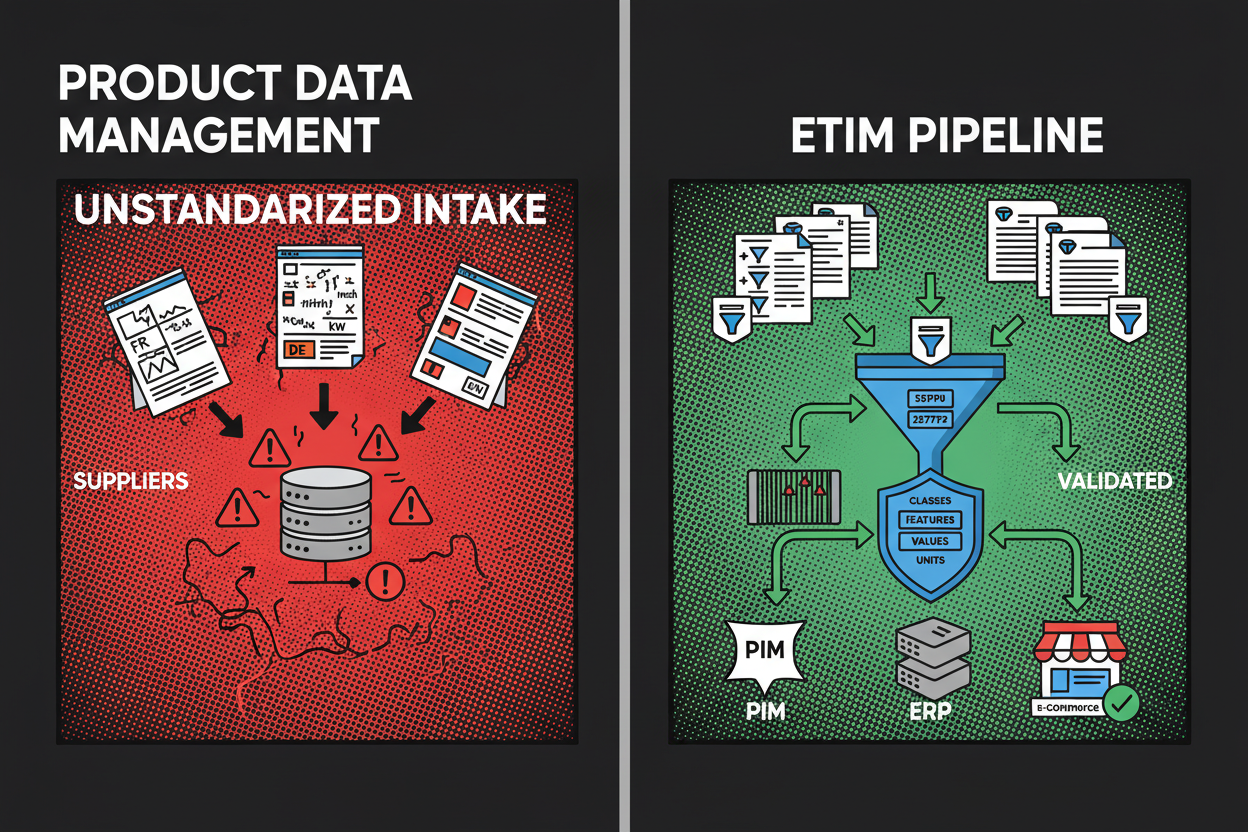
    Split-screen scene: left shows messy spreadsheets from different suppliers; right shows a clean pipeline where supplier feeds are classified by ETIM flowing into PIM/ERP

    Bad data costs organizations trillions annually in rework and lost sales. In technical supply chains, this manifests as wrong orders and project delays. By mapping each SKU to an ETIM class, you align disparate values into a shared language.

    Pro Tip: While ETIM provides the framework, Classifast provides the engine. Built with FastAPI and advanced semantic search, Classifast allows you to instantly map your technical descriptions to ETIM classes and features, providing the audit trail and rationales necessary for high-stakes data management.

    Understanding the Structure of the ETIM Classification System

    ETIM is built from a repeating set of building blocks. Each element has a stable identifier so systems can reference it precisely without language barriers.

    ETIM uses standardized two-letter prefixes followed by six digits:

    • EG = Group (e.g., EG000017) – The high-level product group.
    • EC = Class (e.g., EC000016) – The specific product type (e.g., LED lamp).
    • EF = Feature (e.g., EF000138) – A technical attribute (e.g., power).
    • EV = Permitted Value (e.g., EV000147) – A list value (e.g., E27 socket).
    • EU = Unit (e.g., EU000015) – A standardized unit (e.g., Watts).
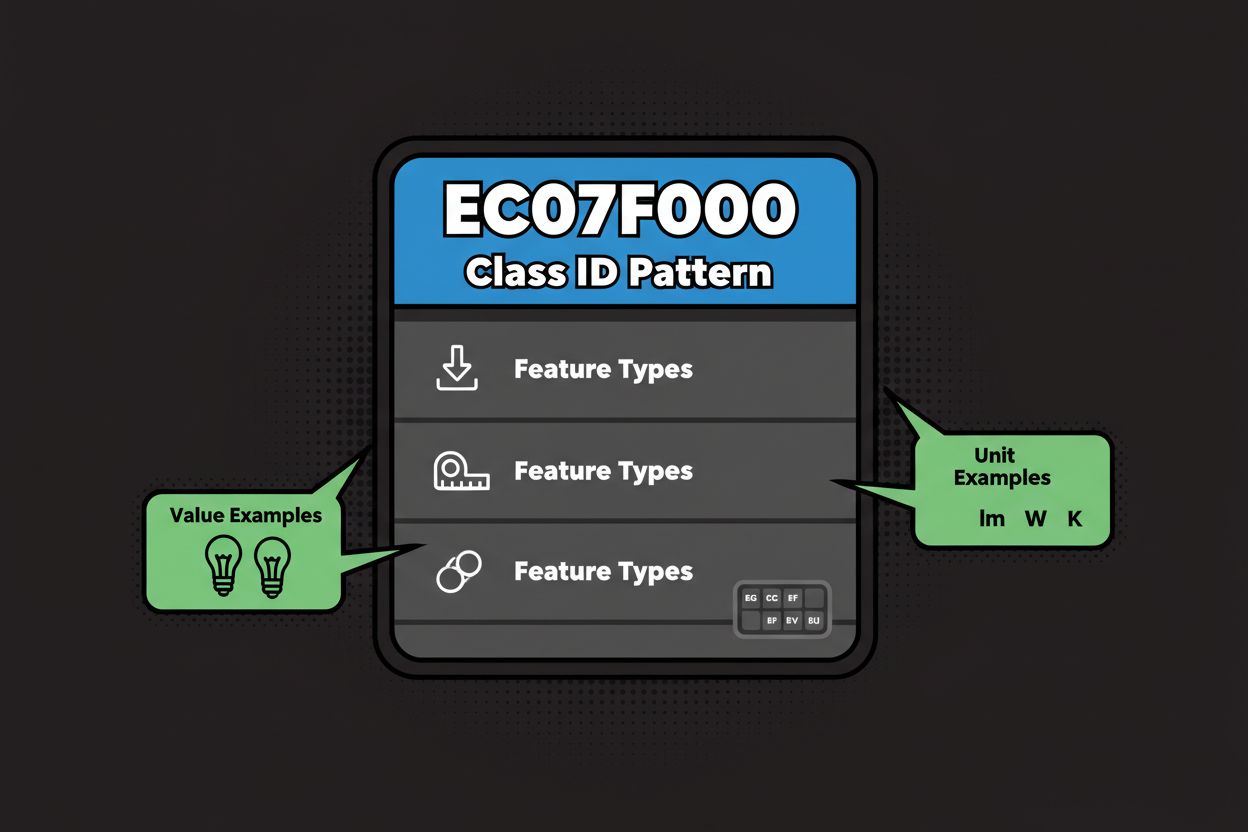
    Zoomed card of a single ETIM class showing Class ID, Features, and Units

    For a miniature circuit breaker, once placed in the correct EC class, you rely on features like rated current (numeric with EU = Ampere) and tripping characteristic (value list with EV values like B, C, or D). This structure is what Classifast navigates instantly, replacing manual lookups with intelligent, semantic categorization.

    ETIM as an International Standard: Principles and Governance

    ETIM International is a non-profit association. Its governance ensures the standard remains neutral and vendor-independent. At its core is the “one-country-one-vote” rule, preventing any single market or company from dominating the standard’s evolution.

    The Technical Committee oversees Requests for Change (RFCs). This community-driven process ensures that when technology evolves—such as new smart-home capabilities—the ETIM model evolves with it. Because Classifast supports these international standards (including UNSPSC, NAICS, and HS/HTS), users can trust that their classifications are always aligned with current global governance.

    Technical Attributes and Data Exchange with ETIM xChange

    ETIM is a classification model, not just a file. To move this data, you need an exchange format. Today, ETIM xChange (a JSON-based format) is the preferred route for PIM, ERP, and e-commerce integration.

    Classifast fits perfectly into this pipeline by helping you generate the initial classification data. With its advanced tech stack, Classifast provides:

    1. Instant Mapping: Use semantic search to find the right EC codes.
    2. Audit Trails: Every decision is backed by a rationale, making your ETIM xChange payloads “audit-ready.”
    3. Multi-Standard Support: Easily switch between ETIM, UNSPSC, or customs-focused HS codes.
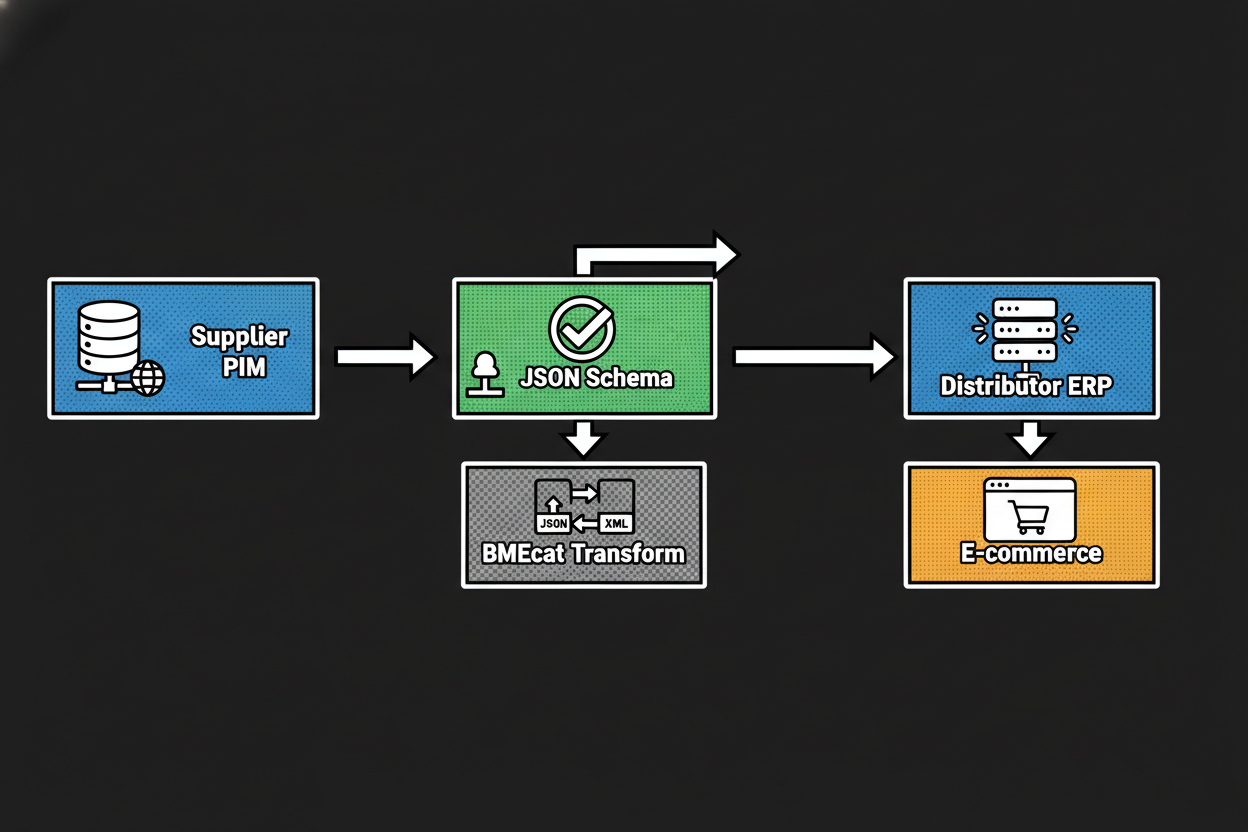
    Pipeline diagram: Supplier PIM exporting ETIM xChange JSON through a validation gate

    The Implementation Checklist:

    • Identify the correct EC class for each product family.
    • Normalize numeric values to ETIM EU units.
    • Map categorical choices to permitted EV codes.
    • Use Classifast to validate your choices and provide a rationale for each entry.

    Regional Variations and Global Adoption

    The ETIM model is identical worldwide. What changes are the language labels and national coordination. For example, the Dutch data pool 2BA accepts ETIM xChange natively, showing how a global core can meet local operational needs.

    Whether you are in Europe using ETIM or in North America looking at NAICS and UNSPSC, Classifast serves as the universal bridge. It simplifies the transition between different regional standards, ensuring your product data is interoperable regardless of the destination market.
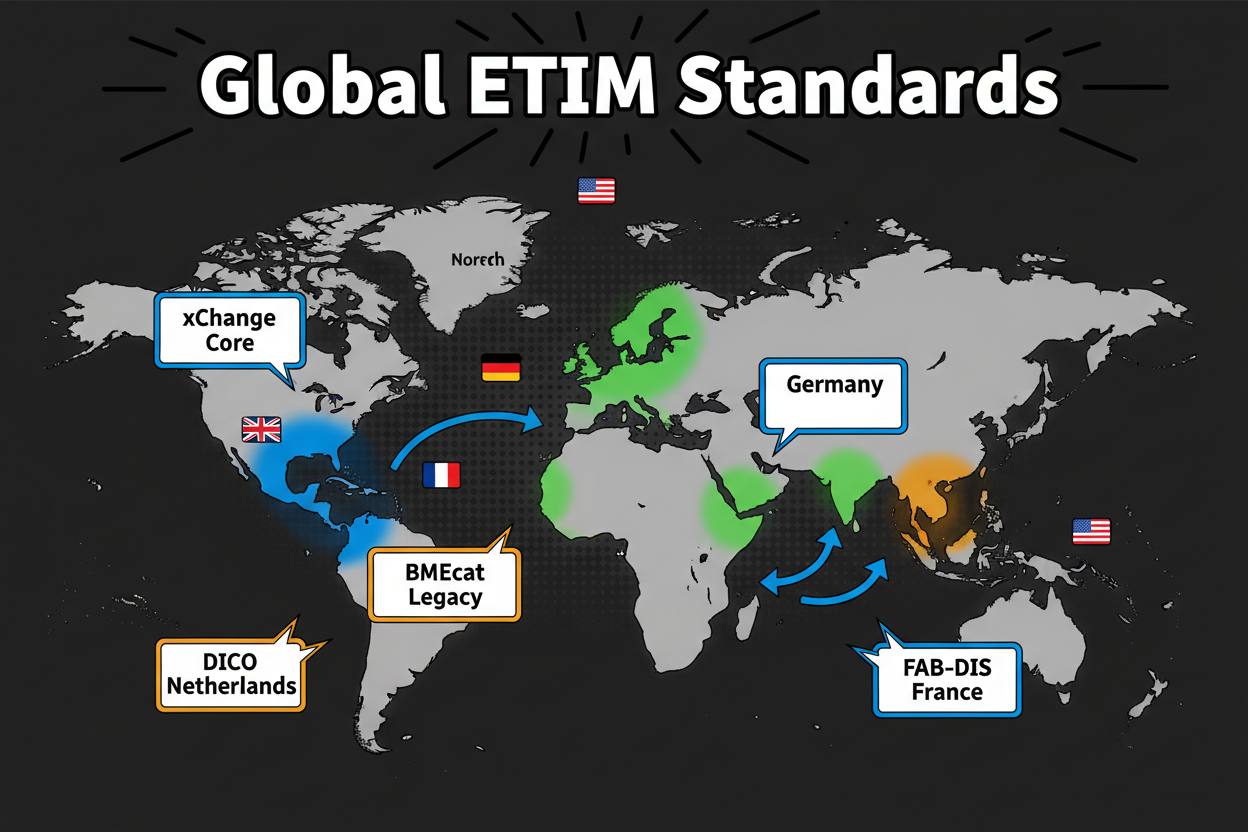
    World map with highlighted regions indicating ETIM adoption

    Frequently Asked Questions about ETIM

    Q: What industries benefit most from ETIM? A: Technical sectors like electrical, HVAC, plumbing, and industrial supply. They rely on precise attributes to drive engineering decisions.

    Q: How does ETIM differ from UNSPSC? A: ETIM is attribute-centric (detailing specific features like voltage), whereas UNSPSC is often used for high-level procurement categorization. Classifast.com supports both, allowing you to classify once and map to multiple standards.

    Q: What if my partners still use BMEcat (XML)? A: You can maintain your data backbone in ETIM xChange (JSON) and transform it for partners who require legacy XML.

    Q: How do I handle multi-function devices? A: Classify by the primary function. If the “essential character” is ambiguous, use Classifast’s semantic search to compare definitions and select the most defensible code.

    Conclusion: Streamlining Your Classification Workflow

    ETIM provides the shared language your technical products need to succeed in a global market. By utilizing stable identifiers (EC, EF, EV, EU), you ensure your data is filterable, comparable, and reliable.

    However, manual classification is a relic of the past. To achieve true speed and accuracy, you need a high-performance solution. Classifast replaces tedious manual lookups with instant, intelligent categorization.

    Ready to transform your technical data? Start Classifying Now at Classifast.com — Fast, accurate, and audit-ready.

    Clean banner with a prominent 'Start Classifying Now' button
  • Trade and Industry Compliance: Instant Classification with Classifast

    Trade and Industry Compliance: Instant Classification with Classifast

    Table of Contents

    Instantly Classify Goods and Services with Classifast

    If you’ve ever tried to classify a product or service by hand, you know the drill. Ten tabs open. Conflicting definitions. Clock ticking. And the risk that a wrong code leads to delays, fines, or messy rework. That’s exactly why we built Classifast—a high-performance web application designed to classify goods and services without the guesswork.

    Built with a modern FastAPI backend and powered by advanced semantic search technology, Classifast replaces the frustration of manual lookups with instant, intelligent categorization. Whether you are dealing with UNSPSC, NAICS, ISIC, ETIM, or HS/HTS codes, Classifast provides a fast, accurate audit trail for every decision.

    Type in a clear description and get instant code suggestions with plain-language definitions. See notes, exclusions, and related categories to confirm the fit. Then export your choice directly into customs paperwork, accounting systems, product catalogs, or market research files. It’s simple, accurate, and built for busy professionals.

    Real-World Efficiency

    Imagine an importer who needs the correct industry code for “Bluetooth speakers” before filing customs entries. Instead of digging through PDFs, they paste the description into Classifast, review suggested codes with definitions and exclusions, confirm the match, and export the result with their rationale. That single flow saves hours and reduces rework across compliance, logistics, and finance teams.

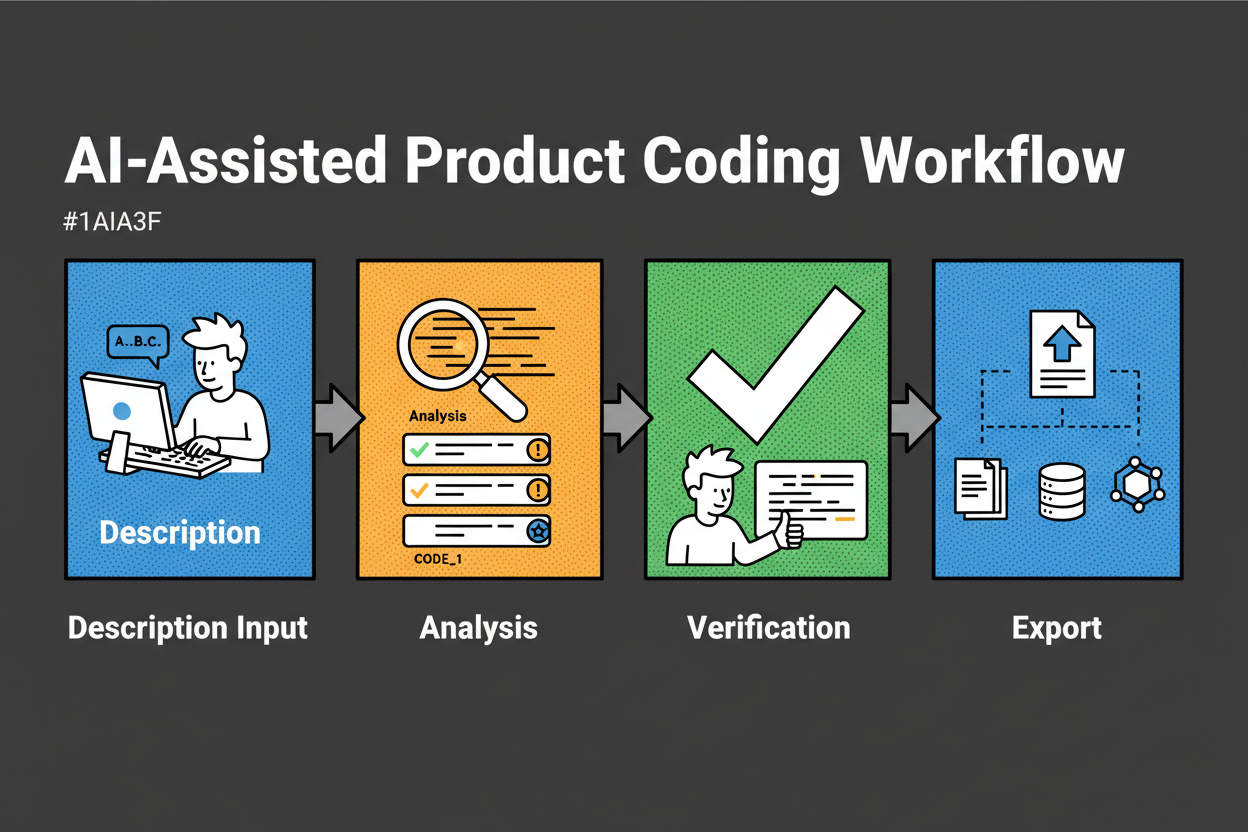
    Four-step workflow showing a user typing a product description on the left, flowing through a magnifying glass icon to a list of suggested codes with confidence badges, then a checkmark for verification, and finally an export icon to documents and systems

    Why Accurate Classification Matters: Compliance, Efficiency, and Business Success

    Classification is more than a form field. It’s how your business describes what it does and what it moves across borders. Get it right and workflows click. Get it wrong and you invite delays, penalties, and audits.

    There are two major families most teams deal with:

    1. Harmonized System (HS): For goods moving in trade, customs authorities use this 6-digit nomenclature to underpin tariffs and trade statistics worldwide.
    2. NAICS & ISIC: For industries and services, these standards support economic statistics and are reused for administrative, regulatory, contracting, and tax purposes.

    Misclassification can trigger a chain reaction. A team classifies an electronics accessory under a generic category; customs flags the shipment; the goods are held; and documents must be reissued. Meanwhile, operations schedules slip and costs mount. Classifast prevents these bottlenecks by surfacing the critical context—definitions, notes/exclusions, and related categories—up front.

    Manual vs. Classifast Comparison

    FactorManual ClassificationUsing Classifast
    SpeedSlow, cross-referencing multiple sourcesInstant suggestions with prioritized matches
    AccuracyDependent on individual experienceSemantic search reduces guesswork
    Audit TrailOften undocumented or scatteredExportable results with rationale fields
    ScalabilityDifficult at volumeHandles repeated queries and batch-friendly workflows
    Compliance RiskHigher risk of misclassificationBuilt-in checks and standardized outputs

    How Classifast Works: A Step-by-Step Guide

    You don’t need to be a trade expert to get accurate results. Classifast is designed to guide you through the process.

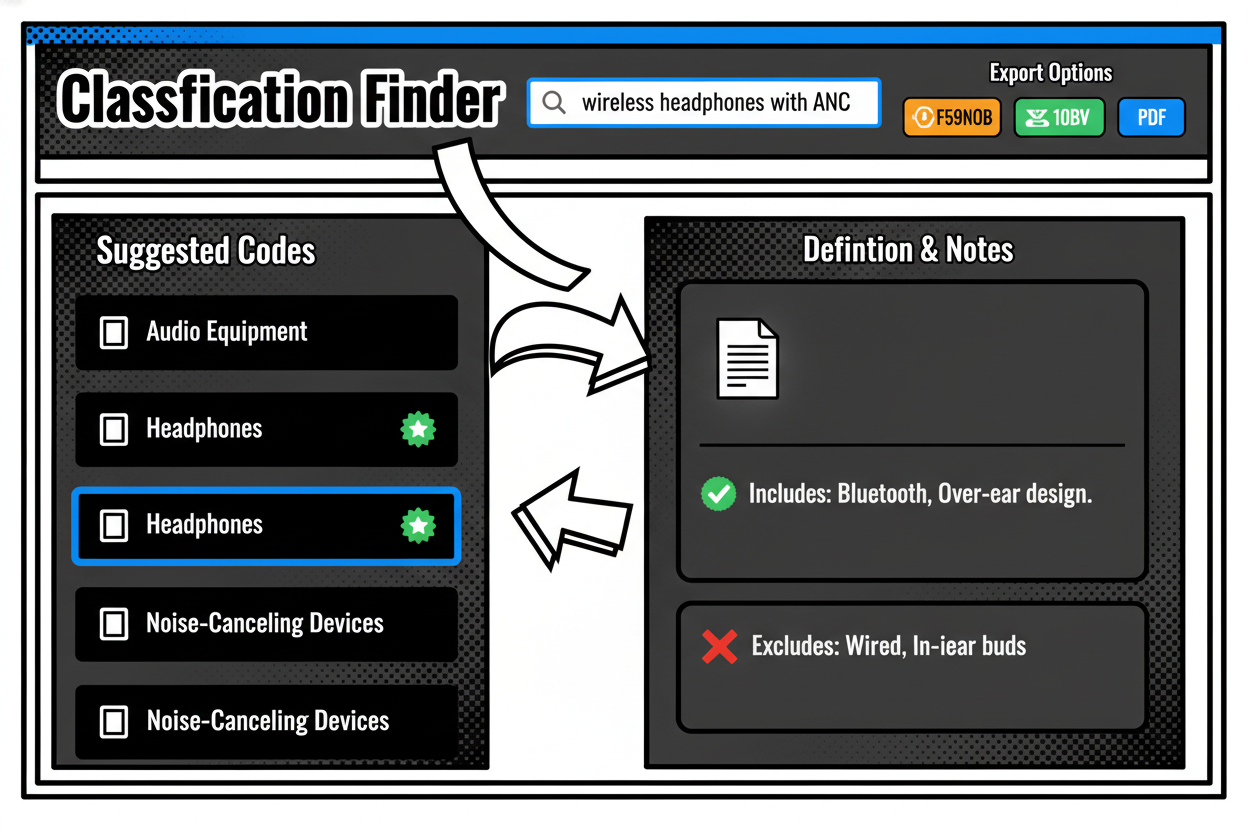
    1. Input: Type a clear description (e.g., “wireless headphones with active noise cancellation”).
    2. Search: Our semantic search engine analyzes the intent and returns suggested codes prioritized by relevance.
    3. Verify: Review the definitions and check for exclusions that might rule your item out.
    4. Export: Save your choice as a CSV or PDF, complete with your decision rationale.
    Mock interface of the Online Classification Finder with callouts: 1) search input containing 'wireless headphones with ANC'; 2) left pane showing suggested codes with confidence badges; 3) right pane showing selected code definition, notes, and exclusions; 4) top-right export buttons for copy, CSV, and PDF

    Refine Ambiguous Cases

    Ambiguity happens. The word “adapter” can point to electrical power, plumbing, or software. If your first pass is too broad, add attributes like “AC power adapter for laptops, 65W.” Classifast’s intelligence helps you navigate these nuances by providing “Related Categories” to ensure you are in the right neighborhood.

    Practical Use Cases: Real-World Applications

    Import/Export Compliance

    When moving goods across borders, “close enough” isn’t enough. Customs decisions on duties and controls are built on HS codes. Classifast allows shipping specialists to move from a “hunch” to a defensible, documented choice in seconds.

    Market Research and Analysis

    If you work in strategy, you live in codes. NAICS and ISIC group businesses by production processes. Classifast helps research teams map real-world offerings—like “cloud security consulting”—to standard industry codes consistently, ensuring your competitive analysis is based on clean, aligned data.

    Tax and Regulatory Filings

    Tax teams and controllers use Classifast to ensure industry codes reflect the business’s primary activity across all registrations and returns. This reduces friction during audits and ensures reporting consistency across different jurisdictions.

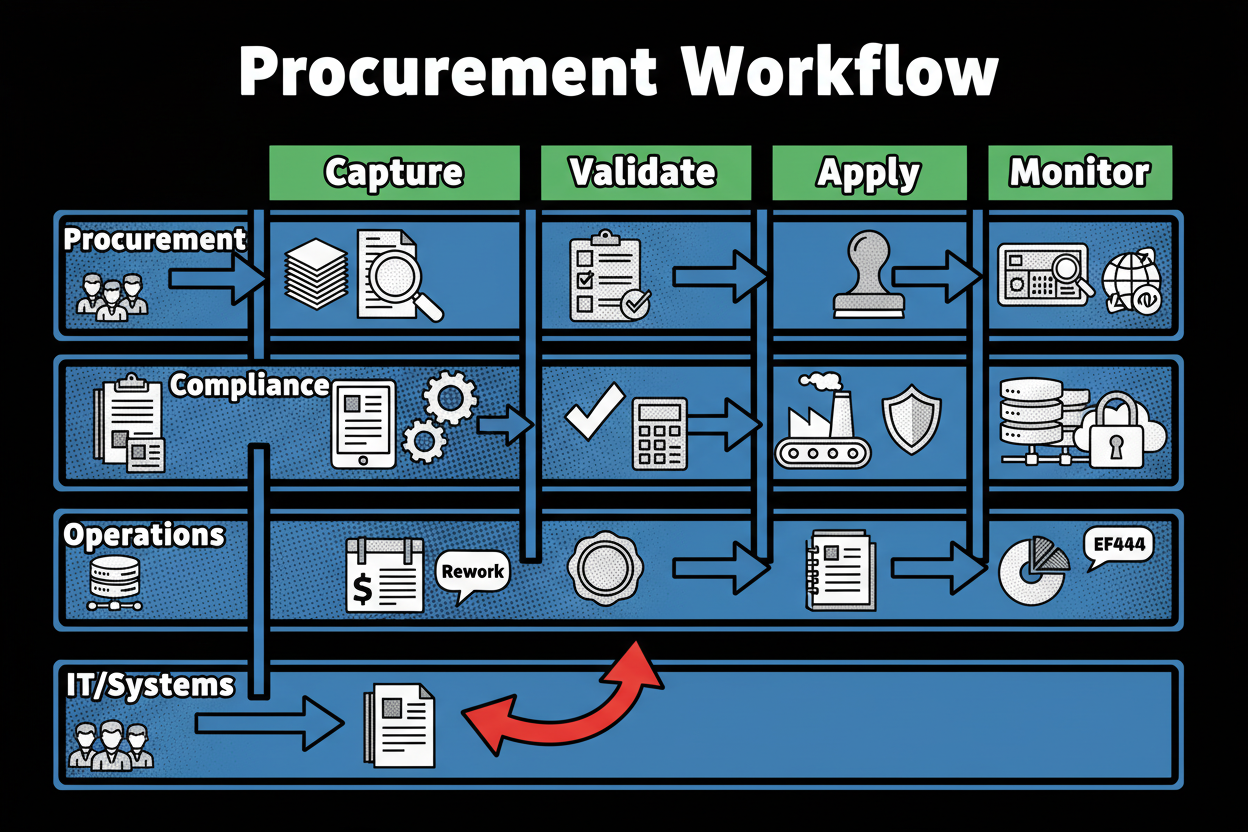
    Process flow diagram with swimlanes for Procurement, Compliance, Operations/Logistics, Finance/Tax, and IT/Systems

    Frequently Asked Questions

    What classification systems does Classifast support?
    Classifast currently supports major international standards including UNSPSC, NAICS, ISIC, ETIM, and HS/HTS. We are constantly expanding our coverage.

    How accurate are the results?
    Results are generated using advanced semantic matching. We recommend a 3-point validation: check the definition match, review exclusions, and scan related categories.

    Can I export results for an audit trail?
    Yes. You can export your findings via Copy-to-clipboard, CSV, or PDF. Each export includes the code, definition, notes considered, and your custom rationale.

    Is my data secure?
    Absolutely. Only your query text is processed to generate suggestions. We offer enterprise options for high-sensitivity use cases requiring specific data security standards.

    Getting Started: Unlock the Power of Accurate Classification Today

    Accurate classification drives compliance and efficiency. Classifast turns complex plain-language descriptions into reliable data you can trust. By cutting manual research time and providing a documented audit trail, we help your team focus on high-value tasks instead of scrolling through spreadsheets.

    Ready to see it in action? Start Classifying Now at Classifast.com.

    Clean banner with a prominent 'Start Classifying Now' button